The Ricki Lake Type 1 Blunder

Goof & apology from Ms. Lake
 NewImage

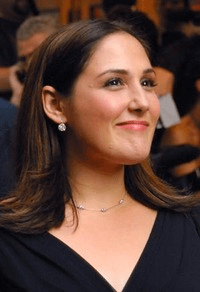
 Last week on “Good Morning America” actress and former talk show host, Ricki Lake, said juvenile diabetes was preventable. She’s since apologized. “This was a mistake on my part and in no way was meant to offend anyone dealing with the very serious disease of juvenile diabetes.”

Lake was speaking about her new book and AllStride program to combat childhood obesity when she made her mistake. “I commented that juvenile diabetes was preventable when in fact it is type 2 diabetes. This was a mistake on my part and in no way was meant to offend anyone dealing with the very serious disease of juvenile diabetes.”

I’m not offended. In fact, I’m a little delighted. Her mistake only confirms the public’s confusion about type 1 and type 2 diabetes. Even Lake’s interviewer smart guy, George Stephanopalous, didn’t catch her mistake. Now that is one thing I am sorry about. That the error was not snuffed out in its tracks and may deepen the confusion for those who didn’t catch Lake’s apology.

You’d think Lake, who’s advocating stemming the tide of childhood obesity – linked to the rise of type 2 diabetes in children – would know better than to confuse juvenile diabetes (type 1) with type 2 diabetes (adult onset diabetes). Type 1 diabetes is an auto-immune condition, not related to weight or a sedentary lifestyle and it’s not preventable or reversible.

Lake probably does know better, and it was probably a glitch of the mind, just a slip of the tongue. Then again, she actually made two mistakes. The name “juvenile diabetes” was changed to “type 1 diabetes” in 1997.

Then again you’d think Dr. Oz, “America’s doctor,” would know better. When he appeared last year on Oprah Winfrey’s program on diabetes he actually said, “Type 1 is also called juvenile diabetes and you are born with it.” Oh, my, born with it. That’s a pretty HUGE mistake! Just to clarify, while type 1 diabetes occurs more often in children than adults, you are not born with it.

Do I blame Lake for her blunders? Not at all. These are the type of mistakes the general public make all the time. Most people don’t even know there’s such a thing as type 1 diabetes as we are so overshadowed by all the media and pharma attention on type 2 diabetes. I am less understanding however how Dr. Oz could get it so wrong.

Maybe you’re thinking what’s the big deal? The big deal is multi-pronged. I believe the lack of recognition of type 1 diabetes and understanding its daily life-threatening nature, impedes urgent and necessary funding toward a cure.

The fact that type 1s are judged harshly by the public for “causing their condition” is just plain hurtful, just as much as to type 2s. The fact that we are invisible against the large canvas of type 2 diabetes is often painful. The fact that the public is so misinformed and uninformed may actually hinder life-saving treatment when a type 1 needs it.

So let’s go back to that “life-threatening” part: As a type 1 every day, every few hours, I have to test my blood sugar and then often do something to return it to a near-to-normal, safe zone. If my blood sugar’s too low I can fall into a coma and die. If my blood sugar’s too high my body can produce toxic acid in my blood stream called ketoacidosis, and over time I will likely succumb to a premature heart attack, blindness, amputation, host of nerve conditions and have a life span 15 years shorter than if I didn’t have type 1 diabetes.

If you’re interested, you’ll find a side by side comparison of type 1 and type 2 diabetes in“The type 1 versus Type 2 Diabetes War.” 

One thing I noticed in the diabetes community regards Lake’s mistake was upset from parents of children with type 1 diabetes. If you want a little window into living with type 1 diabetes ask any parent who has a child with it. A mother or father who has to hold their five year old down every day to give her several injections a day. Who has to poke their child’s hurting, tiny little fingers all through the day to get a read and regulate her blood sugar. Who has to force their child to eat when she doesn’t want to and stop her from eating when she does. Make her move when she doesn’t want to and stop her from moving when she does.

Most parents go to sleep fearful every night that their child will not wake up due to a dangerous blood sugar drop overnight that can not always be predicted or prevented. 

I have asked these parents what it’s like. I also know that children with type 1 diabetes grow up and become the person sitting next to you, sitting unseen with her invisible life-threatening disease.

I think type 1 diabetes needs the recognition that type 2 diabetes has gained. I think the roughly 3 million people with type 1 diabetes, living in the shadow of the almost 25 million with type 2 diabetes, deserve to be acknowledged for what they live with and what they do to keep living, every day. For their courage, for their hope, for their tenacity. 

So Ricki, while some say your mistake has added to the myths of diabetes, I thank you for what it has also done – brought more media attention to type 1 diabetes than we’ve had in a long time.

Right now get life-saving insulin to children in need

Save Thousands of Lives – Watch and Pass It On

All it takes to get 1 child 1 week of insulin is for you to watch this video. Pass it on and thousands of children will outlive their childhood.

(If you’re seeing this post w/o the video, click here.)

We’re attempting a rescue mission – to save as many lives as possible for kids with diabetes around the world who have no medicine. 

For every view, Roche Diabetes Care is making a donation (through the Diabetes Hands Foundation) to two diabetes rescue organizations:  “Insulin for Life” and “Life for a Child.”

With 100,000 views, Roche will make its top donation – $75,000. That’s where you come in. Watch, and pass it on to EVERYONE you know. Don’t stop when you’ve gone through your friends with diabetes and best friends. Almost everyone is touched by diabetes in some way. It will mean something to others and you don’t know who – so fire away!
  • Just $50 keeps a child alive in Ecuador for a year
  • 1 video hit will pay to transport medicine and supplies to 1 child for 1 week
  • Funds will educate children and their parents how to treat diabetes. It’s the only education most will get
My fellow video creators, Manny Hernandez of dhf and tudiabetes, and David Edelman of Diabetes Daily, and our producer, Sean Ross, and I and all these kids whose lives you’re about to save, thank you from the bottom of our d-hearts.

50 Diabetes Myths book now available in China

I couldn’t be more pleased, and more amused, to see that my book, 50 Diabetes Myths That Can Ruin Your Life and the 50 Diabetes Truths That Can Save It is now in Mandarin and available in China.

Quite shocking, actually, to hold a book in your hands that you not only can’t read, but can’t figure out if you’re actually holding correctly. 

While China is economically becoming “the new Japan,” part of its new wealth is also contributing to making it the country with the largest number of people with diabetes. 

According to the International Diabetes Federation 92.4 million adults in China have diabetes, superseding India’s ranking as fastest growing nation with diabetes, and it’s expected by 2030 there will be close to half a billion people in China with diabetes.

Well, all I can say is I hope a few people buy a book before they end up reproduced on the black market for a nickel a copy. 

Do check out the addition I insisted on – the ice cream cone on the cover 😉

We are worth loving ourselves

We can live full, robust, amazing lives with diabetes

 NewImage

If you read my last post you know my book “The ABC’s Of Loving Yourself With Diabetes,” is a hit with the younger set. I imagine it’s the illustrations and her mother’s bedtime voice. But as any good detective, I went back in and re-read my own book. Well, it doesn’t take very long, it’s about 64 mighty, yet short, pages.

I’d like to share the ‘Foreword’ that was written by Susan Guzman, Ph.D. and psychologist at the Behavioral Diabetes Institute. While Susan doesn’t have diabetes, she does live with a chronic illness. She is also one of the nicest, most genuine persons I’ve met. Both she and Bill Polonsky, the Institute’s founder, have been an influence on my work. 

What Dr. Guzman says in the book:

“The emotional side of diabetes is often ignored or neglected and yet is such a critical part of living with the disease day in and day out.  It is easy to get overwhelmed, tired, defeated, frustrated and down about diabetes.

In my work as a clinical psychologist at the Behavioral Diabetes Institute we address the emotional and behavioral side of living with diabetes. Through workshops, classes, and discussion groups we offer people a forum within which to share their personal struggles and victories, and discuss and work though difficult emotional issues. Connecting with others who truly understand what it is like to have these thoughts and feelings can cause remarkable transformations. Just knowing that you are not alone with what you are going through, and believing that there is hope in what you are struggling with, can create new ideas, possibilities and motivation.

Sometimes healing needs a change in the way you look at things. It may be looking at your next high blood sugar number and just seeing it as information to inform your next decision, rather than as a judgment of yourself. Or, reminding yourself that it’s impossible to “do diabetes” perfectly, and so aim to do your best. 

At the BDI we have learned that for many people changing their thoughts and behavior regarding diabetes is a long journey, but as Riva says you can appreciate the steps you take. In the end, living with diabetes means taking responsibility and taking charge. I’ve seen when people do that, particularly with the emotional issues of living with diabetes, their management improves, which means their day improves and their life improves.

Riva inspires others to not just live with diabetes, but to thrive with diabetes. With gentleness and wit she challenges her readers to acknowledge and address difficult emotions in an effort to see that we are worth the hard work of loving ourselves.”

Like Susan, I know the emotional side of living with diabetes is just as important as the medical side. If you are having trouble, seek help. And remember, you are worth the work of living well with diabetes. Happy weekend.

Diabetes Moods

DSC00898_2

I have one of those 3″ x 6″ plastic mood-visuals hanging on my refrigerator. It comes with a little red cut out square that you place over the face that illustrates the mood you’re feeling. 


One thing I’ve noticed about this little mood chart is that out of the 30 moods on offer, 25 are negative and only 5 are positive. What does that say about us?


Here’s a sample of the negative choices 


Exhausted

Confused

Guilty

Angry

Hysterical

Frustrated

Sad

Embarrassed 

Disgusted

Frightened

Enraged

Anxious

Lonely

Jealous

Overwhelmed


Here are the five positive choices

Happy

Ecstatic

Confident

Lovestruck

Hopeful


I have two thoughts about this and I’m going to share both with you. 


1) We are so ingrained to see the fly in the ointment. Is it so hard for us to name positive emotions that they only gave us five? Do we spend so little time feeling positive that the words don’t come more quickly to us? 


2) I can go through each of these negative emotions and tie it to diabetes. For instance:


Exhausted – After 1 billion blood sugar tests it gets a little tiring!

Confused – This isn’t the number I usually get when I eat that!

Guilty – A night of eating everything I love that just gets away from me

Angry – Stopped by security at the airport because of my insulin pen!

Hysterical – Stopped by security at the airport because of my insulin pen!

Frustrated – Having to eat just because I’m low. Damn!

Sad – I may really not make it to 80

Embarrassed – Shooting up in front of people I don’t know

Disgusted – Leaving blood trails on my newly renovated white kitchen cabinets 

Frightened – What will they find in my lab tests this time?

Enraged – This disease costs a shit-load of money

Anxious – Left the house without testing and have no idea where my sugar is

Lonely – No one else knows what this is like!

Jealous – Of everyone else’s freedom

Overwhelmed – I feel lousy yet I still have to get up to test my blood sugar, see if I have to refill my meds, god, I got it wrong again?


That said, I can go through each of the positive emotions and also relate it to diabetes:


Happy – I’m in great shape overall and better shape than if I didn’t have diabetes

Ecstatic – Just started blogging for the Huffington Post as a patient-expert

Confident – I’m generally on top of things

Lovestruck – My partner couldn’t be more supportive 

Hopeful – This will continue to get easier to live with


But I’d add a few more positives to my mood meter:


Peaceful – Just had my labs done, everything’s OK

Contented – Overall, I love my life 

Excited – Going to the AADE to present this August

Joyful – I’ve found my passion and am in my ‘element’ as Ken Robinson says

Grateful – For everything I have: partner, home, work, friends, family, chocolate

Delighted – Lovely surprises come on a regular basis these days

Proud – While I thank my lucky stars, I did a lot to get here


The truth is we can look down and we can look up. I rarely change where my square hangs – it’s usually on “happy”. For even when I’m not happy, I’ve noticed that glancing at my happy square, makes me feel happier and think of something to be happy about.


Just an observation, make of it what you will.


Imagine joy and humanity in a hospital

Humanizing illness in a flash

If you haven’t seen this video, Pink Glove Dance, that’s gone viral, take a look. It’s for breast cancer awareness and it will grab ahold of your heart. 

It upends our typical view of hospitals and everything we associate with them, and the music is a foot-stomper. 

You’ll find yourself smiling (even if you watch it more than once as I have) or find a tear or two has crept into your eyes as they have mine, as it reminds us just by its joyfulness of our connection, and the humanity we all share. 

Medline, the manufacturer of pink examination gloves, is making a significant contribution to the Providence St. Vincent Medical Center at the Portland hospital where the video was shot and offering free mammograms to the community when the video gets 1 million hits. Nice to see a company think outside the box.

The video’s already gotten almost 5 million hits, but that’s no reason not to add yours. Now we need one of these for diabetes awareness, don’t ya think?

When the healthy choice is the easy choice, that’s the one people will make

Biking in Finland, easily accessible

 NewImage

New York City trying to create bike lanes

 NewImage

The great gateway to the West, St. Louis

 NewImage

Where our diet is leading us: two thirds of Americans are slowly dying from obesity

 NewImage 

Around the same time that the Diabetes Prevention Program in 1992 proved that losing a moderate amount of weight (7%–about 10 or 15 pounds for many people who are overweight) and getting 30 minutes of physical activity five times a week can possibly prevent diabetes, the Finns ran a similar study and came up with similar results.

But there the similarity ends. The Finns actually did something about it. For the past 15 years they’ve been building parks and bicycle paths, changing foods available in schools and restaurants: they’ve been making healthy choices easier to make. And people have been losing weight, getting fitter and lowering the incidence of type 2 diabetes in Finland. 

As Dr. Pekka Puska, Director General of the National Public Health Institute says in Dr. Francine Kaufman’s documentary, Diabetes Global Epidemic, “You can give people all kinds of information but unless you make the healthy choice the easy choice, it’s not going to be the one people make.” The key is connecting the dots from information to action, so in Finland city planning has changed direction so people can more easily be physically active. The central lesson from Finland’s success is it’s human nature to make the easy choice and when you make the easy choice the healthy choice, people will follow: fitness trails now fill Finland’s cities and people who otherwise would not be, are on them.

I had the opportunity to reflect on this last week when out of my home town of New York City I was in the heartland, attending a conference in St. Louis. The first morning I was abruptly reminded and saddened to see how poor the choices are across much of America to make healthy choices when it comes to eating. Lodged at a very lovely, star-studded hotel, I was frankly appalled at the dismal breakfast buffet. It appeared the best way to make a healthy choice was to get on line for the fresh omelets. So I did. I got a spinach omelet dripping in butter and when I asked for lettuce and tomato instead of potatoes both grill chefs looked at me like I was speaking a foreign language.

Surveying the breakfast buffet, on tap were gummy scrambled eggs, fruits in canned syrup, bacon, sausage, biscuits with coagulated gravy, sweetened, flavored yogurt, frosted cold cereals and only instant oatmeal in only sweetened flavors like Apple and Cinnamon, Maple Syrup and Brown Sugar. 

My whole four days were an enormous effort to work around the unhealthy selection of foods plentifully available and try to find a few nutritious choices. The one evening my colleagues and I went off premises we took a short ride into historic downtown St. Charles for dinner. Having asked our driver for a good restaurant that offered a variety of foods he recommended Lewis & Clark. It appeared to be a typical family restaurant chain like a Fridays or Houstons. Scanning the menu I immediately saw almost everything was fried. We settled on what I thought would be the healthiest choices: guacamole and a spinach-artichoke dip for appetizers. Both came creamed and with a mound of corn chips. Luckily there were two fish entrees which you could order grilled with steamed veggies which I did. If this is how America eats because this is what we’re offered, how can we expect people will not be fat?

The straw that broke my back was breakfast at the St. Louis airport the day I left. In the new concourse there was only one place to sit and eat a meal, at the bar. I ordered scrambled eggs which came with sausage, only white sourdough bread, and when I asked if they could substitute lettuce and tomato for the hash browns, I got my second startled lettuce-and-tomato look. The eggs tasted like they came out of a plastic container not a chicken, the sausage was so salty I’m sure it spiked my blood pressure right then and there, the coffee incidentally was burnt. I felt almost sick after that meal, physically and spiritually. 

Understand, I’m not picking on St. Louis and I’m not saying everyone in this country makes poor health choices; I am saying I experienced how difficult it was to make healthy choices in the course of a day in an ordinary American city, and that it’s shameful to hawk at us on morning news programs and magazines that we have to change our eating habits and then make it almost impossible to do so. 

America, shape up–and I’m not talking to those of you who have pounds to lose–but our agriculturalists, industrialists and politicians who let the food industry and big business get away with murder–because frankly they’re killing us.

Bracelet in hand, or rather on hand

L1020829

If you’ve been following my search for, and acquisition of, my very first medic alert bracelet, you know I found one on American Medical ID. You’ll also know I bought just the plaque, the center part of the bracelet that holds the essential emergency information, and enlisted my friend who makes jewelry to make the actual chain.

While you can certainly order your bracelet with a chain, I figured it would be nice to have the chain be a little special. I also used that as an incentive to actually wear this new adornment.

So pictured here is the outcome. The top picture shows the bracelet with the plaque, it’s sterling silver and the information is on the back. There’s actually enough room between the plaque and my wrist that you don’t have to take the bracelet off, as I suspected someone would, to read the info. You can just flip it to the back side while still on my wrist. The second picture shows the two-toned chain I had my friend create.

I’m pretty happy. It’s a nice looking piece of jewelry and yet recognizable as a medical alert from the emblem. I have found the plaque, since it is heavier than the chain, tends to often fall to the side of my wrist or the underside of my wrist, amazing the smallest things we don’t think about. But I guess it doesn’t really matter. It’s there, where nothing was there before, and that matters more. 

As to my question of whether it would bother me to wear a constant reminder that I have diabetes, I actually haven’t found that it does. Maybe it’s because I’m still liking the bracelet I designed. To be honest, since I have made an agreement with myself that I will not take it off, since you know what will happen if I do–I’ll run out of the house on a short errand, not put it on, and something will happen where I’d need it–so far I notice soap has a tendency to find a home in the little links. Oh, well….

Me and Mary Tyler Moore

Riva and MTM

A few days ago I was among about 400 people seated at Barnes & Noble for Mary Tyler Moore’s book signing. Her new book, Growing Up Again: Life, Loves, and Oh Yeah, Diabeteshas put her on the promotion circuit: Good Morning America, Rachel Ray, Barnes & Noble. I read the book and it’s a sort of stream of consciousness: a little bit Hollywood, a lot about being a recovering “bad” diabetic who’s learned some lessons and is still confronting others. I found it surprising how hard she is on herself, but from what she discloses about her upbringing, and she is very open, she had two parents who never gave her much attention or approval. 


Ms. Moore is donating all of her proceeds from the book to the charity she champions, the Juvenile Diabetes Research Foundation (JDRF). Reason enough in my book for her to write her book. What I particularly like about her book, is it gives us adults with type 1 a face, and a place, in the diabetes community, making us a little more visible. 


After Mary stepped out in front of the group awaiting her, and spent a few minutes graciously answering people’s questions, which ran the gamut from, “What was it like working with Elvis Presley?” (if you know she was the last of Presley’s leading ladies then you’re a fan!) to, “What’s happening with the artificial pancreas?”, she sat behind a big desk with about four protective handlers and we were invited up to the stage row by row to have our book signed.  


I stood in line carrying her book, and my own book, The ABCs Of Loving Yourself With Diabeteswhich I intended to give her as a gift–if I could get it past the handlers. It would take some quick strategizing to not have the four strongarm men and women standing around her grab it out of my hands and hurl it out the window behind her. Then, just when my moment arrived: I’m in front of her, she begins to sign my book, I lift my own book up to table height to hand it to her, pow–the man to my right (meaning he was BEHIND me in line!!!) asks her a question. Her attention now diverted, I wanted to clobber him. You’ll be glad to know I didn’t. No, I just waited. 


She finished signing my book and picked it up to hand to me, and that’s when I extended my book out to her and said, “I hope you’ll accept this as a gift from me to you, my book.” She looked at it, and since I know she has a vision problem, I said the title aloud, whereupon she said, “Thank you, Riva.” I quickly calculated she must have read my name on the cover. Three sweet little words, “Thank you, Riva.” Well, c’mon, I did watch her every Saturday night laughing it up with Rhoda. Then, as if on cue, the strongarm woman to her right, whisked my book from her reaching hands and put it in a bag behind her. 


So, will my book really ever be read by Mary Tyler Moore? Who knows…but when my husband and I got home there were two voicemail messages on our machine. Before we played them I said to him, “I’m sure they’re from Mary calling from her limo to thank me for the book!” They weren’t, but you never know, tomorrow is another day. 

Making the most of the hand you’ve been dealt

Screen Shot 2015-02-08 at 1.05.19 PM

I was just so moved by this article in the NY Times Sunday Styles section last week, “In a Charmed Life, a Road Less Traveled” by Layng Martine Jr. that I insisted my husband read it. “Anyone who is in love is living a charmed life,” said the author, “especially if you’ve been in love for many years, through good times and bad.” I was moved both because it resonated with how I feel about my partner and because love never left this relationship. Not after the author’s wife lost the use of her legs, as well as other bodily functions. Not after she had to give up so many things she once enjoyed, and they once did together, like hiking in the mountains, strolling on a beach, tending to their garden. 

Martine Jr. continued, “After the doctor left, tears filled her eyes. “It was all too perfect,” she said, “wasn’t it?” And it did seem that way. It always had… Not long after getting home from the hospital, when we were having dinner by candlelight at our kitchen table, she burst into tears. “I don’t know if I can do this for the rest of my life,” she said.

All I could say was, “We’ll do it together.”

And then they began to look for what could be instead of what they had lost. “We began to think of what we could do to replace playing tennis, walking on the beach, working in the garden. 

We take many more drives now, preferably in our convertible… where they bring the food to our car…We know to say “Yes” to nearly everything because there is probably a way to do it. We know there is happiness available every day… A few months after the accident, Linda started driving again. She has rolled three marathons — yes, a full 26-plus miles in a racing wheelchair.” 

And now, so long since that fateful night, looking across the dinner table at my wife, or seeing her across the room at a party, the hopeless crush I have on her is as wonderfully out of control as when I first saw her more than four decades ago.” 

Fifteen years after the accident they have found a way to still roll through Tuscany, in and out of Ireland’s pubs, and watch the sun set holding hands on a country porch.  

“We don’t know what will happen tomorrow, or who will live how long…We are two, but we are one. And I love those numbers.”

This is a story of love and support, of possibility and survivorship, of finding happiness in simple things and adapting to what life hands you. And while it’s easy to say when you’re feeling down look around at the people who have it worse than you, it can still be hard to make your unhappiness smaller. 

But the game really is to find ways to still have happiness and contentment no matter what life has handed you. And the lesson to be learned is it is possible.