The healing power of friends


DSCN0525

Spring has sprung. I’m looking at the tree outside my window full with pink and white flowers while I’m sitting at this computer writing my next book. It’s going to be a small handbook of the key things to do to stay healthy with diabetes and lots of suggestions how to do ’em. So as I’m writing I thought I’d like to share one step with you for taking care of your diabetes. 

Collect Good Friends, Even If You’re Not A Collector 

If you’re planning on starting a collection, skip rare stamps, miniature toys, and vintage handbags, and head straight for the collection that pays dividends whether the market is up or down – good friends. Good friends don’t take up much space in your home and they’ll be there to cheer you when you’ve lost your cheer. Good friends say nice things about you even when you don’t, and they provide a shoulder to cry on when it’s all too much. 

Diabetes may from time to time make you feel alone; I know. But collect good friends and I guarantee you’ll find diabetes easier to live with. Plus, studies show that having friends, and strong social networks, can improve your blood pressure, memory and decrease physical ailments, cognitive decline, depression and Alzheimer’s. And don’t forget the biggest benefit of all – you’ll hardly ever have to dust them! 

• Let your friends know that you value them and schedule a get-together

• If you’ve been shouldering a lot of pain and stress, see if a friend would be willing to listen or help. Most people want to help others. 

• Do something new that you think you’ll enjoy where you’ll also meet new people – take a class, volunteer at your church. You’re very likely to make a new friend or acquaintance there. 

• Having friends who have diabetes is especially gratifying. Consider volunteering at your local American Diabetes Association or Juvenile Diabetes Research Foundation office. 

I don’t know where I’d be without my friends, and I hope I never find out.

OneTouch VerioIQ meters being replaced

Unknown

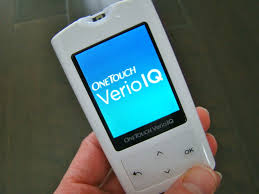
I just received notice that LifeScan is replacing its OneTouch VerioIQ Metersin the U.S. and Canada. To be honest, I’m not sure if the meter is yet available to the public in the States but you can find more information on their web site. 

It appears according to the press release I received, “the OneTouch® Verio™IQ Meter, under very specific circumstances, produces an error that causes the meter to turn itself off when a user attempts to access the “ResultLog” to view stored test results. If this occurs, when the product is turned back on, the meter enters the “set up” mode and requires the user to confirm the date and time settings before being able to test again.” 

This doesn’t affect the meter’s accuracy or your data and you can still use your meter if you have one. That said, LifeScan is providing free replacement meters without the problem.

To receive a replacement meter, call LifeScan’s Customer Service number: 1 888-567-3003. You will need your meter’s serial number and you will be asked to return your original meter.

A few weeks ago I tried out this meter. It’s unique advantage is it’s a pattern detector: it alerts you if your numbers are out of range three consecutive times around the same time of day. 

It’s very useful if you’re looking to get a better handle on your numbers and when you tend to be too low or too high so you can think about what you may be doing that’s causing those out-of-range numbers.

Now, if only the VerioIQ would also give me a daily alert along the lines of, “Congratulations, you’re doing a wonderful job!” when my numbers are in range!

My Valentine’s Day card


IMG_0268-2

So, the husband’s in Holland where it’s cold and dark and I’m sitting in Brooklyn this morning. (That photo’s from our Christmas trip to Israel). Hmmm…some Valentine’s Day you say? Well for me it is. It is the expression of the heart that just keeps growing fonder.

Yesterday I received my Valentine’s email:

“I did an experiment,” he wrote. “At 7:10 PM I checked my blood sugar (no he doesn’t have diabetes, but he has a meter for occasional curiosity checks) and it was a perfect 85. I made dinner, vegetables and a veggie burger.  I sauteed it all in a wok with olive oil. I also ate 8 nuts. I finished dinner around 7:35 PM. [Is he anal? Not really. But he’s a good researcher ;-)]

At 8:10 PM I took my blood sugar. It was 139. At 9:35 PM, two hours post-meal, I took my blood sugar again. It was 108.

I think in a normal person [he means without diabetes ;-)] blood sugar also fluctuates. Then it comes back to a set point. But even if you just eat vegetables and a plant-based veggie burger, no other carb, no rice or pasta, it shoots up. So if this pushes up blood sugar in a non-diabetic, then what you are doing as a person with type 1 diabetes, keeping your blood sugar so well managed, is near perfection!

And by the way, I HATED pricking my fingers!”

Yes, girls, to me that is love, and the perfect Valentine’s Day card. The guy who four years ago went out in the midnight sun while we were on vacation in Helsinki, Finland to buy me a meter, is after 10 years of marriage still willing to prick his fingers for me.

A diabetes solutions campaign you can help shape now

Sanofi has created an extremely brief 6-question survey in a unique diabetes awareness effort. Until Feb. 12th by expressing what matters most to you about diabetes in this survey you get to shape the focus of Sanofi’s Data Design Diabetes Innovation Challenge

The challenge will gather ideas for innovative solutions regarding diabetes awareness and care. After ideas are submitted, 5 semi-finalists will be selected for an intensive mentorship program, design boot camp and a $20K prize. Two favorite finalists will then be chosen by the public and finally a judge will select the winner who will receive $100K to develop their solution.

Sanofi is casting the net wide to grab as many innovative ideas, interventions and solutions as possible to help in the management and awareness of diabetes. On the survey page you can read all about the contest and rules. I should just mention winning ideas will be mentored by industry leaders, plus remain the property of their creator. 

So take the survey and help shape the Challenge. Be part of the solution finding a solution. 

Dear Santa, won’t you please take this diabetes away?

Screen Shot 2015-02-07 at 3.17.22 PM

 I’ve posted this before but I’m posting it again – because it makes me laugh, and humor can’t be overrated living with diabetes.

Dear Santa,

All I’d like this Christmas is for you to take this diabetes away. I’m so tired of it already. All the time stabbing my fingers for blood and guessing when my sugar’s too high or too low.

Now that I’m in menopause I can barely tell whether I’m sweating because I’m losing estrogen or because my blood sugar’s crashing at 50 mg/dl!

And, can we talk… I mean the constant figuring out how many carbs are in a ravioli or bread stick or that fried calamari that will be at the company Christmas party. Some days I just want to lie down and shoot myself. Please, please, Santa, would you take this diabetes away?

Sincerely,
Riva

***
Dear Riva,

I’m very sorry you’re having a tough time during my favorite season. I only want people to be singing carols and drinking eggnog and feeling good cheer. Unfortunately, it says in my contract that I’m not allowed to interfere with life’s natural occurrences. So here’s my suggestion: although you’ve already opened your holiday gifts, go back and look under your Hanukkah bush for the gift in having diabetes.

You may have to spend a few days looking, so why don’t you schedule it for the week between Christmas and New Year’s while you have some down time? Then you can start the new year fresh.

Best wishes,
Santa and the gang

***
Dear Santa,

A gift in my diabetes? What are you, crazy? Meshuggah? Thanks, but no thanks!

Riva

***
Dear Rabbi,

I seek your wise counsel. I wrote to Santa to take away my diabetes, but he wasn’t helpful at all. Surely you who have studied the Torah and represent our people who have suffered throughout history can help me with this awful diabetes.

It’s such a strain, Rabbi. I have to test my blood sugar when I really want to be lighting the sabbath candles. I forgot all about the High Holy Days this year because I was so busy counting carbs in the Challah, bagels and honey cake.

Rabbi, please, what solace can you offer me? What words of wisdom? Surely you would tell me to just forget about this diabetes thing and go shopping, right?

Please write soon,
Riva

***
Dear Riva,

Santa and I just returned from the Caribbean, and he told me about your difficulty. He said he told you to look for the gift in your diabetes. I concur with Santa; there are many gifts to be found in diabetes, if you look. For one, my child, you won’t have to drink the traditional Manishewitz holiday wine anymore. The Counsel all agree that it is much too sweet. Bring out the Chardonnay!

When Santa asks you to look for a gift in your diabetes, he is not saying this because you are not Catholic and he is not bringing you anything, although this is true. He is speaking like our brothers the Buddhists, who profess that there is a gift in everything if you look for something positive that it can bring into your life.

Let me tell you a story, my child. My own Aunt Sheila had diabetes, and after she stopped kvetching, she went to a spa and learned how to eat healthfully. She shopped along Rodeo Drive and bought a cute little jogging outfit and started running. On her jog along the ocean she met her fourth husband, Marvin, and they’re very happy. They just moved into a $6 million mansion in Jupiter, Fla. — right next to Burt Reynolds! Everyone’s plotzing! The house was in foreclosure so they have even more money to decorate!

Darling girl, find a gift in your diabetes, because to be honest, since you’re not orthodox, and all I have are these great wigs I got on sale from my cousin Schlomo, I’m not bringing you anything, either. And really, it’s not very pleasant to whine.

Shabbat Shalom
Rabbi, Local Union 107

***
Dear Rabbi,

I thought about what you and Santa said and have decided to become a Buddhist. I picked up the Dalai Lama’s book, “The Art of Happiness.” He says, “Happiness is a butterfly, which when pursued, is always just beyond your grasp, but which, if you will sit down quietly, may alight upon you.” I told my friend Joe I like butterflies, and I like the robe, so these aren’t bad gifts.

Joe said the quote meant that we are the source of our happiness, that happiness can only come from inside us, regardless of what happens in our lives. Hmm, I said, maybe I need to learn more. So I booked a flight to Tibet.

Now if only I didn’t have to drag all this damn diabetes stuff with me…. ohm… ohm… oy.

This year I also posted this on a great diabetes newsmagazine you should check out if you haven’t already, asweetlife.org. And onTuDiabetes, a social media community.

Today is World Diabetes Day

UnknownHelp make the blue symbol used and recognized

If you’re new to diabetes, or the diabetes online community, November 14th is World Diabetes Day. Nov. 14 is the birthday of Frederick Banting who helped discover life-saving insulin. 

World Diabetes Day was established by the United Nations to raise awareness of diabetes and increase funding for its prevention and treatment. We actually have the little nation of Bangladesh to thank for pushing through this resolution.

Today the World Diabetes Day campaign is led by the International Diabetes Federation (IDF). Take a look at some of the great things going on and ways you can get involved.Today in many places around the world structures, and people, will be lit in blue to draw attention to the round blue symbol you see here. Like breast cancer’s pink ribbon, IDF is leading an effort to get all diabetes organizations to adopt the blue symbol.   

IDF just released in its Diabetes Atlas the latest global diabetes statistics: 

• One adult in ten will have diabetes by 2030 

• Currently 366 million people have diabetes, that will rise to 552 million people in 2030. That means 3 new people will be diagnosed every 10 seconds

• 183 million people are still undiagnosed

• 78,000 children develop type 1 diabetes each year 

So today wear blue to be part of the movement and so that we can all be a little less blue as we help diabetes get the attention it deserves.

Second International Positive Psychology conference

If you read my last post you won’t be surprised that I just spent 4 days in Philly at the Second World Congress on Positive Psychology sponsored by ippa – International Positive Psychology Association

ippa promotes the science, practice, collaboration and communication of positive psychology. Let me tell you first, that doesn’t merely mean thinking good thoughts. 

In a nutshell, positive psychology is a practice and a means to greater well being and happiness. The road is largely composed of: Being engaged more of the time in positive emotions (love, play, curiosity, compassion…) than negative ones (fear, guilt, shame…); Being engaged with life – you know those times when you lose track of time because you’re in “flow” with whatever you’re doing; Enjoying loving and supportive relationships; Having meaning/purpose in your life; Having a sense of accomplishment. 

In a practical sense, it also involves discovering, focusing on and using our strengths (you can take a surveyhere), being engaged in a mindfulness or meditation practice and being solution-focused rather than problem-focused.

The conference speakers were the world’s heavyweights in the field including psychologists and PhD’s Martin SeligmanBarbara Fredrickson and Ed Diener (these are merely the names I remember) as well as scientists, neurobiologists, university professors, psychologists, you get the idea. We participants were largely 1200 therapists and coaches from 62 countries around the world. I was indeed struck by the amount of Australians, Asians and Europeans who’d made the journey.

In general the conference is a coming together to share scientific research that validates the positive effect of positive psychology. 

There was so much to take away after 4 days of back to back lectures, workshops, and symposiums that I, and my mind, are rather exhausted. But these are a few things I took away:

1. Positive psychology is not just about being positive. It’s about living with your full range of emotions – including the negative ones – in a healthier way. Or as Dr. Fredrickson would say, it’s about using your positive emotions to broaden and build your resources, skills, connection to others, flexibilty and perspective to create greater well being and happiness.

2. Meditation and mindfulness do increase biological (slow and strengthen heart rhythm, increase circulation, lessen inflammation) and psychological health (increase compassion and awareness, make your thinking more open, quicker to see solutions) – and, it’s high time I got back to a regular practice.

3. If people are not ready to change behavior, they need information not persuasion. If they’re ready they need a plan and if they’re taking action they need to know how they will prevent relapsing back into their old behavior.

4. Focusing on what you want is a much more compelling strategy to move forward than avoiding what you don’t want.

5. “Coping” is a word that signifies “less than.” Whereas “thriving” and “flourishing” are words that signify “more than.”

6. Love is the seed that forges bonds, weaves social fabric, promotes health

I’ll also give you three things you can do right now and on a daily basis to up your Positivity Quotient and create greater health –  and you can do them without attending a conference or reading a book: 

1) Reflect each evening while falling asleep on 3 things you are grateful for or that went well that day

2) Give out more praise and compliments than you do criticism

3) When you get angry, catch your breath, pause, and try to see the personwho’s making you angry, not what they just did. We are all caught up in the stresses of life. Slow down and change or reframe the interaction.

My mind and my heart are all about this field and it’s a strong place to work from for anyone who has, treats or coaches anyone with a chronic illness. The next conference in the U.S. will be in two years. Maybe I’ll see you there.

“Eat less!” says the government

images

It makes you wonder why it’s taken the government so long to say the obvious to a nation of people two-thirds of whom are obese, “Eat less!” Finally they’ve said it in their latest nutrition guidelines that came out on Monday.

Along with those blunt words come equally blunt words naming names – drink “water” instead of “soda.” Oh, my.

Of course I wonder what finally got the government to get with the program given the entrenched powerful food lobbyists in Washington who cannot be pleased. Not when the government says eat more nutritionally dense foods.

As for general dietary recommendations regarding what to eat, those haven’t changed: eat more fruit, vegetables and whole grains and less salt and saturated fat. 

Margo Wootan, director of nutrition policy at the Center for Science in the Public Interest remarks how much more valuable these guidelines are than the “big vague messages” of, well, …hmmm…only last year. She cites before these new guidelines just issued that the message was to eat more vegetables which could have meant adding a slice of tomato to your hamburger. Now the recommendation is to fill half your plate with fruits and vegetables. Of course I know a lot of diabetes educators and dietitians who’ve been saying that for years. It’s called the “Plate Method” and is an easy way to create a healthy meal.

Many food manufacturers have recently begun reconfiguring their recipes to cut down on added sodium. Will restaurants now cut down on portions? When I eat out, I typically share an appetizer and take half my dinner home. 

As obvious as the government’s recommendation is, equally obvious, at least to me, is it will not be easy to do this unless everything around us supports eating less. For instance, government farm policies need to be overhauled to provide incentives for farmers to plant more fruits and vegetables. Prices for them need to drop and access to them needs to rise. School cafeteria food needs to change, airport kiosks need to have healthier options etcetera, etcetera.

But I’m pleased. After decades of the government, like in the fairy tale, “The Emperor’s New Clothes”, saying what beautiful clothes the naked Emperor is wearing, federal regulators have finally put on their glasses and declared,  “hmmm…you look a little naked there Emperor.” 

You can read more in, “Government’s Dietary Advice: Eat Less,” in the NY Times.


“Breakthrough” at the NY historical society ends

Screen Shot 2015-02-07 at 5.04.27 PM

As I posted this title I thought about the many meanings of “breakthrough.” 

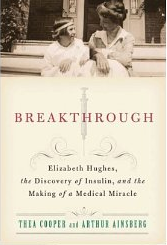
“Breakthrough” is the name of the book released last year that follows the discovery of insulin in 1922 by Dr. Charles Best in Toronto and one of its first recipients, Elizabeth Hughes, an 11 year old girl with type 1 diabetes.  

“Breakthrough: The Dramatic Story of the Discovery of Insulin” is also the name of the exhibit, based on the book, that just closed at the New York Historical Society

“Breakthrough,” of course as the book’s title, represents a medical breakthrough – the discovery of insulin. Now one could have diabetes and live. But now I find the word “breakthrough” bittersweet. As “breakthrough” is the dream that lives in the heart of all of us with diabetes still waiting for the big one almost 90 years later – a cure. 

I attended the exhibit a few weeks ago and particularly enjoyed seeing the antiquated pumps, meters and syringes patients had to live with only a few decades ago. I am eternally grateful that just about the time I got diabetes, 39 years ago next month, disposable syringes were already on the scene.

Here are a few snaps from the exhibit.

Apart from seeing what’s pictured here, however, the best way to soak up the story is to read the book

Diabetes foods I can’t do without

Screen Shot 2015-02-07 at 4.55.46 PM

I don’t eat “diabetic” foods. I don’t eat anything that says, “made for diabetics” and I hardly ever eat sugar-free foods. If I want something like chocolate or jam I eat a small amount of the real thing. I’m more concerned what chemicals they put in when they take the sugar out. Besides, many foods “made for diabetics” have as much carbohydrate as the real thing. 

I’ve even managed to reduce my dependence on artificial sweeteners. It’s been a long slog. But now, a little half & half in my coffee or tea makes it mouth-satisfying enough that I don’t want, or even like, the sweetness anymore that a Splenda or Equal gives it. And oatmeal and cottage cheese without sweetening taste just as good, as my sweet-tooth has waned. 

But here’s a food made for diabetics that is always in my pantry:

Extend Snacks. I found Extend Bars, one of the company’s original products, years ago and they’ve been in my house ever since. If when I’m going to sleep, I’ve had enough wine with dinner that I know my blood sugar will drop significantly through the night, I eat one-third of this bar and I wake up fine. (Amount may vary for you). Extend Snacks now include crisps and shakes and all their products work on the same principle: they contain cornstarch which breaks down very slowly and helps maintain level blood sugar for 7 to 9 hours. 

Extend Snacks were created by pediatric endocrinologist Francine Kaufmanafter she noticed cornstarch’s ability to help patients with severe lows. If that sounds a little too medical, the bars taste really good. Peanut Butter Chocolate Delight is the most popular and my favorite.

Extend Snacks are available at Walgreens and other chain stores. Or you can order online as I do because they’re not in the NY area, yet. In fact just recently I’ve been part of a letter writing campaign to try and bring them to New York City chain drug store CVS and Walmart.

By the way, Extend Snacks hasn’t asked me to write this. I just like to share what works for me in the hopes it may work for you.