Recently I read about one of my fellow diabetes bloggers who also attends Roche’s social media summit, yet I’ve never known much about the modest, quiet Wil Dubois.
Join me for the TCOYD event Rhode Island, September 11th
TCOYD, which stands for Taking Control of Your Diabetes, is a non-profit organization that provides one day health fairs all across the country to help people better manage their diabetes. The organization alsobroadcast in-depth discussions with renowned health professionals and patients.
Next month, September 11, if you’re anywhere near Rhode Island, you should attend because I’ll be there presenting. Of course, it’s not the only reason you should come. You’ll hear lectures on facets of diabetes care from your feet to your heart, learn and get some exercise, bond with many others and attend interactive workshops where the learning is personal. It’s a full day affair of fine tuning your diabetes management provided to you by many respected people in the field. All for only $30. Register here.
Joining you will be top physicians, psychologists, educators, foot specialists, exercise physiologists and there’s much to see and do in the exhibition hall including many new devices, products and foods.
TCOYD was the first diabetes health event I attended way back in the early part of this decade. There I attended, among others, psychologist’s Bill Polonsky’s workshop where I learned something crucial — that diabetes is not the leading cause of heart attack, blindness and amputation but poorly-controlled diabetes is. It made a huge difference to me: 30 years of fear slid down my shoulders and the resolve to master my self-care led me to the healthy regimen I have today.
I also met a lovely gentleman in the exhibition hall who answered all my questions and then guided me to the peer-mentoring programs I deliver today around the country speaking to fellow patients.
TCOYD is the labor of love of Dr. Steven Edelman who founded it almost 15 years ago. Dr. Edelman was recognized last year with the ‘Outstanding Educator’ award from the American Diabetes Association. Edelman himself has lived with type 1 diabetes since the age of 15, and has dedicated his life and work to helping as many people with diabetes as possible to live healthier, happier lives.
My workshop by the way is titled: The ABCs of loving yourself with diabetes and I’m on at 3:30 PM. You’ll discover how to live a life with diabetes where you don’t just cope with diabetes, but actually flourish. If you come, do let me know. I’ll want to say hello.
Back from the AADE
I know I’ve just returned from San Antonio because my body is craving guacamole and the smell of fresh mint in those juicy mojitos! Ah, but that’s not what you tuned in for, is it?
The annual diabetes educators conference was a hit with thousands of diabetes educators, nurses, physicians and pharmacists attending the 4 days of lectures, bonding, learning and renewing their credentials, and their spirit. The first evening at the poster event while all were mingling, I asked several CDEs what keeps them going. The answer was always the same, “Making a difference in someone’s life,” and that feeling was palpable.
The meeting kicked off with President, Deb Fillman’s welcome address. I was extremely happy, and surprised, to hear her talk so emphatically about the need for change. The need for educators and the profession to look outside the box for new ways of working as more will be asked of them.
Prevention is becoming a big topic in health care and for CDEs. The U.S. Senate’s passage of the health care reform bill late last year includes a provision to establish a National Diabetes Prevention Program. This means an expanded role for CDEs in the prevention of diabetes. Although god only knows how they will do more given the thousands of educators for millions of patients.
Fillman asked the audience to be more adventurous with change in their personal lives, taking on challenges and reaching for more fulfillment and success, as it will flow into being even better mentors and educators. Fillman also spotlighted the AADE’s new online tool, “My AADE Network” which helps members connect wherever they are and create an online community and remote learning.
Rear Admiral and former AssistantSurgeon General, Susan Blumenthal, was the keynote opening speaker. She pressed the sense of urgency upon us that we need to stand up to deal with the obesity epidemic now that’s taking a huge toll on America’s health and economy.
The exhibition hall, always interesting to me, didn’t get as much traffic as usual and vendors didn’t know why except to suggest the short hours precluded many attendees from spending much time there if they were sitting in on continuous lectures. Also, the bookstore made a decision to only carry ADA publications and those of their speakers doing book signings. Other authors needed to show their own book(s) at their own booth, if they had one.
I presented Saturday morning a behavioral program titled, “Beyond Motivational Interviewing: What Can Happen When You Catch Someone Doing Something Right.” There were about 100 attendees excited to be introduced to an entirely new mindset and model for working with diabetes patients: a mindset of “flourishing” with diabetes and a coaching model that enables health professionals to work as facilitators with patients, as appropriate, to:
1. Explore the context of patients’ lives
2. Play “Strengths Detective” to help patients recall and reconnect with capabilities they’ve used in the past
3. Collaboratively design mechanisms for sustaining healthy habits, causing positive behavior change faster and more sustainably than when only using the traditional model of “telling patients what to do.”
This is exciting stuff that you’ll be hearing more about. I am currently putting the finishing touches on a curriculum to train health professionals on this mindset and model along with my two partners,Boudewijn Bertsch and Eileen Murphy.
A phenomenal play called, ‘Close to the Heart’ produced by Amylin was one of the conference’s highlights. With real actors in tow, it dramatized a patient getting a diagnosis of diabetes and how she deals with it, along with her relationships with her jealous best friend who is struggling with her diabetes, her supportive, yet pre-diabetic husband, and physician. Even I who have had diabetes for 38 years felt anew this woman’s confusion and pain.
After the half hour performance Dr. Steven Edelman of TCOYD, Psychologist Bill Polonsky of BDI, heart surgeon Robert Chilton, Dr. Stephen Brunton and host Davida Kruger, certified nurse practitioner, answered questions in a panel discussion. Kudos to Amylin for going outside the box. It was a smash, and I know Amylin has plans to make short videos of it.
The general session closed with an in-your-face presentation by Dr. Michael Roizen, Chief Wellness Officer at Cleveland Clinic about the cost, both physical and economic, of our obesity and diabetes tsunami. Roizen has been an impressive change-agent spearheading the “Lifestyle 180 Program” at the Cleveland Clinic, which was first piloted with Clinic employees and now available to patients.
One point Roizen made that still resonates is — food is an absolute, you can’t make a deal with food. What you eat is critical to your body and your health and either will or won’t turn on the genes for illness. For instance the sugar in ice cream will change the proteins in your body. That, he says, is a given. You can burn off the calories, but too many unhealthy foods and you’re creating inflammation which creates disease.
Next year’s conference is in Las Vegas. I think my husband is already booking the hotel and buying his binoculars to look for Elvis.
Take a short survey and tell me about your success
In my work to help people better manage their diabetes, I’m doing research on how people create and sustain good management.
I’ve written a short survey (13 questions, many multiple choice) that I’d love for you to fill out. It will take you about 15 minutes. Click on this link to go to the survey: https://www.surveymonkey.com/s/riva_research.
At the end of the survey, just click the “submit” button.
The Power of our health possibility
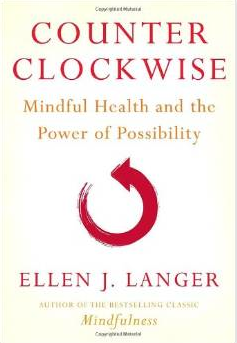
I’m reading a great book, Ellen Langer’s Counter Clockwise: Mindful Health and the Power of Possibility. It’s about being more mindful in everything we do and how that breaks through many of our assumptions and beliefs and can help us maintain and attain greater health, and happiness.
It’s about thinking about our health, and aging, differently, turning our own stereotypes on their head, and taking back much of our power.
It’s about how language either empowers or disempowers us, and sets us down a path of expectation, and how we then tend to create what we expect.
For instance when you go to get a “second opinion” don’t those two words already make you feel it can’t be quite as credible as the first doctor’s diagnosis? After all now you’re going for “second” and it’s only an “opinion.”
Langer, a social psychologist and teacher, has written a book, this is actually her fourth on mindfulness but first on health, that is philosophical in part, and practical throughout. It is based on many of her studies and those conducted with her students. One classic study Langer conducted had senior citizens, some of whom were in nursing type facilities spend a week living as though it was 1959 again, wearing the type of clothes they wore then, doing things like carrying their own suitcases, which they hadn’t done in years, bringing photos of who they were then and “acting as if” they were their younger version, again. A week later, most were actually livelier, stronger and healthier, they expressed more vitality and took more interest in life than they had in years.
Langer pokes through our routine thinking as in where did these thoughts come from? Do they make sense? And she beseeches us to be mindful, to notice new things. And she reminds us that our routine thinking may indeed be deteriorating our health rather than vitalizing it.
For instance she proposes that maybe older people are thought to have poor memories not because they lose their faculty to remember but because they’re not much interested in what’s going on in a world geared for younger people. So they don’t pay attention. What looks like memory loss may be a case of older people never having listened to something to begin with because it doesn’t interest them.
Or maybe older people seem weaker because we’ve been socialized to see them that way, and they’ve been socialized to expect they will become that way. Maybe 80 year olds have trouble getting out of a car not because they’re feeble. Maybe cars just aren’t built for 80 year old bodies.
Langer and her students’ experiments will offer you lots to reconsider that may change how you think which may impact your health more positively.
Counter clockwise tests many of our assumptions about healthfulness and reading it would be a very healthy choice.
Writing for the Huffington Post
I’ve never written about what it’s like to write for the Huffington Post, until now. Here’s the story. Actually, it was a fun question to ponder, and you’ll find out more about me than just that single bit of info.
Amy Tenderich, blogger of the terrifically newsy DiabetesMine.com, posed the question when she asked me to guest post on her blog for today.
Amy does us all a service posting almost daily about the ongoing news in diabetes. If you haven’t taken a look, roam around the site once you’ve finished my guest post.
If you want to be happy…
I found this passage that I wrote down months ago on a slip of paper while finally clearing the clutter near my computer. Doesn’t matter, though, because it’s timeless.
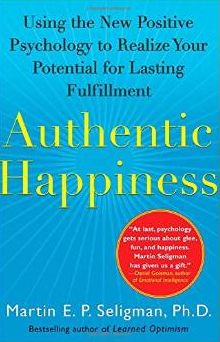
This is from Martin Seligman’s book, Authentic Happiness.
“If you want to be happy
for an hour, take a nap
for a day, go fishing
for a month, get married
for a year, get an inheritance
for a lifetime, help someone”
What more is there to say?
Food Is Medicine appears on HuffPost
I posted another version of my beef with food – that food is medicine – on The Huffington Post.
It appears as a lead story today.
A loyal fan already wrote me,
“What an inspiring article to read first thing in the morning – thank you for your latest Huffington Post piece on healthy eating.
Great tips in there – and makes me glad I have a fridge full of fresh produce waiting for me at home for tonight’s episode of Top Chef (a weakness of mine).”
It also occurs to me maybe I should let you know one of my little secrets for health.
I not only have a medicine cabinet in my bathroom, but I also have one in my kitchen.
It doesn’t have a mirror on it, although to be frank that would be a great incentive to eat healthy, wouldn’t it?. But it does have these big shiny silvery doors.
I’m sure having a medicine cabinet in my kitchen is not particular to New York City. You probably have one too.
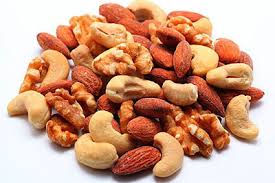
And just to show you I’m a woman of my word that food is medicine, I’ve put up a picture of what you’ll find in my kitchen medicine cabinet most days.
Come to think of it there’s probably more medicine in my kitchen medicine cabinet than in my bathroom medicine cabinet.
I like to think that’s a good thing.
Food is medicine
For the last several months I’ve really shifted my view about food. I see it as medicine. Not that I don’t enjoy it, but I see what I eat as either making me more healthy, or less. I see what I eat as being almost as important to my health as my insulin.
Now that doesn’t mean I have a perfect diet. But it does mean I’m more motivated to eat foods that are nourishing me — infusing me with healthy anti-oxidants and strengthening my overall body and fitness, rather than degrading it, or setting me up for the side effects of unhealthy eating – heart disease, overweight, guilt and personal frustration with myself.
So I wanted to share this great article from Men’s Health magazine giving their take on the 40 Best Age-Erasing Superfoods.
My healthy eating, and by this I mean smaller portions and eating mostly vegetables, fruit, beans and lean protein, automatically maintains my weight. I’m trimmer these last several years than I’ve ever been, and without trying. Healthy eating also gives my psyche a reason to feel pretty good about myself every day instead of guilty and frustrated. But you got that already, didn’t you?
And so you know I’m not just blowing smoke, it’s reflected in the blood tests I get twice yearly: A1C 5.7%, LDL (lousy) cholesterol 108, some would say a little high, yes, it’s in the family, but my HDL (good) cholesterol is an astronomical 107, triglycerides 50 mg/dl, blood pressure 90/60 and a heart Al Pacino would say is “Strong like bull.”
If you’re curious what I typically eat here’s my day food-wise:
Breakfast – a bowl of steel cut oats, I cook, to which I add: flax seeds, sunflower seeds and fruit, and then top with a spoonful of non-fat Greek yogurt, non-fat cottage cheese, and a spoonful or peanut or almond butter. I can’t tell you how much I like this – it’s creamy, crunchy, sweet and delicious. I could eat it for every meal. Maybe having a breakfast I love and knowing I get to eat it every morning, helps me stick to my healthy eating throughout the day; I know a reward is coming tomorrow morning.
Lunch – usually left over veggies from last night’s dinner, or a spinach salad, with some feta cheese or a slice of turkey and some beans. I may add avocado or cooked squash depending upon what’s in the house. If I eat lunch out it’s usually a spinach feta omelette with one slice of whole grain toast. No butter. Olive oil, herbs and mustard are my main taste-boosters. Butter, mayonnaise, bottled salad dressing and such I don’t use anymore.
Dinner – usually fish or chicken grilled, broiled or sauteed with a mix of veggies and beans. Snacks are usually nuts, particularly walnuts (yes, they have fat, healthy fat which you need, just don’t eat too many), veggies, less sugary fruits like berries, melon, peaches and after dinner usually some dark chocolate.
Now you’re thinking I must be a monk, or a martyr, keeping to such an austere meal plan. I know you think that, people have said it to me. But neither is true. It’s just that over the years, particularly after reading Bernstein’s book, Diabetes Solution, I’ve rid most of the refined carbs from my diet knowing how much they made my blood sugar swing from high to low; it was awful. Now I have tons more control. And feel better. And, to be honest, while rapid-acting insulin and pumps give us more spontaneity, routine as in eating similarly day to day, makes my blood sugar more predictable.
I’ve also lost my taste for most sweet and fatty foods. It happens when you begin to eat “real food” again. I’m a big fan of Michael Pollans, Food Rules. I follow his mantra: Eat food, mostly plants, not too much.
That said, I’m not a vegetarian and I’m not a zealot. Fried calamari, the occasional slice of cheese or flourless chocolate cake, crusty bread and olive oil, anything friends make for dinner and eating everything in my house – everything – those occasional nights when the world tips out of balance also co-exist with my healthy eating. Oh, yes, so does wine with dinner. Another reward. Thank goodness years ago some French marketing guy said it was healthy.
So, check out this list of 40 Superfoods and try to put more of them in your diet. And, if you’ve tried to eat healthy before only to have given up, perhaps this is the day it will take. Here are a few tips that may help:
1. Decide why being healthy is important to you – only to you – and keep that front and center
2. Fill your house with healthy foods and throw out the junk. If when you’re hungry you can reach for a carrot instead of pretzels, you will.
3. The day you fall off the wagon, is only a day. Start new the next day. What you do in a week counts more than what you do in a day.
4. Your history doesn’t have to be your future. Ever.
5. Honor yourself enough to make healthy eating important, and your mission.
6. Know that in a few weeks, your tastebuds will change. You will lose your taste for synthetic food, sweets, salt and grease.
7. Talk yourself through a weak moment. Tell yourself if you’re dying for that piece of cake at 10 PM, you can wait till morning.
8. Nothing’s off limits. If you need it, eat a little of it. Parcel it out onto a plate, don’t stand over it in the kitchen. You won’t stop.
9. Go slow or cold turkey. Whatever works for you.
10. Remember, you can do it – millions do. It may take time, but depending upon what you do now, next year you’ll either be exactly where you are now, less healthy or healthier.
“T” is for thank you Dex4
Every summer in Orlando, Florida, Children With Diabetes, an online community for families with diabetes, runs an amazing conference for families called “Friends for Life.” It’s just winding up today.
Children with diabetes come and play and make new friends (for life). Parents attend lectures to learn more about: managing diabetes, helping their children manage their diabetes, managing the emotions of having a child with diabetes and to bond with other families. There’s also access to a mini-vacation with Minnie and Mickie over at Disneyworld.
Every year since 2007 I’ve attended at least one diabetes conference. Friends for Life was the first diabetes conference I ever attended. It felt instinctive–at 54 I still was, and always will be, a child with diabetes.
Since 2007, I have wanted to make my book, “The ABC’s Of Loving Yourself With Diabetes” available to families at Friends for Life. This year,Dex4 (manufacturer of glucose products) gave me the opportunity to donate 150 books and distribute them in their welcome gift bags that they handed out to new families attending the conference.
I sincerely thank Dex4. I also hope as families leave the conference this year, buoyed with new learning, memories and friendships, that when they need a booster shot of strength again, they’ll dip into my book and find their way there. When you live with diabetes from a place of courage, confidence, forgiveness, patience, joy and pride, as my book guides you to, this ride utterly changes for the better.
Dex4 is working, through both education and products, to help one always be prepared to correct a low blood sugar. I work with Dex4 upon occasion as a patient-expert advisor.