Special dLife webinar to get the action steps in my book

 Screen Shot 2015-02-06 at 3.49.29 PM


Last year I wrote, Diabetes Do’s & How-To’s, to give you very specific action-steps to live your healthiest life with diabetes. The book covers Food, Fitness, Medicine and Attitude. And, has 19 gorgeous cartoons by illustrator Haidee Merritt who’s lived with diabetes since she was two!

Now I’m giving a special webinar with dLife so you can have several important steps to “health-up” regarding what you eat, weight control, checking blood sugar and staying emotionally strong to manage your diabetes day to day.

Tune in next Monday, August 18th, at noon for the webinar. You’ll get great tips, your questions answered and a special one-time discount on the book.

It’ll be a great learning experience and I promise to make it fun. To register for this free event, just go to: https://attendee.gotowebinar.com/register/5200175787112752130

See you there and invite your friends and loved ones!


Serving is our path to wholeness

Remen-lt

I‘ve posted here before about holistic Dr. Rachel Naomi Remen. Herself a patient with Crohn’s disease since the age of 15, most of her work in medicine has been with patients at their ends of their lives with cancer. 

She has created a program, called Commonweal, for cancer patients to gather and experience healing, if not a cure. She has created The Healer’s Art, a curriculum for doctors to gather and heal from their work: not being allowed to grieve for their patients, medicine’s emphasis on science and dismissal of spirit and mystery, and from the medical system itself that stresses being an expert over being a person. It is taught in many medical schools now.

She has written books telling the stories of life, of healing, of what’s important that she learned as a very young child from her Rabbi grandfather and as a doctor tending to her dying patients. 

This passage I just read this morning from her book, My Grandfather’s Blessings and it seems particularly fitting this weekend over the Easter and Passover holiday:

“Serving anything worthwhile is a commitment to a direction over time and may require us to relinquish many moment-to-moment attachments, to let go of pride, approval, recognition, or even success. This is true whether we be parents, researchers, educators, artists, or heads of state. Serving life may require a faithfulness to purpose that lasts over a lifetime. It is less a work of the ego than a choice of the soul.”

I know so many people through this work who serve and I believe it is our path to wholeness. 

I try, as a practice, to be kind, to be conscious and to leave people feeling a little better than before I wandered into their space. But it’s a practice and I need to be reminded to be conscious on a regular basis.

Bringing new ideas to a unique diabetes clinic in Bangalore, India

DSC01162

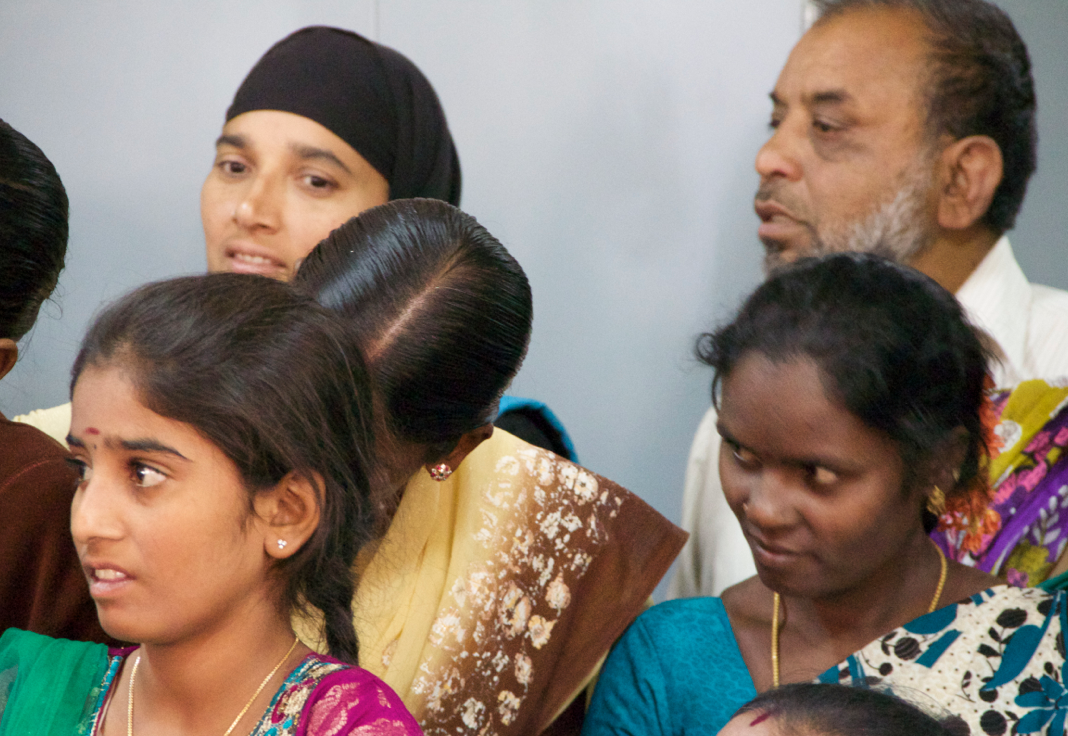
This is my report from three weeks in Bangalore, India, working with a clinic that serves the poor with diabetes. Almost 30% of India’s population are illiterate and live in rural areas. India has the second largest population growth of diabetes.

I realize I’ve never been to the third world before. Jakarta, Taipei, Bangkok, Gualin, these places, or at least where I was in these places, was second world. But here in Bangalore I have entered the third-world worm-hole and I am overwhelmed.

DSC01131

I arrived a week ago. It wasn’t at the invitation of Erin Little, an amazing 27 year old American woman who’s single-handedly, with the help of one of India’s most renown diabetolgist’s,. Dr. S. Srikanta, developing and executing a leadership program for community village health workers here. No, when I heard about this from Erin, I invited myself.

So here we are. We being my incredible husband and me. Here in an airbnb Homestay for which I’ve just bought my first-ever pair of flip-flops; the shower floor is so sqishy I can’t bear standing on it without shoes. I’m afraid to touch the walls because they’re grimy with decades of caked grease and dirt. The single blanket has burnholes, the linens are stained even after they’ve been washed, we take a pill with each meal to try and avoid getting ill, boil the water to brush our teeth and wash the dishes and I’d say I have a good case of the heebie-jeebies.

Most of the furniture is broken. The lighting is single sockets most of which are without bulbs. The wall décor consists of wires hanging out of holes. No closet door hangs properly or closes, and you don’t want to open the kitchen drawers. My husband and I did not come sponsored, we did not stay in a 5 star hotel; we lived like the local population. We wanted to contribute and make life better for people with diabetes, and yes, it is third world. I know there are worse apartments, but as uncomfortable as I am inside, I am more so outside.  

The advantage of our residence is we are only a seven minute walk to the diabetes clinic where Erin is living and Dr. Srikanta works from sun up to midnight taking care of Bangalore’s poor and wealthy, many of whom have diabetes.

traffic

Bangalore traffic is murderous. Motorbikes, rickshaws, taxis and private cars all following their own personal driving handbooks. We are on an amusement park ride every time we get in a tiny open rickshaw. I feel for the seat belt continuously, which doesn’t exist, as drivers and pedestrians expertly, yet heart-stoppingly, come within, literally, an inch of each other, every few feet.

Yet the seven minute walk to the Jnana Sanjeevini Medical Center is strewn from start to finish with garbage. There are small fires along the walk acting as garbage disposal. Yesterday two ravenous crows were tearing apart a rat. The dogs are thin and haunted. The air is filled with dirt.

By time we arrive at the clinic I have breathed only garbage, so much of it, it feels like I am chewing dirt. All these signs are how I know now I have never been in the third world before. I also know somehow there is also a fourth world where this would be heaven.
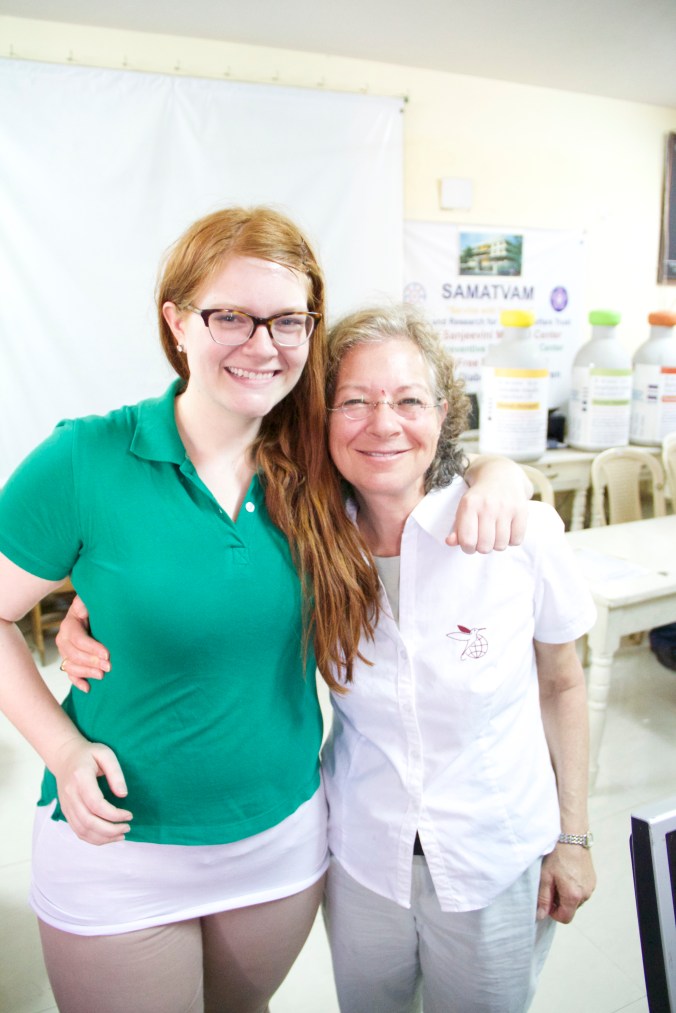
 IMG_5648

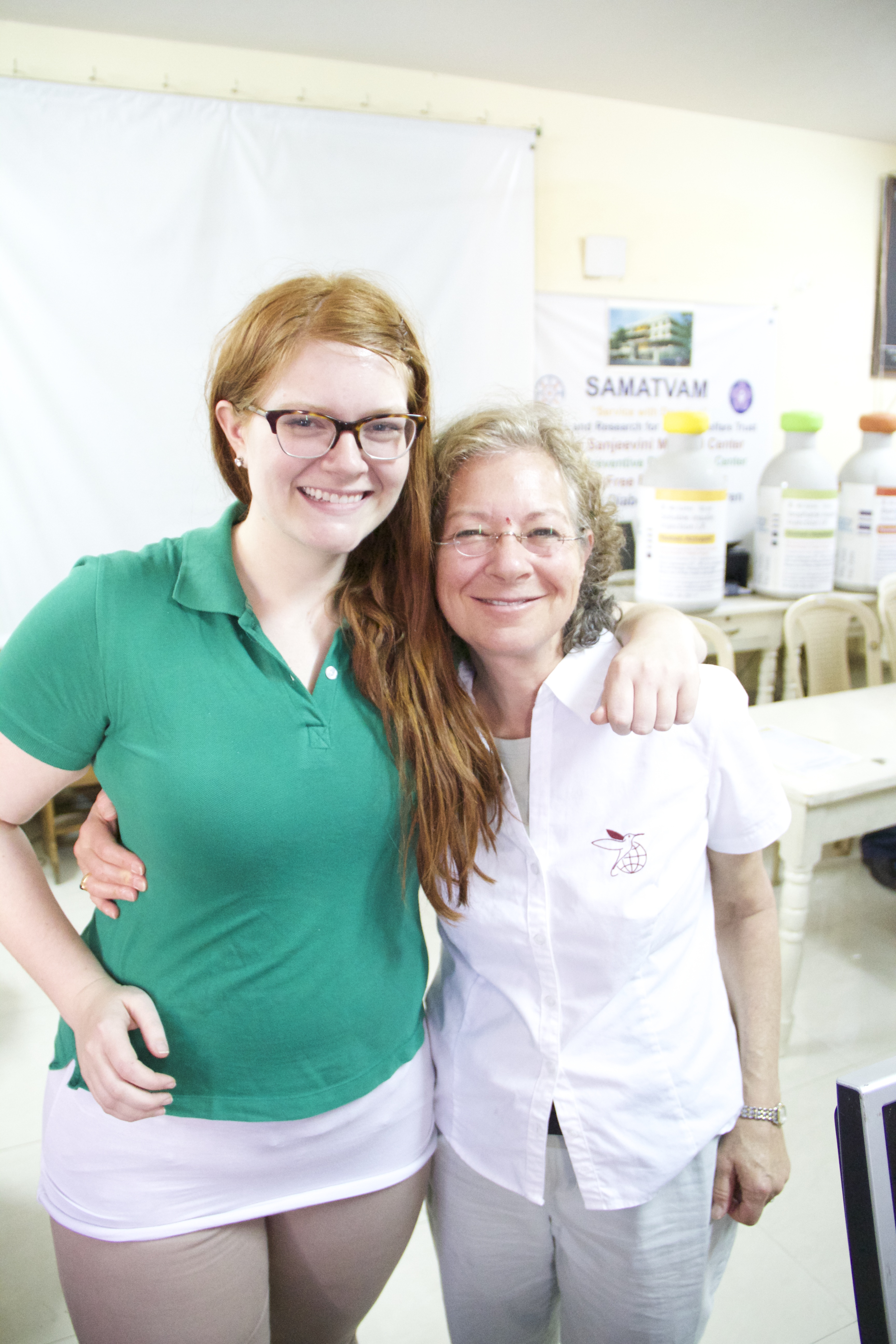
The clinic is an oasis here. That’s me above with Erin. It is open to everyone and it is served by a committed, well-trained, passionate group of doctors, educators and administrators. The clinic was also closed for two years when Dr. Srikanta would not pay extortion money. Retalience was bombing part of the front of the clinic. We are reminded of this each time we step over the rubble in front and are greeted with smiles and “good mornings.”

Once inside the clinic, I am distracted from the poverty outside and reminded why I am here. The dedicated staff, including volunteers, work tirelessly. Everyone wants to give, to help, to improve the lives of their patients, neighbors and extended tribe. Some staff members below as I show them my Dexcom CGM.

Screen Shot 2015-02-06 at 4.51.11 PM

They want to learn from me – what I teach in America about managing diabetes, how to inspire behavior change, creating a new space for patients to move into where, while not “cured,” healing is possible. And, how I live as a successful patient – how and what I eat, how I manage my blood sugar, how I’ve had type 1 diabetes for 42 years, am “sixty years young” as they say here and have no major complications. Of course I joke with my husband by time we leave I will look sixty. My hair feels like straw from the water; I fear my face will be marked by every bit of garbage burning in the air.

I spent the Sunday after I arrived here giving a workshop for the children who come to the clinic with type 1 diabetes, and their parents. Some come from two hours away, on several buses. They come the first Sunday of every month. 

Needless to say, having a girl from Brooklyn standing in front of them was not an everyday occurrence. I know I gave them a sense of hope seeing one can live well with type 1 diabetes. I gave them a sense of pride as I taught them the raised finger salute I learned from Jason Baker of Marjorie’s Fund, that one can have type 1 and be proud. 

Although, sadly, I have since learned with only access to older insulins and one test strip a day from the clinic, some will not live to be eighteen. To be sure they gave me more than I could give them; a reason to keep doing the work I do.

Screen Shot 2015-02-06 at 4.52.26 PM

I came both to teach and to learn and I am learning more than I could have imagined. Daily my husband and I go to the clinic and sit in on patient consultations. I have been invited to share my observations of how they are doing and what can be improved. It is an exchange of learning on both sides.

One afternoon we accompanied Erin and several staff members from the clinic to a village two hours drive away. Erin’s mission and work, through her non-profit organization Sucre Blue, is to train local village women in rural India to survey their village people’s health and then have a mobile team of doctors and educators come provide medicine, care and counseling. 

Screen Shot 2015-02-06 at 4.53.56 PM

Waiting on an outside floor of dried cow manure, I watched as villagers arrived from across the road to have their fingers pricked for the first time in their lives for a blood sugar reading, had their blood pressure taken, stood on a scale to record their weight and were then given instructions from the doctor along with any necessary medications. 

I watched all this, as I lifted my Dexcom CGM discretely from my pocket to see where my blood sugar was in that moment. It was other-worldly. But it is programs like this that can potentially change history, and more importantly, provide futures.

Here, in this place where many are poor, have difficulty affording vegetables, eat a traditional high carbohydrate diet, do not have a concept for self-management, where women put themselves last, there is so much work to be done. This is when you know the difference between first and third-world.

While Erin, who has been in India for several years, is dedicatedly, back-breakingly picking up stones to clear paths to better health, I came to offer ideas about working with patients so that they flourish, change behavior and create healthier lives. Remarkably, my ideas, new and alien here, have also been seen to have stone-moving power, and have been received with open arms and enthusiasm by Dr. Srikanta and his staff.

In fact, toward the end of our stay, Dr. Srikanta felt what I offered had the means to provide a true tipping point for enabling and inspiring patients. He proposed that we do a six-month patient study. The doctors and educators would employ my flourishing methods and tools that I have shared with them to help a control group of patients flourish. Another group would be treated as usual. Within a day the staff decided not to go ahead with the study. They felt it was unethical not to share these tools with all patients. That is what they plan to now do and see if the positive results they have achieved from their practice with these tools continues. 

During my time here I have given six mini workshops and lectures – about leadership both in how to work with patients and inspiring patients to be leaders in managing their own diabetes. I have spoken to the children and their parents, to the doctors and educators at the clinic and to doctors completing a certificate program on diabetes to expand their knowledge. I have been accorded the respect of a wise elder.

Yet it is a long road before them to travel. Here in Southern India I have found food to be a constant challenge to manage my own diabetes. The diet is largely vegetarian consisting of enormous amount of carbohydrate: rice, dal, lentils, nan, roti, pakora, lentil pancakes, peas, and curries swimming in oil. I must also admit my surprise my first day at the clinic when served coffee and masala tea both heavily sugared.

I immediately asked if they could make it for me sugar-free. “Sugar-free?” they asked uncertainly. “Yes, please, I have diabetes.” And I smiled. And that is how it has been coming for me. The patients and staff continued to be served sugar-rich coffee and tea as it is traditionally taken.

Tradition runs much of India. Tradition keeps the diet from changing. Pressing the point about lowering carbohydrates for better blood sugar control, I was told, “The Gods would be angry if we don’t eat these traditional foods.” 

Also poverty makes vegetables hard to buy and prepare for a family. 70% of the population lives in rural areas and are illiterate, and a culture of others taking care of you makes the concept of self-managing diabetes unrecognizable.

Can you talk about flourishing with diabetes in a third world world? I don’t know. Yet even here in a culture up against so many obstacles for diabetes health, an educator bounded up to me the day after I gave out an exercise for the medical staff to do with their patients, all smiles. She had done it and seen the smile on her own patient’s face as she had him discover his strengths.

So it seems even here you can use the principles of “flourishing” to create better outcomes. That medical professionals can create greater rapport, help patients focus on what they’re willing and able to do, help them see their strengths and use them to take a step forward, provide hope, raise happiness and build confidence – all of which motivates more positive action. These principles cross cultures, I think, because they appeal to the most base instincts in all of us.

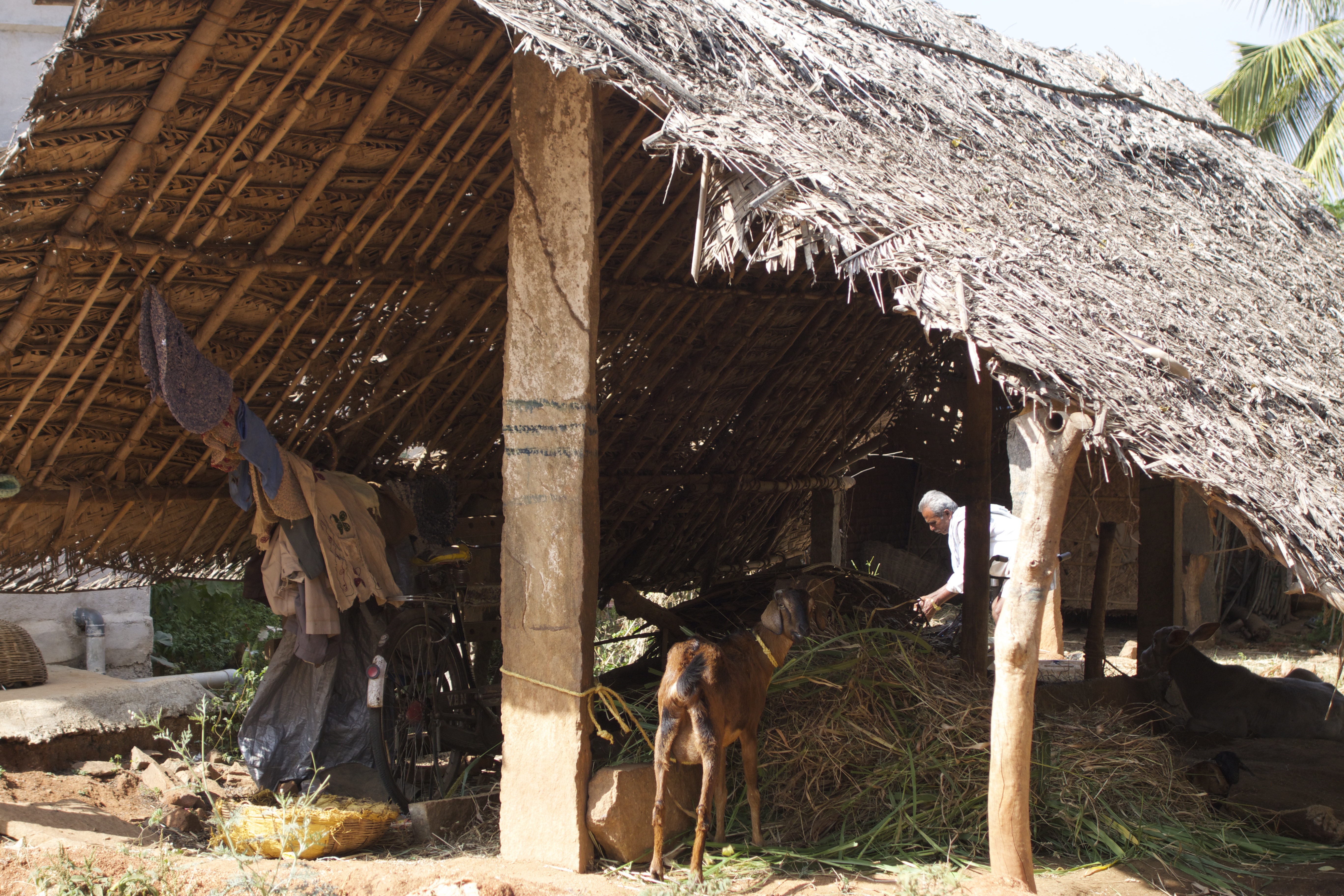
I know, like those at the clinic, I am making a difference. In a place where cows wander the streets, beggars follow and touch you for blocks with their outstretched hands, here among the shantytowns where mud and straw huts have laundry hanging on them, something in one small clinic is changing.

Like the story of the boy on the beach surrounded by starfish that have washed ashore. As he tosses a starfish back into the ocean, a man comes by and asks, “Boy, what are you doing?.” When the boy says, “I am putting the starfish back into the ocean.” The man responds, “Child, there are thousands of starfish here, you cannot possibly make a difference.” Tossing another starfish back into the sea, the boy responds, “I just made a difference to that one.”  

Leaving Bangalore I have felt and seen the difference I have made and Dr. Srikanta has told me he wants to continue to work with me to spread the idea of flourishing with diabetes throughout India. And just perhaps, my greatest legacy is the clinic now only serves sugar-free coffee and tea to everyone.

You can see more photos of this journey on my Facebook page

cowScreen Shot 2015-02-06 at 4.55.35 PM

Happy Holidays from the Blue Mountains of Australia

Flourish

We spent last weekend, and will spend this weekend, in the Blue Mountains of Australia. Two hours from Sydney, it’s a stunningly beautiful area, graced with a huge variety of shades of blue and green trees and other foliage, thus its name. 

Of course we knew our friend’s property had suffered a terrible fire two months ago; the worst fire on the mountain in 50 years. She saw it unexpectedly roll right over her hilltop and then carry its blaze quickly and decisively. She worked all night tip 2 in the morning, with the volunteer fire brigade and neighbors, to save as many trees as possible, and her home. 

The house is untouched. 15 acres of trees are burnt. As we walk the trail behind her house we see many uprooted, hollow. The community of 200 residents on the mountain, who pitched in in every possible way, are closer than ever. And my friend? She mourns the loss of all the work she had invested planting trees and vegetables, creating an amazing flower garden, and now having to start over. Of course there are economic costs as well.

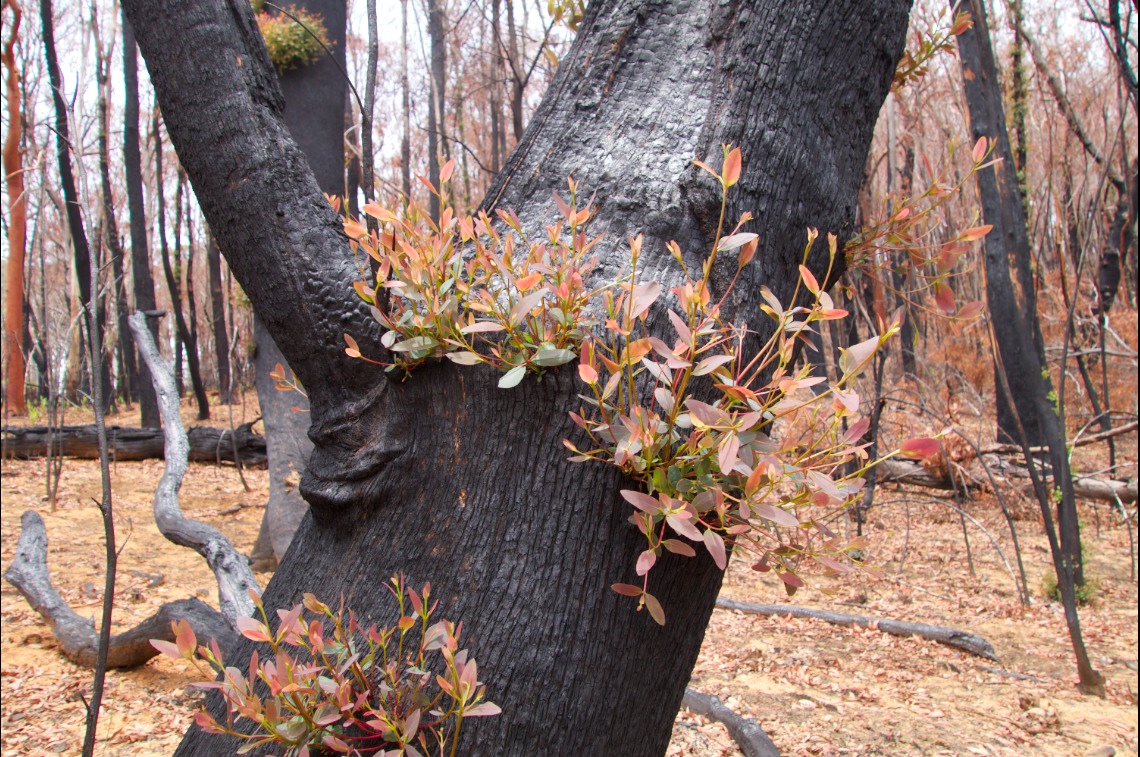
Luckily, being the stalwart individual she is, she is also able to see a certain beauty in what remains. The charred trees are a panorama in black, grey and orange. Their shapes are quite remarkable. And many are going through a process of photosynthesis; green and red leaves (how perfect for Christmas) are sprouting along their trunks. 

Like the trees’ display of resilience, my friend appreciates the view now open of the mountains around her and she is working with renewed vigor and focus to rebuild and reshape.

Of course I would tell you there’s a message here for living with diabetes; to rouse ourselves to see something beneficial from our new state and have a deeper appreciation for all we have and a renewed commitment to rebuild and reshape our lives. Resilience, the power of nature and very human.

Happy Holidays. I hope you enjoy all the gifts all around you, particularly those that come not tied with ribbons, but with open hands and hearts.

Did you know insulin is a biohazard?

Unknown

As we approach the eve of Diabetes Month, November, I think it funny that my recent episode with my insulin pen ended up the way it did. 

Last month I spent ten days in Scandinavia. I packed all my diabetes supplies and I had a few days left on my Lantus Solostar insulin pen and packed a second pen. 

When I went to use my new Solostar pen, the pen jammed: I couldn’t press the plunger and get any insulin out of it. This has never happened to me before. Given this had been my back up pen (well, for the first few days of my trip) I had no back up pen. 

My husband and I went to a local pharmacy in Copenhagen where the pharmacist was very friendly and accommodating and said, even without a prescription she would sell my a new Lantus Solostar pen. The trouble was I couldn’t get one. They come in boxes of five and I would have to purchase five pens for the equivalent of $120.

Well, that was not my idea of salvation, so I decided I would just withdraw the insulin from my pen with a syringe until I got home. And that’s exactly what I did and basically it worked fine. 

The funny thing is when I got home I called the number for the Solostar pen to register an adverse event and I was told I would be sent a replacement pen, thank you very much, and I might need to return the faulty pen so they could see what went wrong. FYI, the rep told me on the phone, chances were the pen needle somehow was blocked, which caused pressure to build up in the pen and didn’t allow the plunger button to work.

Two weeks later a huge box arrives at my door. It contains what you see here. A number of bags marked “biohazard” and a tube. I am to put my Solostar pen in the tube, and then put the tube in the clear bag and then put the clear bag in a paper bag and then put the paper bag in a box. 

I am aware it is law that when someone is dispensing insulin in a hospital they must be accompanied by another someone. Yet, it struck me as funny. We, who live with diabetes and use insulin, do so so casually, we would never think of it as a biohazard. That is not to dismiss insulin’s side effects – possible low blood sugar which can be dangerous. But the every day taking of insulin, is something we do all the time and don’t have to put on a zoot suite to do so. 

It’s just a little strange when the scientists decide insulin cannot be handled in transport other than locking it in three vessels because it is potentially so dangerous. 

Ah, just another example of the disconnect between those in the lab and those of us on the ground.

What’s coming up for Diabetes Month?


Unknown-1

When I read something useful in the diabetes biosphere I want to make it known and accessible to you here. 

Today’s post on DiabetesMine well captures a number of upcoming events for next month, Diabetes Month. 

One event I will single out is the Big Blue TestIf you have diabetes, are mobile, and haven’t participated in the test yet, you owe it to yourself to correct that. 

No, no dates and facts to study. Rather, you will see first-hand how just 14 minutes of an activity of your choice lowers your blood sugar. 

And, as we roll into Diabetes Month, if you missed it, here is my list of greatdiabetes resources. After all, I always tell fellow PWDs, “the more you know the better you do.” 

And, while somehow I mistakenly omitted DiabetesMine.com, a top news- reporting site from my list, I read it almost daily to know what’s going on regards devices, meds, the FDA and all things diabetes. 

An interruption in a blogger’s life


Riva and Douglas

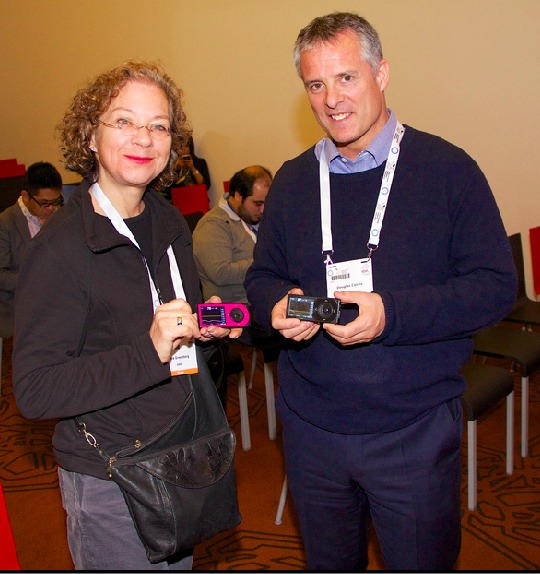
If you’ve been coming here for a while you may have noticed this blog, or maybe more apt this blogger, has suffered a recent bout of ADD – attention deficit disorder. In truth, writing my last book, Diabetes Do’s & How-To’s and blogging over at The Huffington Post, speaking at conferences, attending conferences like above, coaching, and somehow finding more newsletters, requests and information flying into my inbox than I can process, I have been delinquent here. My apologies. 

So this is my suggestion and my promise. Browse thru the Blog archive on this site. I’ve been writing some great posts amid the ordinary, since 2007, and the classics are as fresh, meaningful and insightful as the day I wrote them. I know because I sometimes reread what I’ve written and find new insights when I do. 

My promise is I will begin running excerpts from my book The ABCs Of Loving Yourself With Diabetes because I want you to have the benefit of building your positive tank: if you can’t find the internal strength and stamina to do what you need to do every day to take care of your diabetes, it doesn’t matter a wit how many bells and whistles are on your meter.

So don’t give up on me. I’m still here. And I hope you’ll continue to return to continue to learn and keep me company.

4 Ways To Boost Diabetes Funding and Holiday Cheer


Screen Shot 2015-02-07 at 2.07.02 PM

‘Tis the season to be jolly, and I can’t think of an easier, faster way than by doing something for someone else. As my own financial planner, who’s still dealing with the fall-out from Hurricane Sandy, said to me recently, life’s not about money or possessions, it’s about friends and family and who will take you in when you need it.

So I did a little investigation and saw there are four ways in which you might like to spread some holiday cheer and “take someone in” who has diabetes. These four worthy causes help fund diabetes research, put a smile on a child’s face, let someone know you care about them, and are guaranteed to turn a little glow light on in your heart.

Santa and the Diabetes Research Institute Foundation have joined up. With a $15 donation, Santa will send a personalized letter to your child, niece, nephew, grandchild, or anyone you designate, anywhere in the world — complete with a North Pole stamp! Santa will even congratulate your child for how well they’ve been taking care of their diabetes if you wish. You supply the letter’s details. How can you lose? A child goes to bed happy and we all take a step closer to the cure. Deadline: Dec. 18 at midnight.

A Tribute Through JDRF. It’s a true tribute to recognize someone special by making a gift in their name through JDRF’s “Make a Tribute Donation program. The person whose name you donate in receives a letter that they were honored by you. I know I’d feel rich if someone did that for me. 

American Diabetes Association’s Gift of Hope. Founded in 1971 by parents of children with diabetes, “Gift of Hope” has raised more than $24 million to help find a cure for diabetes. You’ll find an array of beautiful and affordable gifts, from candles, cards and ornaments to jewelry, kitchenware and travel gear — and 100% of the profits go to fund research for the millions of children and adults living with diabetes.

The ABCs Of Loving Yourself With Diabetes. This is my first book, from which each year I donate a portion of the proceeds to organizations making life better for those of us living with diabetes. Its inspiring, positive and educational essays guide you to develop greater self-love, strength, appreciation and emotional resilience, which makes managing diabetes easier. Plus, the fanciful, colorful drawings make it a perfect read for adults and families alike, as you can see above. Donations have been made to the Diabetes Research Institute, JDRF, Diabetes Hands Foundation among others.

So don’t miss the opportunity to give yourself a gift this holiday season. Make a choice above that changes a life. That truly is the greatest gift of all.

Musings about World Diabetes Day


Unknown

I’ve written before, that more than once, my “smart Timesulin cap” has saved me from missing my daily long-acting insulin shot. So the Timesulin folks asked me to be among the people to write a blog post on their blog about World Diabetes Day. 

As I wrote it, I realized I’m not entirely happy we have a World Diabetes Day. If you want to know why, read the post. You might agree with me.

If you want a Timesulin cap for your insulin pen, unfortunately you’ll either have to have someone bring one over for you from Europe, or hope Timesulin gets approval to make them available here in the US next year as they’re hoping.

Happy Holidays