Aimee Mullins and her 12 pairs of legs

Unknown

If you don’t know who Aimee Mullins is, you should. She’s an athlete, fashion model and inspiration on two prosthetic legs that often graces theTED stage.

Born with missing fibula bones, she had both her legs amputated below the knee when she was one year old. 

But Aimee has risen so far above her perceived handicap that she’s redefining how we see disability. 

She talks of the empowerment that can come from a perceived deficit and how we can, if we chose, be the architect of our lives, and identity. How the conversation is shifting from overcoming “deficiencies” and “disabilities” to having them augment us and our potential. And, she redefines “adversity” along the way.

In her quiet, unpretentious way, and with humor, she opens your mind to think differently and see your condition, whatever it be – for most of us it’s diabetes, as a launch pad for doing greater things.

This 10-minute video is, as are all her TED videos, smashing – for the places your mind will go and its visual richness, as she shares her dozen legs. In her tallest pair of legs, Mullins says she stands six feet one inch high. I think she stands far taller no matter which pair she may be wearing.  

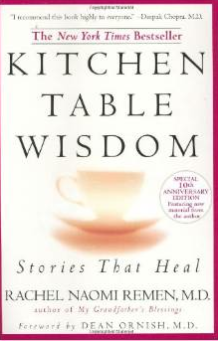
Kitchen Table Wisdom

Screen Shot 2015-02-07 at 9.42.33 PMPhysicians learning to be human

I’ve just finished a book of stories I learned so much from. Particularly how medical training wipes the humanity out of our health care providers. You may not be surprised, except for how strategic and intentional it is.


Kitchen Table Wisdom by Rachel Naomi Remen is full of small stories that include her own experiences as a physician for more than 30 years and observations of fellow physicians, and, as a patient suffering with Crohn’s disease since her teenage years. 


Her stories illustrate how most medical training depletes physicians of their humanity by actually outlawing any show of emotion or authentic aspect of themselves. Physicians are judged weak to by these standards and strong if they share nothing but their medical expertise; no heart, no humanity. Her stories also reflect the courage and grace as patients find their courage to live, and often die, with illness. 


You cannot come away from these stories without having a new understanding of our medical system. And the healing power of being with patients in a sacred space that does not judge, but allows frailties to just be. You will better understand why most doctors treat us like interchangeable parts and how far we have to go till this changes. Especially treating chronic illness.


Today, though, maybe there is a movement afoot. I just read Amy’s post over on DiabetesMine about a new ideal for treating the whole patient with a dedicated team. Perhaps it is happening, somewhere. Perhaps it will happen, someday.


In the meantime, pick up a copy of Kitchen Table Wisdom. Your soul will thank you.

Be your own Valentine. Here’s how.

The best gift is the one you give yourself every day

 Screen Shot 2015-02-08 at 5.46.09 PM

O.K., let’s declare a moratorium on fretting over what your significant other is going to get you for Valentine’s Day. Or whether he or she will, or what it will mean. 

The best Valentine’s Day gift you’re ever going to get is the one only youcan give to yourself. That doesn’t mean you still wouldn’t mind a dozen red roses and chocolate truffles.

But it does mean that it’s time to start keeping different company with actually something, not someone, you hold most dear — your emotions. 

It’s time to cuddle up with more of your inspiring, positive emotions and less with your nagging, negative ones. How? By simply asking yourself a few questions that get you focused on the good news in your life. For instance:

·      What do I appreciate in my life?

·      Who am I grateful for in my life?

·      What did I learn this week from a mistake I made?

·      What do I truly love about myself?

·      What can I do today for someone to make them feel good?

·      What am I most proud of?

Now, isn’t this a Valentine’s Day gift truly worthy of you?

Typically any discussion of emotions around diabetes are always negative ones: Depression, denial, guilt, shame, worry and fear. I’ve watched this conversation lead people straight into their “unhappy place” where they yearn for pity or consolation.

But one Valentine’s Day, standing on the brink of such an event, I conducted an experiment. I was at a monthly diabetes support group meeting (Divabetic). I’d been invited to discuss the power of positive emotions, the basis of my book, The ABCs Of Loving Yourself With Diabetes. That evening, instead of the women there introducing themselves by telling everyone what they were struggling with, I asked them to say one thing they love about themselves and one positive thing diabetes has given them. I since use this in workshops.

Here are some of the answers I got:

“Even though I’ve lost some of my vision from diabetes, I have so much more compassion for other people with a disability.”

“I feel very humble. I know I could have something much worse.”

“I got diabetes at ten and really like how it’s made me strong and responsible”

“I feel really valuable and worthwhile being able to help my family members who have diabetes”

“I eat healthier now and have lost almost fifteen pounds!”

“I love the friends I’ve made in this group.”

Each remark brightened the energy in the room. They laughed and smiled, they reached out hands to each other, not to console but to connect, and to celebrate the good news they heard ‘round the room. Only two of the women had to search for an answer, but even their search was an opening for something positive to fly in that wouldn’t have been there otherwise.

It’s a universal law, we tend to attract what we focus on. Spend more time with your positive emotions like joy, hope, curiosity, passion, kindness, forgiveness and pride, and you will have more of these in your life.

Barbara Fredricksonpositivity expert and author, along with many positive psychologists like Martin Seligman, has conducted research that reveals positive emotions open our hearts and our minds making us more creative, flexible and resilient. They broaden our outlook, helping us to see more options. When engaged in positive emotions, our thoughts and actions surface more spontaneously, and we forgive our mistakes and let things roll off our shoulders more easily. Above all, they make us happier and healthier.

Sounds like an ideal prescription for managing diabetes, and life. Now if only we could get doctors to prescribe it!

That Valentine’s Day, when 27 women and I spent a few moments together loving ourselves (nothing kinky mind you), was one of the best Valentine’s Day gifts I’ve ever given or gotten, and I suspect my Valentinas would say the same.

Today, indulge yourself in a few of your own positive emotions, alongside anything else. Ask yourself one or two questions like: “What am I doing in my life that I like?” and “Who can I thank for what they mean to me?” 

Then every day let this be more of the company you keep.

A new year with resolution, rather than resolutions

 Scan-110929-0002

As this new year begins I have not made any New Year’s resolutions. Actually I never do. Not since turning old enough to realize they’re a cruel joke we play on ourselves. If I don’t keep them I’ll feel like a failure and if there’s something I really want to do, I’ll do it.  


One thing I have been doing these past few weeks, however, is re-reading the slew of posts that I’ve now written here over the last two years. Truth be told, I would barely change a word. What a nice feeling that’s been, and so has re-reading my own lessons been, which, yes, I benefit from as well as anyone. 


Here’s one that struck my fancy again especially because it reminds me to look for the good and believe in myself especially starting a new year. 


Posted November 18, 2008

What if we had to purchase happiness and self esteem the way we purchase most things? Would you value it more? Would you feel it more? Would you recognize it as a tangible commodity you owned? Would our lives be happier, easier, more joyful overall? It’s an interesting notion I think.


Somehow it seems negative emotions:  anger, fear, guilt, worry get more of our attention and feel more at home in our lives than positive emotions like happiness, hope, pride and success. Is it just fear of failure or something else at work? I don’t know, but if you had to pay for simple pleasures –  a sunny day and a clear blue sky, a field of flowers, to have the loved ones in your life that you do, the satisfaction of a job well done, a fun dinner with friends, coming home after an arduous trip, having your kids put an arm around you – would you enjoy these things more? 


I try these days, as too many of my contemporaries are getting ill and passing away, to recognize how fortunate I am and cherish the day and all it brings. 


Time passes much faster than it used to so I’m trying more and more to follow the words of a very wise man, “Be the change you want to see in the world.” These were Ghandi’s words. So, if you want to have love, be love. If you want to enjoy peace, be peace. If you want to find joy, be joy. If you want to see yourself live well with diabetes, live well with diabetes. 


And I think the way to appreciating things more is while not necessarily easy, pretty much as simple as what Christopher Robin said to Pooh: “You must remember this: You’re braver than you believe, and stronger than you seem, and smarter than you think.” Hmmm…that’s a lot to take in, and yet, some pretty good stuff to live by.


So as I start this new year and it stretches in front of me now pretty much a blank canvas, I’m going to try and remember my own words and those of Christopher Robin. After all, one of my true blessings is the company I keep – around the corner, virtually and in storybook form.

The day of thanks

Screen Shot 2015-02-08 at 5.29.07 PM

We’ve tried it once, I think, instigated by my sister-in-law’s sister a few years back when she was pregnant with her first child at 40. We went around the table of 12 each saying what we’re thankful for. We got through about three and a half people before it all caved in and other conversations looped us elsewhere so that we never returned to the affair. 

So, in this space, I will say what I’m thankful for before anyone has a chance to divert me: 

The fact that each day I wake up to another day

My beloved husband, who has to remind me that rather than take a picture of something on a piece of paper and then drop it digitally onto my computer, that I can just scan it

My immediate family who still allow me to feel protected in the world

My dear friends who send me those annoying, trite emails because they care

My work which leaves me to never question what to do with my life – the single question that haunted me for years and years

My little home, that while I bemoan its size, I have one – and I love the leafy neighborhood it occupies

Seeing the world from Cleveland to Copenhagen, meeting new people who feel like old friends, and escaping New York City and coming home again

Great nights out discussing the world over good food and great wine

Books that take me away and films that bring me home, and vice versa

Adventures and surprises that show up now on a regular basis since I’m never quite sure where this life is taking me

That I still look relatively OK at 56 due to moderate living and my parents’ gene pool

My health, which outside of a few nicks and dents is pretty good

My ability to stay positive in a negative world

That I could come up with another bunch of stuff if I spent more time thinking about it…

and all of you who make what I do possible.

Diabetes heroes

Tom FinecoOn a roll with diabetes

This month Diabetes Healthmagazine was about diabetes heroes. I think there are more diabetes heroes around than we could ever write about and we generally tend to only hear about celebrities or someone who’s done something extraordinary. 

But after interviewing more than 125 people with diabetes, we simple folk who live every day with this condition, are in my mind pretty darn heroic for all we do and still get up each morning to do it all again.

Here’s one such story of a simple heroThomas Fineco: A man who decided after his diagnosis to take life by the seat of his pants and get in shape. 

You could consider what he’s done extraordinary or merely a guy who determined to get the most out of life. The same opportunity lies before all of us, whether you put legs (or a bicycle seat) under your dream. 


Life is diabetes and diabetes is life

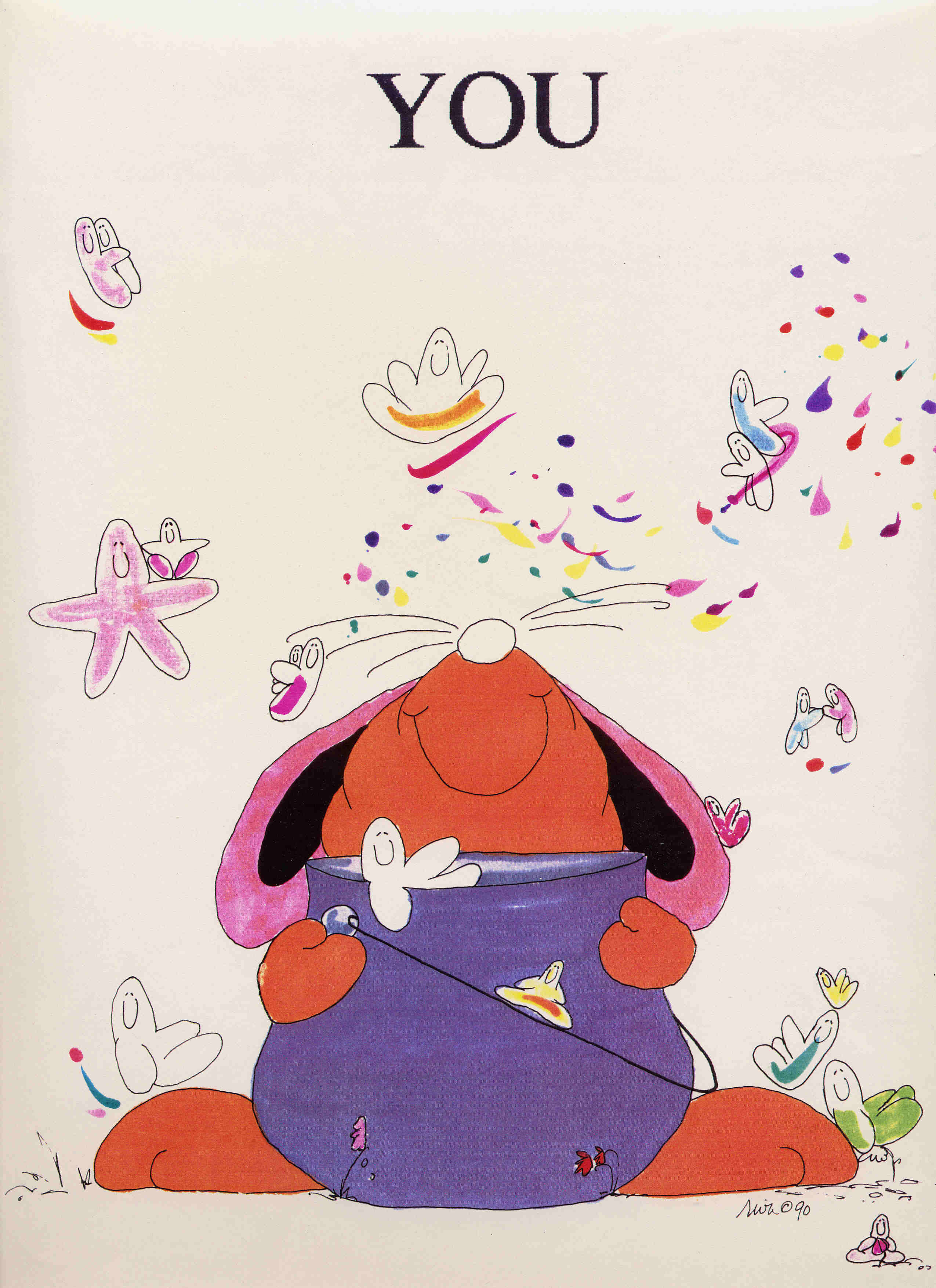
P-U Bring the Stars Out to PlayThe answers are inside you

A lifetime ago, well literally half my life ago when I was in my twenties, I quit my advertising copywriting job to design and write inspirational greeting cards. I was taking some personal growth trainings at the time and wanted to share my newfound key insights with the world. I actually did create the cards, get them printed, get them sold and four years later, still a starving artist, get a “real” job. 

But what I wanted to teach others has never gone away. What I learned during that time of training and years of reading are life principles that affect the quality of our lives, and as Oprah says, “When we know better we do better.” So, here is what I know for sure:

1. There’s a pay-off to everything we do. You may not think so when you’re miserable but whatever you’re doing, crying in your beer, moaning on someone’s shoulder, letting guilt fill your day, playing the victim with diabetes, it’s comforting to you in some way. 

2. You will tend to get what you expect. If you want more, raise your expectations. If fear of failure is paralyzing you, lower your expectations.

3. “Act as if.” When you don’t feel it, act as if you do: happy, confident, strong, whatever. Who’s to know that’s not really you? Certainly you’ve been these things at various times before. By pretending you feel a certain way, you will begin to. The world then responds to you in kind, as it does all the time, actually.

4. What is, is. You may not like what is, but it’s what you’ve got in your deck to play with. All you can control is how you play your cards. You can always add to your deck of course.

I am coaching a young woman in her early twenties who has type 1 diabetes. She has had diabetes for about 10 years and is going through an emotional storm:  a bad break up with her boyfriend, a death in the family, financial strife and more. The immediate ramifications for her have been a loss of interest in her studies and future, which she was so enthusiastic about previously and out of control blood sugars. Due to months of stress her blood sugars have been consistently high causing her to lose 20 pounds with no effort – her body is not absorbing the calories she eats. Her emotional storm has unmoored her from her good diabetes habits – she is eating erratically, missing meals and not covering her snacks or correcting her high blood sugars, all of which she used to do.

During our coaching session my job is to ask her questions to spark her thinking in a way other than she has been thinking. When we are stuck in a problem it’s very hard to think outside our usual box. And, as much as I want to give her the answers I think I see for her, they are not her answers. She needs to delve down and come up with what will work for her. Trust me, this is hard work. Both for her and for me. Real thinking takes time and effort. Much of her thinking will actually happen after she leaves me because I have stimulated it and it will continue. Holding my tongue while she searches for her own answers is hard work for me. But I know that she must remember what she already knows, reflect back on what she’s done in the past that’s worked and determine what she truly believes she’s capable of doing and willing to do. In short, only she knows what will work for her in her life. In this scenario she is the expert, I am only a tool.  

At the end of our time, however, I do, with her permission, share a few of my own thoughts and suggestions. And as I look back now on what I told her, I see it is very much based on the four principles above. 

I pointed out to her that while it’s hard to see it, there’s a pay-off for this unbearable sadness she is nursing. Maybe it reinforces her sense of herself as not being a very good person and it is always comforting to be right about what we believe. As for expectations, she is already talking about likely failing this semester as she is not paying attention in class. I reminded her that the expectations she plants she will likely create. Alternatively, I suggested she “Act as if” she is fine, her old self, confident, an interested student, for instance, while in class. At least for the periods of time she can sustain it. They will grow longer.   

I suggested she spend up to 30-60 minutes a day obsessing about her worries. And when blue thoughts roll in, in as they will, save them for that period when she will indulge them. Sometimes you just have to cut off non-constructive behavior. The rest of the time I suggested she be as fully present as possible wherever she is and employ the “act as if” principle. Lastly, I reinforced that she move forward with the small steps she identified that she could take to move in the direction of the life she once dreamed of and still wants. Covering her emotional eating with insulin is a step she identified that she can and will take. The results of this will likely be a little better blood sugars, a little less stress, a little more ease and a little light streaming into her world that now looks so dark. Each step we take creates a ripple effect: one positive step puts you in a more positive upward spiral.

It’s not rocket science, but when the world is on tilt it’s hard to see where you stand. I learn a lot when I coach someone. I learn to listen harder and more openly. I learn myself to be more present in the moment and not finish someone else’s sentences, not even in my mind. I learn we each see the world differently, operate in the world differently and prioritize differently. And, her emotional storm has reminded me just how dependent good diabetes care is on how the rest of our life is going. So along with the four principles I’d like to add this one specific to diabetes: Don’t just tend to your diabetes, also tend to your life. And don’t just tend to your life, also tend to your diabetes. They are intertwined. 

El ABC para aprender a quererte teniendo diabetes

Screen Shot 2015-02-08 at 11.48.29 AM

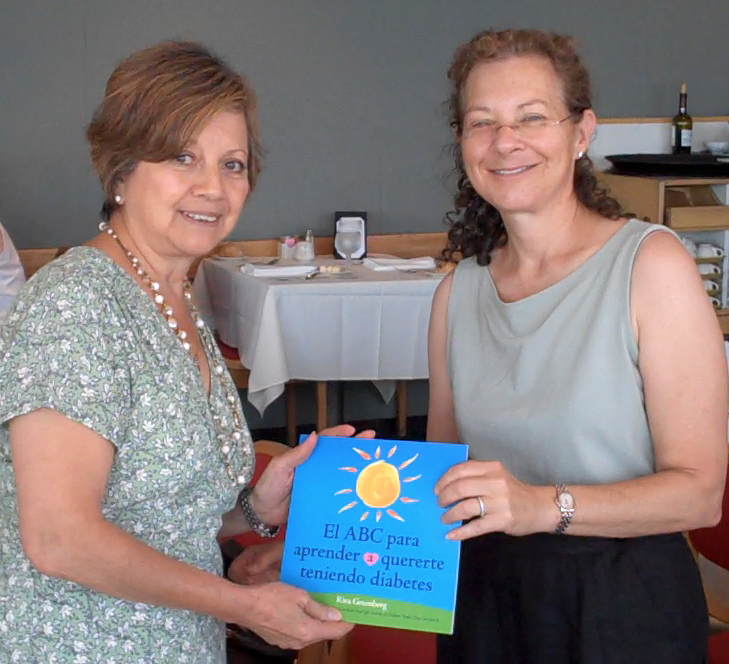
Translation:  “The ABCs of Loving Yourself with Diabetes.” This Spring my ABC book came out in Spanish due to the unprecedented hard work of its two translators: Georgina Baez-Sommer (pictured here) and Amparo Fernandez. How lucky was I to have two translators from the United Nations! In truth, I’m not that special but beside being a dedicated professional, Georgina also happens to be my neighbor’s mother. 

I decided there isn’t enough literature to help Spanish speaking people with diabetes, the Hispanic population being one of the highest risk groups, so voila, a coaching book in Spanish. 

“The ABCs of Loving Yourself with Diabetes” guides readers to use more positive emotions both in life and in living with diabetes, for one enhances the other. For instance, if you appreciate all that you do have in your life – friends, family, work, a hobby you love, you experience life as a happier place. Being happier makes managing diabetes a little easier. If you forgive your mistakes with diabetes and see them as learning opportunities, you build a databank of diabetes knowledge and more resources to do better next time. If you’re struggling with something in your care and can look back to when you’ve managed difficult times before and bring those same qualities and skills to managing your diabetes, you will do better.

Among the emotions you’ll learn to augment are courage, confidence, joy, awe and pride. You deserve to be proud just because living with diabetes is an ongoing job. Pride in a job well done is a powerful source of energy and healing. In truth, all we have power over living with diabetes is how we live with it: graciously, responsibly, lovingly and kindly or angrily, guiltily, sadly, beating ourselves up and everyone around us.

Anyway, just wanted to remind you The ABCs is available in Spanish and share these lovely pictures. Now it’s up to you to do the rest. 


Focus on what you want, not what you don’t want

Unknown

It’s a proven principle, when you focus on what you want there’s a greater  likelihood that it will happen. It’s the same principle as “thoughts held in mind produce their kind” and “like attracts like.” Hold onto something energetically in your mind and your attitude and behaviors will fall in line behind it. Poof! What you will see in your life will follow your thoughts.

Unfortunately, most of us focus on what we don’t want. It’s a sort of safeguard from failing or maybe a holdover from what you were programmed to believe about yourself in childhood. But the principle remains the same, like attracts like. If you focus on what you don’t want (most of us do so unconsciously, yet vigorously), it will tend to show up in your life. Then you say, “See, I never succeed, the deck is stacked against me” Or, “Why bother, I never get what I want.” You reinforce that you were right about your wrongly held intention. 

With diabetes you can either focus on what you don’t want like complications: blindness, kidney disease, heart attack, amputation and a shorter lifespan or you can focus on what you do want: a healthy weight, feeling vigorous, showing up as the healthiest person in your doctor’s office; your actions in both cases will be in alignment with what you focus on. 

So this morning I heard in a segment of Good Morning America with Dr. Oz, noted heart surgeon and health guru, on Keys to Long Life a new study came out that shows these keys can reduce chronic illness by 80%, add seven years of life and cut our health care costs in half. 

But what intrigued me was what Diane Sawyer quoted as the new mantra, “Eat what you need to eat first instead of worrying about what you don’t eat. Hmmm…focus on what you want not what you don’t want. So shop, cook and savor the flavor of the recommended daily 7 servings of whole grains, 4 servings of fruit, 5 servings of veggies, 2 servings of lean meat and a handful of nuts and let go of the worrisome thoughts around what you’re trying to avoid. Every time you go there you take a step off the road to what you want.  

To the garden state and back

One of the most surprising elements in the book, “How Doctors Think” by Jerome Groopman, M.D. is right at the start when Groopman says most doctors interrupt their patients within the first 18 seconds. 


A few days ago I went to New Jersey to present diabetes materials at a minor league baseball stadium that was also featuring a small health fair. Funny to see our little table against a backdrop of every unhealthy fast food available, but let’s not go there.


While I talked with a number of people I remember one particular woman who stopped by the table. She was hesitant at first, tentatively looking over what was on the table. Her hesitation and Pacific Islander look immediately made me think she probably wasn’t that educated about diabetes. Yet when I began to ask her about her blood sugar and A1c, wow, she knew her stuff. She told me about her 6.4% A1c and how she want’s to get it a little lower, she told me what she eats and where she can do better and she told me about her last conversation with her doctor, turning her shy smile downward. Hearing her A1c, without thinking I stuck out my arm and shook her hand saying, “Congratulations! You’re doing a wonderful job!” She grinned, she glowed, her smile lifted and spread from ear to ear going right up into her eyes. “Keep up the good work!” I said as she walked away waving and smiling, smiling and waving and thanking me. 


Right before my eyes I saw the affect of congratulating a patient on her hard work. Something I fear not nearly enough doctors do. And I know damn well she’s going to work even harder to get that A1c where she wants it because someone acknowledged her and her efforts. More and more I am convinced patients will do better if we acknowledge and praise, congratulate, encourage and inspire them.


In a Wall Street Journal article, “The Importance of Trying to Be a Good Patient” by Laura Landro, Landro cites medical educator and physician groups that are training doctors to conduct more sensitive interviews, recommending doctors find ways to praise patients for their competencies and express sympathy with how frustrated patients may feel. John Prescott, chief academic officer at the Association of American Medical Colleges, reports more and more communication training programs are trying to get doctors to step back and say, “What’s going wrong with this discussion and how can I change that?” And, the authors of “Breaking the Cycle”recommend doctors let patients speak uninterrupted for three minutes and ask open-ended questions. We hark back to where I began.


As my sojourn out to New Jersey came to an end, the driver of my ride turned to me as we approached my neighborhood saying, “I heard you talking about diabetes…” (I had been on the phone in the car). I explained to him what I do and he began to tell me about his father who died of diabetes and his brother who is having a terrible time with it. And how he and his wife are concerned because they’re both overweight. 


I listened, answered his questions, encouraged him and spent an extra five minutes in the car in front of my building to give him information and a soft place to speak. When I reached for the car door handle to let myself out he reached for my hand, shook it and thanked me, wishing me the best day anyone ever has. I feel now as though it was kismet that I met the two people whom I know I impacted. I imagine they feel the same about meeting me.