“My Sweet Life” shares women’s success stories living with diabetes

Screen Shot 2015-02-07 at 3.38.54 PMAvailable now for pre-order

Calling all patients – whether you’re newly diagnosed or have been living with diabetes for decades – and health care providers. 


There’s a new book hot off the presses, “My Sweet Life: Successful Women with Diabetes.” Published by PESI HealthCare, “My Sweet Life” is available for pre-order now and will be widely available next month, diabetes month.


“My Sweet Life” brings together twenty plus stories from successful women who have found a balance in their personal, professional and diabetes-management lives. One of the themes in the book is how diabetes can be viewed as a blessing in disguise. 


Clinical psychologist and CDE, Beverly Adler, gave birth to the book. I happen to know because only two months ago I was writing my story to be included in this compilation. While there seem to be a number of books that feature inspiring stories of living with diabetes this one is strictly of women, and predominantly women with type 1 diabetes. While a type one woman will no doubt see herself in these stories, I imagine there are things a woman with type 2 will relate to as well. If you’re a man married to or dating a woman with diabetes, particularly type 1, it may give you greater insight what your woman deals with.


Living with a chronic illness we all – newly diagnosed and long-timers – need to dip into a well of inspiration and hear each others’ stories every so often to feel less alone and recharge our batteries. Patients will find it here. These are stories of women accomplishing their dreams and, every day, dealing with the realities of living with diabetes.


Health care professionals may better understand what it’s like to live with insulin-dependent diabetes and how diabetes not only doesn’t have to stop anyone from accomplishing their dreams, it can actually be the jet-fuel. With that in mind, you may see a different, more hopeful, future for your patients. 


This may encourage you to approach your patients with an expanded view of what’s possible for them and find your relationship with patients and their outcomes improve. Within these pages are what you can’t get in an office visit; the deeper insights of what your patients live with, the intense management and how they balance their diabetes and their life. 


I’m joined in this book by an illustrious group of women including many well-known diabetes bloggers . 


List of Contributors:
Brandy Barnes, MSW
Claire Blum, MS Ed, RN
Lorraine Brooks, MPH, CEAP
Sheri R. Colberg-Ochs, PhD
Carol Grafford, RD, CDE
Riva Greenberg
Connie Hanham-Cain, RN, CDE
Sally Joy
Zippora Karz
Kelli Kuehne
Kelly Kunik
Jacquie Lewis-Kemp
Joan McGinnis, RN, MSN, CDE
Jen Nash, DClinPsy,
Vanessa Nemeth, MS, MA
Alexis Pollak,
Birgitta Rice, MS, RPh, CHES
Kyrra Richards
Lisa Ritchie
Mari Ruddy, MA
Cherise Shockley
Kerri Morrone Sparling
Amy Tenderich, MA

Heartha Whitlow
A New, All Natural Glucose Tablet

All natural glucose tablets

 NewImage


Ten days ago, while presenting at theTCOYD event in Tampa, I wandered around the Exhibition Hall looking to see what’s new – and I actually found something, and someone.

I found Chris Angell, a young man with type 1 diabetes standing behind a table with his product, GlucoLift

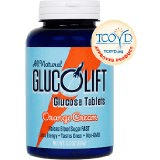
GlucoLift is, unlike other glucose tablets, all-natural. It contains no artificial color, flavoring or dextrose from genetically modified corn.

GlucoLift contain the same 4 grams of glucose/per tablet as the glucose tablets you’re familiar with and come in three flavors: Orange Cream, which Chris likened to those creamsicles of yore, with which I agree, Cherry and Wildberry. While taste is personal, and I didn’t find they taste that different than regular glucose tablets, I do like the idea of no artificial ingredients. 

GlucoLift also have the advantage of a flip-cap top on their sleeve of tablets. It’s a one hand operation, easier to open when working with a muddled brain, heart palpatations and shaky hands from a low. These tabs also carry the banner of being the 1st “TCOYD approved” product.

Since GlucoLift are more expensive than other glucose tablets here’s a sweet introductory offer: Go to Amazon (or hit the “Buy Now on Amazon.com” button on the GlucoLift web site) and enter either of these two codes for a 15% discount. If you enter “TCOYD15G” a portion of the sale will go to benefit TCOYD. Enter “IN15GLUC” and a portion of the sale will go to benefit Insulin Independence, an organization helping people with diabetes maximize their management capabilities and reach their personal fitness goals.

We’ll have to see what comes next from this Angell. Chris admits if he could  alter the laws of physics he’d fit 15 grams of glucose into one chewable tablet the size of a breath mint. Ah, we can dream, can’t we?

Actors Paul and Mira Sorvino are diabetes co-stars

images

Last Friday I went to the “Diabetes Cook-Off,” an event sponsored by SANOFI and hosted by father and daughter actor team, Paul and Mira Sorvino. The event was a pie competition. Two woman had sent in recipes for their healthy pies and they baked them up with the Sorvinos in NYC where a panel of judges awarded one the winner. (Recipe below) It was a generous event – all invited got to eat pie! 😉

But I was attracted to the SANOFI initiative Paul and Mira Sorvino are involved in, “Diabetes Co-Stars.” It’s awareness-raising around healthy eating and exercise, but also particularly, the importance of supporting a loved one who has diabetes. Paul was diagnosed with type 2 diabetes five years ago. 

I had the opportunity to interview the two actors for a few minutes after the event. (There will be a longer interview in November which I’ll post on the Huffington Post.) 

When I asked Paul Sorvino, “Why do you do this work?” he extolled the pleasure of helping others and gave me a great quote, “I wasn’t going to,” he said. “I was afraid it would hurt my career. But then I thought this is doing something good in two ways, educating others and it makes me more fearless to say, yes, I have diabetes.”

It turns out Mira didn’t even know her father had diabetes until he slumped over his plate during a family dinner. As for Mira, she said, “What can you give someone who’s given you everything, but sticking together through the hard times. It’s about family values.”

It was a lovely morning and all it took was one question to get these two sharing stories, recipes – now I know how Paul likes his salad – and I even have an invitation for dinner at the Sorvino’s should I ever be in L.A.  

But here’s the take-away. If you have diabetes, don’t go it alone. We all do better with support.

How to politely tell diabetes-do-gooders to “Stuff it!”

Unknown

Now you can tell family members, friends, colleagues and your mother-in-law to “Stuff it!” when they get in your face about how you’re managing your diabetes. You know, that finger-wagging, judgmental tone and unsolicited comment about, “Should you be eating that?” or “What’s your blood sugar?” As if all this work wasn’t enough.

That’s because the Behavioral Diabetes Institute (BDI) – founded by Bill Polonsky – have put out these nifty little Etiquette Cards to keep those of us who live with diabetes sane – and safer – from interfering busybodies and self-ascribed do-gooders. 

The mini (2″ x 3″) pocket-stuffers to keep people from getting in your hair have 10 tips each, such as these:

• Don’t tell me horror stories about your grandmother or other people with diabetes you have heard about, and

• Do ask how you might be helpful

In fact, even kids with diabetes can tell their parents to “Stuff it!” because they now have a card just for them equipped with great tips like:

• When my blood sugars are high, don’t assume I’ve done something stupid (although I may have), and

• Recognize that I am never going to be perfect with my diabetes care, no matter how much you want this

There’s also an all-purpose educational mini card called, “Don’t Freak Out! 10 Things to Know When Diagnosed With Type 2 Diabetes.” Including tidbits like:

• No, it probably isn’t a mistake, and

• Ignoring your diabetes after being diagnosed is a very bad idea

I joke, but these provide great little tips both to educate one’s self and those around you. If you haven’t heard of the BDI it’s one of the very few diabetes centers that help patients cope with the emotional stresses of diabetes: burn-out, depression and being off-track with your management through seminars and workshops. 

You can download the Etiquette Cards or send away for them.

Eat more micronutrients, get healthy and lose weight

Try to catch this program if you can on your PBS station: 3 STEPS TO INCREDIBLE HEALTH! with Joel Fuhrman, M.D.

Dr. Fuhrman’s proposition is the American diet is tremendously devoid of micronutrients the body needs to stay strong and healthy. As a result we are largely in a constant state of “toxic hunger”, always looking to eat more to get rid of the uncomfortable feeling it creates. Fuhrman says 65% of most Americans’ diet is comprised of micronutrient-devoid foods – processed and refined foods.

He proposes the answer for losing weight and having a healthy life is to eat more micronutrient dense foods. He uses the acronym GOMBS for a guide:

G – Green Vegetables

O – Onions

M – Mushrooms

B – Berries and beans

S – Seeds and Nuts

If you’re following the many who have been saying this the past few years, this is not news, but Fuhrman explains why this is the case in an easy to understand scientific way based on his medical training.

I never heard of Dr. Fuhrman when I started eating this way several years ago, but I can attest to the fact that it did cause me to lose weight and I have kept it off without diet or struggle or hunger and I do believe with all my being that “Food is Medicine.”


Create a support network that helps you manage diabetes

Everyone living with diabetes does better with support. And now there’s a new APP that can help anyone build a personal support network so they don’t have to do diabetes alone. 

I’ve just developed 3 FREE great short, smart videos to help you invite people to be in your circle of support. There’s an APP under “EatSmart” ‘Build Your Personal Support Network’ or you can also find the videos online on the left hand side of the page under “Build Your Personal Support Network.” 

Video #1- Will help identify what you might need help with – for instance perhaps a drive to the doctor’s office, a walking buddy or someone to learn healthy cooking with, and, who might be available from your circle of loved ones and acquaintances to be on your team.

Video #2 – Gives you tips how to ask for help in ways that people will want to help you. Yes, it’s a little bit science, a little bit art and a lot of just being honest, open and appreciative.

Video #3 – Gives examples how you can use people’s help to help you develop and maintain healthy habits. 

Take a look and a listen. It will only cost you a few minutes of your time and there’s so much to be gained. I don’t know what it would be like having to manage my diabetes without the support of my husband and several of my great friends. 

A thriving diabetes community in Portland that welcomed me

Screen Shot 2015-02-07 at 3.51.09 PMIt’s not often in life we meet people whom we feel so in tune with, but when it happens I really, really treasure it. Not surprisingly, many of my diabetes colleagues, friends and acquaintances I meet initially through email. The best is when we actually get to then meet face-to-face – and this week that happened. Two of my email friendships got consummatedshall we say ;-). 

I’d like to introduce you to Heather Clute and Jeff Horacek, tell you what makes them amazing, and share a bit of my week. 

Heather is a wellness counselor and coach and has had type 1 diabetes for 14 years since the age of 27. Jeff is an internist and some roads in his personal life led him to run Portland’s diabetes support group. Jeff is the kind of doctor who credits his patients for his deep understanding of what it’s like to live with diabetes. I know because he’s said it more than once including at his diabetes support group this week.

Both Heather and Jeff also co-host the online radio podcast“Transforming Diabetes” where their interviews with diabetes experts help us transform diabetes from foe to friend. The link above takes you to the program we recorded while I was in studio. We call it ‘getting real with riva’ but it’s really three people sharing what it’s like to live with diabetes and what we’ve all learned along the way. 

I went to Portland to give an A1c Champion presentation to Jeff’s support group and I arrived a few days early to get to know my hosts. And I do mean hosts. Heather hosted me in her home for two days. And besides enjoying her hospitality, and the drive to the second largest waterfall in America, and the walk in the Japanese Garden – which transported me to my days living in Japan – what I also got to see and appreciate is what it’s like to manage type 1 diabetes when you’re also managing three littles ones, two aged 6, one age 8. Cute as buttons they are, yet your time is their time. I saw how many more challenges there are in that setting than my own where I have no one vying for my attention, where diabetes is my only child so to speak. And that’s just the kind of stuff we talked about on our in-studio Transforming Diabetes program.

The evening before my A1c Champion presentation to Jeff’s support group, Heather and Jeff invited two other professionals from the Portland diabetes community to join us for dinner – endocrinologist Elizabeth Stephens and RN, CDE Susanna Reiner. We had a great evening sharing tapas and conversation. I learned from Susanna, who’s heavily pursuing gluten free cooking, about substituting almond meal for flour, which I plan to do in my next batch of chocolate/ginger biscotti which my husband loves. 

The night I delivered my presentation I did something I’ve never done before. Before I began, I led the group through a mindfulness exercise to ground everyone about why they’d come and have them remind themselves what they hoped to get out of the evening, and to be present. I thought to do it because every time I look at Heather or Jeff I think mindfulness – they are working on a program they hope to offer next year that will revolve around mindfulness and diabetes management. 

Maybe this is just my way of saying “thank you” to my hosts. To take a few moments to appreciate how special my time in Portland was and how special it is when people walk into our lives who make us feel validated, important and seen. When you wrap that around diabetes, that’s quite a gift.

In a way there is nothing amazing about Heather and Jeff, they are just two people living their lives and doing what they love. And in the doing they are brightening a little corner of their own, and our, lives. They are, as are so many, the unsung heroes in diabetes, and all our unsung heroes are pretty amazing in my book. 

I’ve been in some great diabetes company lately

Unknown

Phil Southerland

It’s been a quick changeover to fall here in the Northeast, rain, rain, rain, and I feel myself both speeding up and slowing down. Bizarre.

Over the last week I’ve had the pleasure and privilege to interview three diabetes leaders whose stories will show up in the next two months in my Huffington Post series on diabetes change agents: Phil Southerland, founder of Team Type 1 and author of his early memoir, Not Dead Yet, his indomitable mother Joanna Southerland, who made sure none of the dire predictions for Phil, diagnosed with type 1 at seven months would come true,  and Brandy Barnes, founder of the incredibly supportive space for women around the block and around the globe, DiabetesSisters.

This Friday I take off for the Left Coast where I’ll be doing an A1c Champion program in Portland, Oregon on the 14th and visiting with two other great diabetes advocates, Healther Clute and Jeff Horacek who co-host the program, ‘Transforming Diabetes.” In fact the plan is rather than my making a third appearance on their show, I’m turning the tables and interviewing them. Something to listen for on the show’s podcasts.

So between now and then the husband leaves once again for Holland where he does most of his work, that means cleaning the house after letting things pile up for two months, and I meet with my YMCA coach who’s leading me through a 12 week class of cardio and weight lifting. Oy! 

Maybe packing my suitcase tomorrow will count as weight lifting! Don’t you think?

On road, at the airport, around the corner, consider getting a medic alert bracelet

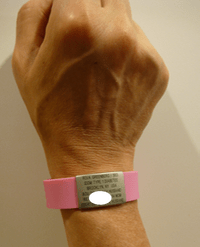
Pretty in pink!

NewImage

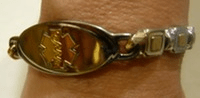
For dress-up occasions

 NewImage

Opens like a watch strap

 NewImage

My inner athlete

 NewImage


In March of 2009 I wondered for the first time whether to get a medic alert bracelet. Except for when I was first diagnosed almost 40 years ago, I haven’t given it a thought. The bracelets I’d seen back then were ugly and no one, including no HCP I’ve ever seen, has ever advised me to wear one.

Then I began doing peer-mentor presentations where I travel across the country solo and I realized it might be wise to have something on my body that identifies I have diabetes. 

As fate would have it, just as I was about to go through security returning home from a presentation, all of a sudden I felt low and pulled myself off the line to check. Sure enough I was 39 mg/dl. That sealed the deal: I decided I would not travel anymore alone without a medic alert bracelet.

After days and weeks of an exhaustive search for something attractive AND something a paramedic, and perhaps your man-on-the-street would recognize as emergency-wear, I found a medic alert plaque I liked – and my friend made a bracelet for it. I first wrote about it here brimming with optimism.

The reason I never finished that story is because only a few weeks of wear and the finish on the plate gave me a rash on my wrist. There began another exhaustive search for another plate. I found one I loved online in real gold and silver, so unique and fine, yes a little expensive but I deserved it after 38 years of diabetes! But the artist (yes, artist) was no longer making them because the cost of gold had skyrocketed!

A year later still looking (well I am a Virgo) I found this plate (first photo) at a health event but you can order here. It’s two tone, which I love, but in titanium so it doesn’t irritate my skin and it’s very lightweight. A few afternoons of roaming around Manhattan brought me to a shop in Chinatown where I found this lovely Italian bracelet. I’ve been wearing this medic alert bracelet whenever I travel – and feeling all the more secure for it.

Today my designer medic alert bracelet has a sporty cousin. This summer my husband took up running and decided it was smart for HIM to have ID in the event he runs into a tree, or his measurable heart rate is no longer measurable. He found a company called road ID and bought himself both a canvas and rubberized ID band – not for fashion, but geography: he lives in Brooklyn and Holland. 

I liked his so much I decided I wanted one too so I ordered the pink rubber one (They come in 8 different colored bands). $29.95, now that’s a deal. You can put 6 lines of information on the stainless steel plaque and they’re amazingly clear to read – much better in fact than my engraved info on the underside of my other bracelet. (BTW, the big white dot on the plaque is only to protect my husband and mother’s phone numbers.)

You can also opt for “Interactive” which allows you to create an emergency response profile online available to first responders. The company sells more band IDs, apparel and accessories – and I’m confident anyone is going to notice this piece of emergency-wear because the information is so apparent on my wrist.  

Road ID also has a great story and I’m a sucker for stories. In 1999 Edward Wimmer (President of the company) was training for his first marathon. His father suggested he carry ID in case he had an accident. Edward being a college senior dismissed him. Only days later while out running a pickup truck nearly struck Edward on a winding stretch of road. Later that year road ID was launched out of the family’s basement. It’s a company with attitude; you’ll have fun just reading their web site.

If you haven’t thought about wearing a medical ID you should. Simply, it can save your life. I don’t see it as an annoying reminder that I have diabetes, as I once thought I might. I see it as an emblem of strength and the smarts to protect myself. Now that I have my road ID band maybe it will even encourage me to live up to its marketing talk – it’s primarily for athletes. 

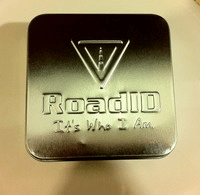
According to the cute little tin it came in an athlete is who I am!”

A few minutes of fun from Ginger Viera

Poking fun at diabetes (yes, pun intended!)

Just for fun my bud Ginger Viera and Allison Schauwecker from dLife, both living with type 1 diabetes, posted this video “Thanks to Diabetes…?” 

They laugh a lot and came up with a kick-me-on-the-side-of-the-head ways diabetes has made them stronger. Sure looked like fun making it. 

What would your answer be if you started a sentence with the words, “Thanks to diabetes…..

Take a look. You may get some ideas.