KIDDs, perhaps the truly unseen group impacted by diabetes

NewImage.png

Last Saturday I spoke at the launch of Marjorie’s Fund in New York City. Marjorie’s Fund is a non-profit organization founded by endocrinologist,Jason Baker, a person himself with type 1 diabetes, and just featured in Diabetes Forecast as “People to Know in 2013.” And deservedly so. 

Until now Marjorie’s Fund has dedicated its energies to empowering youth and adults with type 1 diabetes in Africa by providing resources, education and supporting relevant research. Marjorie’s Fund was actually named after a young woman Dr. Baker met in Uganda, who hard as she tried, given the lack of resources, died at 29 from kidney failure, a consequence of her type 1 diabetes. 

The three hour event gathered about 75 people with type 1 diabetes and their loved ones – parents, spouses and friends – at Chelsea Piers in Manhattan. The event had a triple purpose: to help introduce PWDs (people with diabetes) to local resources, create community and celebrate those we hold dear who support us each day.

Yet, in that list of supporters, I left out a significant source of support – our children. And, I hadn’t really thought about it until 16-year old Hannah approached me and introduced herself and her dad who has had type 1 diabetes for 41 years. Same amount of time as me.

I was truly moved by the loving relationship between Hannah and her father and realized, not having children myself, that children who have parents with diabetes, particularly type 1, are both a source of support and impacted by their parents’ diabetes. It must be frightening to see your parent exhibit any of the symptoms of low blood sugar or at times heart-wrenching to see them check their blood sugar multiple times a day, every day.

Wanting to help other young people whose parents have diabetes, Hannah created the website KIDDs, Kids of Insulin Dependent Diabetics. It culls resources, basic information and gives you, if you are the child of a parent with diabetes, a place to be with others who share your experience.

As we parted, Hannah’s father and I agreed that we’re going for our 50 years with diabetes Joslin medal. I’m hoping Hannah will join us at the celebration dinner. Who knows? Maybe by then she’ll have kids of her own!

What’s coming up for Diabetes Month?


Unknown-1

When I read something useful in the diabetes biosphere I want to make it known and accessible to you here. 

Today’s post on DiabetesMine well captures a number of upcoming events for next month, Diabetes Month. 

One event I will single out is the Big Blue TestIf you have diabetes, are mobile, and haven’t participated in the test yet, you owe it to yourself to correct that. 

No, no dates and facts to study. Rather, you will see first-hand how just 14 minutes of an activity of your choice lowers your blood sugar. 

And, as we roll into Diabetes Month, if you missed it, here is my list of greatdiabetes resources. After all, I always tell fellow PWDs, “the more you know the better you do.” 

And, while somehow I mistakenly omitted DiabetesMine.com, a top news- reporting site from my list, I read it almost daily to know what’s going on regards devices, meds, the FDA and all things diabetes. 

Harvard and Nurses Study on fats and carbohydrates

Harvard and Nurses Study on fats and carbohydrates

Unknown-2

I read a lot of stuff about diabetes, and everything related. And I have a particular interest in food as it relates to diabetes, health and weight. Don’t we all?

“Fats and Cholesterol: Out with the Bad, In with the Good”, an article from Harvard School of Public Health, is one of the best articles I’ve read in a while on the topic – it’s easy to read – and it expresses what I think to a tee. 

Primarily, that America got fatter when we took fat out of foods and put sugar in. That we have become obese, not due as much to eating fat, as eating refined carbohydrates. And yes, bad fats like Trans fats found in most fried and baked goods, are bad for you, but good fats like avocados, nuts and olive oil are healthy and your body needs them to function properly.

This is relevant whether you have diabetes, heart disease, high blood pressure, want to lose weight or frankly, in my book, are just walking around on the planet.

Here are a few major tale-away messages from the article:

• Bad fats, meaning trans and saturated fats, increase the risk for certain diseases. Good fats, meaning monounsaturated and polyunsaturated fats, do just the opposite. They are good for the heart and most other parts of the body.

• When people cut back on fat, they often switch to foods full of easily digested carbohydrates—white bread, white rice, potatoes, sugary drinks, and the like—or to fat-free products that replace healthful fats with sugar and refined carbohydrates. The body digests these carbohydrates very quickly, causing blood sugar and insulin levels to spike. Over time, eating lots of “fast carbs” can raise the risk of heart disease and diabetes as much as—or more than—eating too much saturated fat. 

• It’s important to replace foods high in bad fats with foods high in good fats—not with refined carbohydrates.

It’s worth reading the entire article and if need be making some adjustments in your diet and see if they don’t benefit you.


Dr. Robert Lustig says fructose is poison, and I believe him

Unknown-1

Robert Lustig is a pediatric endocrinologist at the University of California, San Francisco who is carrying the charge that fructose kills. I’ve just spent the afternoon listening to a radio interview he gave recently, watching his lecture,“Sugar: The Bitter Truth,” and watching a series of YouTube mini documentaries he gives about obesity. 

In short, Lustig says sugar, specifically fructose, is a toxin given the way our body biochemically metabolizes it. That it actually turns to fat and that obesity is not the cause of metabolic diseases like Type 2 diabetes, hypertension,cardiovascular disease, fatty liver disease, but a marker of these. 20% of obese people will never get one of these diseases.

I agree with Lustig about sugar and refined carbohydrates being our undoing. If you read my new book, Diabetes Do’s & How-To’s, I emphatically say fat is not what makes us fat but sugar, or refined carbohydrate. Carbs cause the body to pump out excess insulin (a fat storage hormone) and carbs we don’t burn get stored as fat. Lustig will tell you the 6.5 ounce Coke that has morphed into the 44 ounce Big Gulp is the devil incarnate.

Twenty five years ago when America went on a low fat diet, people’s diets reduced in fat Lustig says from 40% to 30%. That doesn’t sound like much, but what happened is the carbohydrates we consumed skyrocketed. Take the fat out of food and it tastes like cardboard. Put sugar in and consumers won’t notice. In fact, they’ll like it so much, they’ll eat even more to it! Food manufacturers are not stupid. 

In fact, they are ingenious, and spend millions of dollars perfecting recipes that get us hooked on the sublime combination of sugar, salt and fat. But Lustig’s biochemistry lesson will help you understand why fructose is so especially causing our out of control obesity.

Lustig’s proposition is that we could not have, as a nation, and now as a global society – with American fast food now exported everywhere and the rise in obesity paralleling it – gotten obese merely from eating more and moving less.

No, he will tell you it is about what’s in our food and how the body uses it. “A calories is not a calorie,” says Lustig, yet he says they teach dietitians just the opposite the first day of school.

I am consumed (yes, pun) with this debate: what causes obesity, how are our modern day chronic metabolic diseases impacted by what we eat, obesity and how food is being reengineered and what role our environment plays. Where does personal responsibility figure into this and what responsibility does our government and food manufacturers have? A lot in my opinion, yet everyone’s hand is in someone’s pocket.

Personally, I believe if we cut refined carbs out of our diet, including sugared beverages, and ate real food – not processed or packaged – but things that grow on trees and in the ground, relatively untouched by human hands, and animals that are responsibly raised, we would not have an obesity epidemic.

Five life lessons turning 60!


L1030253

I turn 60 tomorrow. How did that happen? My mother’s probably asking herself the same question up in Connecticut. I’d say just putting one foot in front of the other every day. But the occasion does give me pause to think about what I’ve learned so far.

(By the way, this picture was two years ago me shooting up before my meal. My friend P. to my right looks a little startled, but then I’m a teacher and this was a teachable moment.) 

It hasn’t all been easy. I was a shy and quiet kid. People would tease me by saying I was talking too much. Today I speak to all kinds of groups, small and large and love it. No one who knew me then would imagine me now. But my deepest desire always was to help others believe in themselves. Today I do it around diabetes which I could have never predicted.

I couldn’t ask to be in a better place on the eve of my sixtieth birthday. I am married to my true partner in life, in love and in work. My parents are still here. I have a treasure trove of dear friends, and acquaintances who bless me with their fellowship through diabetes. I love where I live, which was a lifelong riddle to solve. And I travel voraciously. To towns large and small across the States, as an A1C Champion, which I love and across the ocean. That’s what you get for marrying a European. How lucky he, and his frequent flier miles, fit right in with my wish list. And growing up a listener serves me well in the work I do today, as a health coach, writing on The Huffington Post, writing books and speaking at conferences and as a peer-mentor.

Turning fifty was a hard one. It was the first time I realized there was more time behind me than in front of me. But even though that’s even more the case now, I’m kinda tickled to be turning sixty. I think of all I’ve accomplished and where I’m so contentedly sitting in my life right now.

So tonight, looking back on six decades – true, I don’t remember the first several years, alright let’s be honest, the first decade – I realize maybe I’ve learned a few things worth passing on to my younger friends and colleagues.

5 Lessons I’ve Learned Along the Way

1. Don’t measure your success against anyone else’sIn my twenties I was jealous of how many people around me were clear about what they wanted to do, were on their path achieving so much. I felt I was floundering. Searching for what work I was meant to do, where, how. What cured me of that was when a friend I envied, got a tumor. Surprisingly, I nursed her through it. But I realized, you don’t know what’s on anyone’s road ahead, including your own, good and bad. Just be on your road.

2. Look for the silver lining. I got type 1 diabetes at 18. I’ve had it 41 and a half years. I was misdiagnosed initially as a type 2; after all only kids get type 1. The first decade I had it there were no meters to test my blood and we knew so little about food, etc. But having been there, I’m so grateful I’m here. And I see what I’ve gained from having diabetes – a commitment to my health. I’m convinced I wouldn’t eat as healthfully as I do, walk as I do or keep myself trim and fit if not for diabetes. And maybe I wouldn’t have fulfilled my need to find purposeful work. Most days I truly look at what I have, not what I don’t.

3. Be kind. If I do one thing passing this way in life I hope it’s that I’m kind. It’s selfish; I like making people feel seen, whether it’s my waiter or the girl who checks out my groceries at the supermarket. At my first job in public broadcasting a colleague taught me this lesson unknowingly. I would watch her make the guy who parked her car feel equally important to the President of the company. She talked to them both with the same regard. 

4. Savor the simple stuff. I think this is something that comes with age. When I’m cooking in the kitchen listening to Sade or Patti Austen, sipping a glass of wine, and my husband is working feet away in the living room (a tiny one bedroom city apartment) I am happy. These are the moments they tell you you will recall in the end. I believe they’re right.

5. Pat yourself on the back more. I think women especially are enormously critical of themselves. We’re not enough, we don’t measure up, if we fail, why did we even think we could do it in the first place? If we succeed, we got lucky. Fuggedaboutit! You are a gem, maybe a diamond in the rough, but a gem. Cherish daily accomplishments, and your efforts. Whoever made us think we were supposed to be perfect at everything?   

When I was 18 and diagnosed with diabetes, it was unreal. One pill a day and “don’t eat candy” kept it unreal for years. As it sunk in, I mourned the complications I would inevitably get and the 15 year shorter lifespan I was told I’d have. 

Hmmm, I haven’t got any complications, and I no longer expect my life to be any shorter than anyone else’s.  

When I was 54 years old my good friend, Deborah O’Hara, died from cancer. She was only 59, and my first good friend to die. Funny, she came from a small town in upstate New York but we met in Asia. She lived in Hong Kong and I lived in Tokyo and our work made our paths cross.  

We don’t know what’s on our path. But when my mother calls me tomorrow and says, “How can I have a 60 year old daughter?” we both know it all goes too fast. You’ll know this as you see more grey hairs. 

You may have to wait before these five lessons mean anything to you, I did. But, I just wanted to share. With that, I’m off to roast some cauliflower and broil the salmon. While listening to Josh Groban and sipping a nice bright white from Spain. 

AADE’s 2013 Annual Conference report

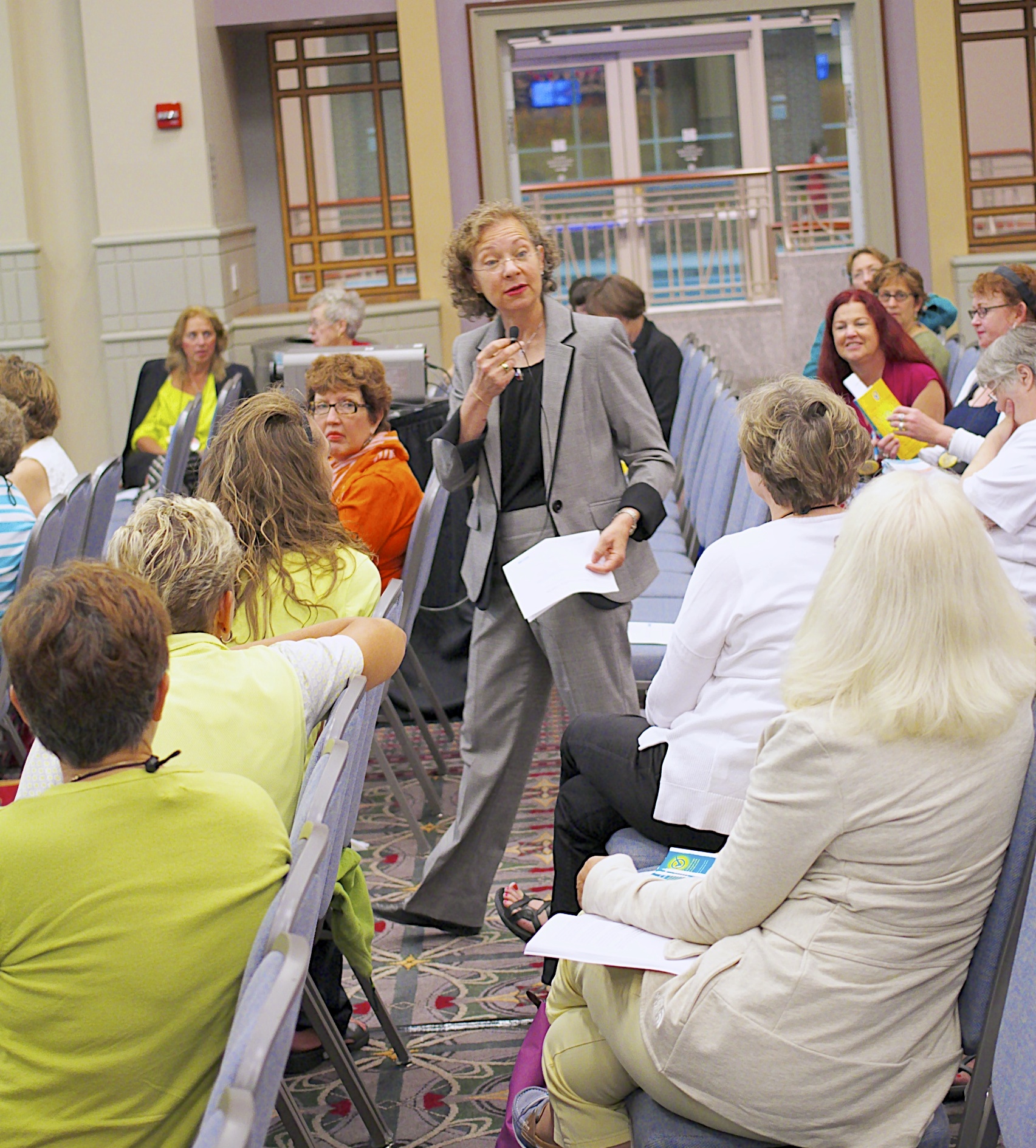
interaction with audience

I returned Saturday night from the annual conference of Diabetes Educators, this year in Philadelphia. While there were fewer educators there than in year’s past, around 2,900 rather than 3 or 4,000, probably due to budget cuts, it was a pleasure for me to see so many people I know.

There were many from the DOC (Diabetes online community) including Cherise Shockley, Scott Johnson, Manny Hernandez, David Edelman, Amy Tenderich, Lee Ann Thill, Kelly Kunik, Kerri Sparling, Bennet Dunlap, Haidee Merrit, Hope Warshaw and more, where do I stop? 

Cherise and Scott led a DSMA twitter feed evening where everyone was answering patient call in questions. And all these guys I’ve just mentioned have diabetes blogs – just google them.

There were people from industry I always like to see including Rob Muller from Roche, Andreas Stuhr and Laura Kolodjeski from Sanofi, reps from my own A1C Champion group, Anna Floreen and Bill Woods from Glu.org…and on and on.

There were 1,000 exhibitors in the exhibition hall. And there were educators. An impassioned group of professionals. Gary Scheiner, educator extraordinaire was awarded the 2014 Diabetes Educator of the Year award and my friend Claire Blum won AADE’s technology award.

While there was a smaller turnout, I felt some winds shifting in the diabetes landscape. Now when presenters used the words, “adherence” and “non-compliance” they did so making fun of those terms, realizing this is no way to categorize patients.

The loud saw of being “patient-centric” and using “motivational interviewing” seems to be subsiding. And actually my own presentation, “Dancing Together: The Power of a Relationship-Centered Approach,” introduced the paradigm of working together, HCPs and patients, talking, exploring, in a compassionate partnership to ultimately design treatment plans – together. That there is a time to teach and a time to listen. A time to be and a time to build. That motivation is nice, but skills are necessary and often overlooked.

Roche generously sponsored giving a copy of my book, “Diabetes Do’s & How-To’s” to the 141 educators who attended the presentation, and I thank them.

For highlights of what was on view in the exhibition hall, take a look at Amy Tenderich’s review.

Learn more diabetes in one day at TCOYD


Screen Shot 2015-02-07 at 12.46.59 PM

The latest TCOYD (Taking Control of Your Diabetes) online newsletterfeatures my new diabetes survival guide – “Diabetes Do’s & How-To’s” – on its back cover. My thanks to all my generous friends at TCOYD and Dr. Steven Edelman, its founder. Read the whole newsletter and start learning.

I interviewed Dr. Edelman as a diabetes change leader on The Huffington Post. He created a true breakthrough – the delivery of diabetes education directly to patients via conferences. Don’t hoard conferences just for doctors was his enlightened thinking. For while Edelman is a doctor he has also been living with type 1 diabetes since the age of fifteen.

I also found my whole thinking about my power to live well with diabetes change when I attended my first TCOYD event. That was back in 2005 in San Diego. I was sitting in CDE/Psychologist, Bill Polonsky’s session. He said, “Diabetes doesn’t cause blindness, heart attack, amputation. Poorly controlled diabetes does.” Today he often says, well controlled diabetes is the cause of nothing. 

It made me realize my actions largely control my illness and I have power over my actions. Take good actions and you will benefit. I began using my power: eating healthier, eating less and walking more. The results have paid off and I see it each year when I get my blood work done. 

I highly recommend getting to TCOYD’s one day event, even if you have to travel. You will learn so much and it costs a mere $10 or $20 depending on when you register. 

Events are presented around the country, so see if there’s one coming up near you or take a trip, it’s worth it. This fall TCOYD will be in Worcester, MA, Omaha, NE, Albuquerque, NM and San Diego, CA. Here’s the schedule.

For now, sending my best to all my friends at TCOYD, the thousands of patients who have benefitted from a TCOYD event, and those who yet will.

Bronx, New York where diabetes thrives in a food desert

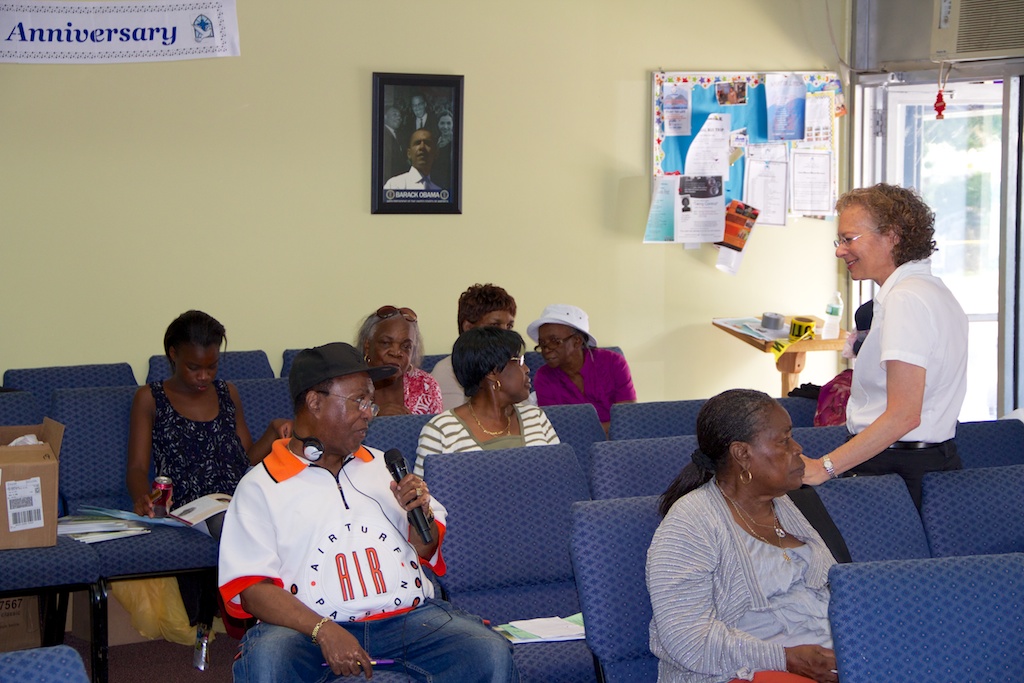
IMG_1709 Your in interaction

Saturday I gave the A1C Champion program in the Bronx. The Bronx is one of the five boroughs of New York City. The one also where diabetes has the highest concentration, largely because it is the poorest.

I was speaking at a storefront church converted from an ordinary building. Bishop David was jamming as the afternoon’s DJ. There were about ten or twelve small folding tables in front of the church on the sidewalk where people could pick up some information about diabetes. A hot buffet table was set up where the hosts were ladling out a relatively healthy lunch – chicken, rice, beans, veggies, corn.   

Before my talk, I walked around the neighborhood. I wanted to see where you could shop for something to eat and what you would find. Certainly, I’m sure, there are supermarkets not far, but within the few blocks I walked, there were several “bodegas.” Little delis like this one above where you could run in and find food – sort of. 

This is what was on offer: sandwiches on big white bready rolls and packaged snack foods everywhere, it took up 95% of the store: candy bars, chips, bakery goods and sugary soda and juices. They covered the store from top to bottom. In one store, one lone bottom shelf held a few onions and potatoes. Those were the only fresh vegetables in the store, no fruit. In another store, I saw only rotting bananas as fresh foods go. And this food desert – the Bronx – is only a subway ride from where I live.

We keep saying people need to eat healthy; yet how are we helping them to do so? I also don’t have to tell you if it costs $1 to buy an apple and $1 to buy a Big Mac, where’s the incentive for people to spend their hard-earned cash on a piece of fruit?

It saddened me to see what I read about in article after article. The food deserts in America. Those poor neighborhoods where there is no fresh food available and fast food brothels line the landscape – McDonalds, Burger King, Kentucky Fried Chicken, Taco Bell. Places that seduce us with sugary, fatty, salty foods and low prices. 

Obesity and diabetes are not merely about individual responsibility – they are also about infrastructure, what the government subsidizes, safe neighborhoods with places to play. It is about getting healthier foods into poorer neighborhoods and helping people do the right thing for their diabetes. 

Yet, it also gladdened me to find the 20 people I spoke to were engaged, curious, thirsty for information and many were eating better than their parents. They shared their strategies from a one day a month “cheat day,” to sautéing fish with plenty of lemon and herbs instead of frying, replacing half the juice in a glass with seltzer and sneaking ten minute walks into the day.

The city councilman above gave a talk just before I went on and let people know how important it is to get exercise and about the parks he’s been building in the Bronx. His eyes were bright and clear as he greeted me and his passion for improving his community and helping people, was earnest. 

Saturday I traveled to a place so close to my home, yet so far from my world. But I also became a bridge for people to take a step from being under the thumb of this disease and its burdens to doing a little better. Riding home on the subway afterward, I was full from the adventure and my heart was light.

Medicare’s cost-slashing for test strips creates a DOC movement: Strip Safely

Screen Shot 2015-02-07 at 12.50.04 PM

StripSafely is the Diabetes Online Community’s raised voice to protect ourselves from inaccurate blood glucose meters and test strips.

This month Medicare begins offering a limited variety of glucose meters to its beneficiaries. Many of the test strips offered, and manufactured overseas, fall below the FDA approved standard for accuracy. That standard is already too low but don’t get me started.

I’m asking you to join the movement. It’s easy. Write a letter (samples provided) asking the FDA to ensure strip accuracy. If you have diabetes, know someone who does or love someone who does, you know this is a life and death issue.

And while you may think this doesn’t concern you because Medicare is a lifetime away, this may drive US manufacturers of meters and strips out of business. That means: no quality control, innovation, support services, educational programs, and oh yea, accuracy.

It only took me 15 minutes to write my letter. Here are sample letters to make it easy. And here’s mine. As you can see, I took the sample “Short Letter” and just made it personal.

Jeffrey Shuren, MD JD
Director, Center for Devices and Radiological Health
Food and Drug Administration
10903 New Hampshire Avenue, WO66-5442,
Silver Spring, MD 20993

July 2, 2013

Dear Dr. Shuren:

I’ve had type 1 diabetes for 41 years and I’m turning 60 next month. Two weeks ago my A1C was 5.5%, yes, normal. How is that possible? I adhere to a healthy diet, exercise every day, and check my blood sugar diligently using a meter and strips recognized among those with the tightest accuracy.

I am writing to you because while I might have said as a teenager, “I’d die if I don’t get that!” I actually could die if I don’t have accurate test strips.

Those of us living with diabetes truly need your help and advocacy. We are facing losing our health due to Medicare’s July 1st cost-slashing program. In only a few years I will be affected by this if nothing changes, and meanwhile US manufacturers may get squeezed out of the market due to price. That means we will lose further quality control and standards, innovation, new product development, service support and educational programs.

At a recent meeting with the Diabetes Technology Society, the FDA acknowledged that many blood test strips do not deliver the accuracy for which they were approved. Further, the FDA has no plan to fix this problem.

I need you to have one. My Aunt needs you to have one, my downstairs neighbor needs you to have one, and hundreds of my friends and acquaintances need you to have one. And my husband, who doesn’t have diabetes, desperately needs you to have one. Otherwise, one day he may not have me.

Blood sugar fluctuates all day, every day both as a consequence of what we do, and by its own nature. I don’t need the quality of test strips to also be uncertain.

Please, I am asking you to, at the least, implement a program of ongoing random sampling of strips to insure that all brands consistently deliver at least the minimal accuracy approved by the FDA.

While I have previously written that the FDA should tighten the ISO standard, how wonderful it would be if Fixing Diabetes Accuracy is one of the things for which the FDA becomes known.

Riva Greenberg

Don’t wait. This is something we can do together. And lives depend on it. Feel free to copy my letter, just fill in your own specifics.

Thank you

Moments of happiness wherever you are

NewImage.png

For the past two days I’ve tuned into the State of You/#140You conference that was held at the NYC 92nd Street Y and live-streamed. It was an interesting group of people doing interesting things in health that ran the gamy from nutrition, food and weight loss to fitness, social media, branding, humor and testimonials of health success stories.

What I learned, basically, is I already know a lot. But it’s always good to be reminded of what you know and hear it again.

One of the things I was reminded of is that happiness is not found in arriving at your destination. Whether that’s your job perfect, spouse perfect, house perfect or any other goal you’ve set for yourself. No, happiness is found in the small, simple every day moments. And, we can feel happier by creating more of those moments and pausing to take them in.   

So, yesterday after watching the conference I went to the post office. My local post office is small with only three workers. They know me because only months ago I was in there almost every other day mailing my new book out to people. 

Kelly asked me s I approached the window with a hearty greeting, “How are you?” I said, I’m find except this awful sore throat. “You know what you need to do for that..” she said, “Gargle with hot salty water.” I told her my mother always told me that and I forgot. Thank you for reminding me. She laughed and said I’d get her bill in the mail.

I walked out of the post office smiling. I was warmed by the exchange of concern, and the small joke. I felt happy. Happiness is small moments. Create them by being in the moment and connecting with whoever you’re with. Look for them by seeing every good thing that happens as a little miracle. After all, it could have gone another way. And savor them. Pause to see the beauty in such moments. 

The photo above is something I was working on 7 years ago, a calendar with joyful images and inspiration to live happier and healthier with diabetes. I think I’ll start posting some pages. Because it makes me happy.