Inside view how the practice of medicine is changing

Screen Shot 2016-06-28 at 1.24.30 PM.pngI love reading readable books from health professionals. It truly helps inform me of their world since I can only sit on the other side of the examination table. You may know some of my favorite doctor/authors – Dr. Danielle Ofri for instance. She has written several books about things patients have taught her and writes for the NY Times. Then there’s  M.D./patient Rachel Naomi Remen who is also trying to help health professionals recapture the enthusiasm with which they first entered medicine.

I just picked up another such book, cover above. I’ve only just started but these passages below jumped out at me below. You can also read a very favorable review from the NY Times, and also an excerpt there.

14.jpg

15.jpg

16.jpg

Keynote Speaker, Roche Diabetes Care global conference in Munich

My recent trip through Europe and Japan was admittedly all pleasure. But one of the pleasurable experiences was also work. I’d been invited to be the closing keynote speaker at Roche Diabetes Care’s global Market Access Forum conference in Munich.

While I was approached to share the patient perspective and send Roche attendees home inspired, I came with more. I came with an “add-on” for Roche’s corporate mission: Doing now what patients need next. In my view, what patients need next is not to cope with diabetes – but to flourish.

Flourishing is a much-ignored domain available to us – living a healthy, happy, productive, robust, meaningful life, not despite having diabetes, but because of it. Yet the universal focus for treating, and living with, diabetes is on coping.

Coping can be a limited and negative view. Coping carries with it a sense of struggle and muddling through, trying to come up from the depths to “normal.”

Roche Diabetes Care produces glucose meters, insulin pumps and lancing devices. Yet it was a new idea that they can also be in the business of helping people with diabetes flourish. A fundamental for flourishing is to have both “”Heartware” and “Hardware.”

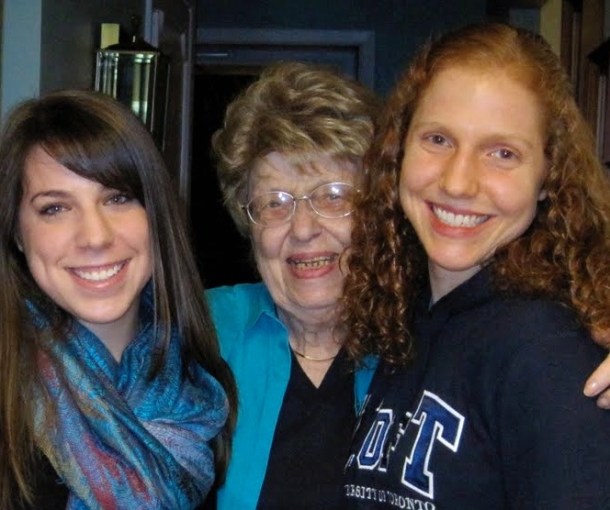
Alyssa and family.jpge Heartware means to see the person living with diabetes – like my friend Alyssa (on right) above who has type 1 diabetes – not just our disease. To partner, champion, support and work with people with diabetes toward possibilities and their best possible outcomes. Hardware is the tools and devices that make managing diabetes easier and help us be more successful.

At the end of my presentation there was complete silence. The conference organizer asked for questions yet none came. Then slowly, they came. One woman, burst into tears. “We’re so moved,” she said, “We have to catch our breath.”

Several participants came up to me after my talk. They wished I had opened the conference rather than closed it. Their two days they said would have been spent differently – focused on ways to expand and enliven their mission in regards to helping people with diabetes flourish.

It’s a personal joy for me to connect with and move people. Whether I’m talking with those who live with diabetes, health professionals or those in industry. You so deeply affect the quality of our lives.

Thank you Roche Diabetes Care. It was an honor and a privilege to share my ideas with your people. Thank you to everyone I met who are in the business of helping we who live with diabetes.

End of Life for Pinkie


IMG_5014.jpgWell, actually it was the end of my sensor session. Pinkie (my Dexcom G5 CGM) and I have just returned from a 5-week trip through Europe and Tokyo, and I miss her.

(This photo is my two dear friends putting extra tape around my Dexcom adhesive to keep her in place. We are in the women’s bathroom at a bookstore in Tokyo. Yes, we got some strange looks.)

The last sensor that I wore on my trip lasted 17 days. That’s the longest a sensor has ever lasted for me – a week longer than usual. For the first time I had put Pinkie on my arm.  I’m not sure if it’s where I placed Pinkie that gave her extra life or this was just a stellar sensor right out of the bag. I’ll know better when I put the next one on, on my arm again.

Screen Shot 2016-06-09 at 4.11.36 PM.png

I feel a sense of loss going it alone these days. I find myself reaching for my iPhone several times an hour to see where my blood sugar is. My hand moves without thinking toward the phone and I have to stop myself. When I forget, I stare sadly at the G5 app screen telling me, “Tap to start 2 hour sensor warm-up.”

Yet while I miss Pinkie, I need a few days off. Just for the freedom of it. No doorways to worry about knocking into. No fear hoisting my knapsack over my shoulders full with groceries. No itching where the adhesive and extra tape have been placed. It’s a joy to feel light and unencumbered again. Still, I think of her through the day.

I wonder has anyone identified CGM withdrawal as a condition? Do I need a 12-step program? Is there a study being conducted on long-term addiction ramifications? Is it a good thing? A bad thing? Or just a thing?

End of life care for humans involves making people comfortable and pain-free during their last days and hours. Perhaps there should be end of life care for CGM wearers when they are between sensor sessions.  It would begin when your sensor gives you the “7 remaining hours” alert message.

TSA agents surprised by Pinkie, my Dexcom CGM

Screen Shot 2016-05-29 at 9.21.30 AM.png

I’ve been traveling now for almost 4 weeks through Europe with a side trip to Japan. This is combination work, tagging along where the husband has work and pure pleasure. Pinkie (my Dexcom G5) and I have been through 4 pat downs and I haven’t found one agent who’s seen Dexcom before. I know Dexcom is in Europe, but it appears not widely used.

As for my side trip to Tokyo, I used to work there three decades ago. I was an English-language copywriter for a huge Japanese advertising agency. And, I was the only Western woman in this company of 6,000 employees. But that’s a whole ‘nother story. Still five Japanese women are dear friends and it’s always a joy when I see them, and revisit what often feels like a second home.

This little Stickie around my sensor/transmitter was an impulse purchase in Harajuku, a very fashionable, hipster neighborhood of Tokyo. When I spied this stickie on the rack, with the opening that perfectly fit, I had to have it.

I asked the young woman who owns the shop if I could put the stickie on my skin. She drew in her breath (very Japanese) and said it was meant for bicycles and cars, for flat surfaces, probably not skin. But she was tickled by the idea, which begot a chat about how much she wants to come to New York and how grateful she was I graced her shop with my presence (also very Japanese.)

My stickie has now been guarding my Dexcom since I returned from Tokyo to Holland and she shows no sign of abandoning her charge. And I’m very grateful for the partnership because I’m wearing Dexcom for the very first time on my arm.

Putting my sensor/transmitter on my arm was a beastly one-handed task. Only after I did it, did I realize I should have googled “Putting Dexcom on your arm” first.  Sure enough,  some wonderful DOC people have made videos showing you just how to do it. Including the fact that if you wear it vertically, not horizontally as I’m doing, it’s a hell of a lot easier to place and wear.

We’ll see how long my G5 and her protector last. But already I find wearing Dexcom on my arm, rather than stomach, she was accurate from the moment I put her on (on my stomach she needs 24-30 hours to calibrate) and so far she’s given me an extra day and we’re still going.  And while you do have to be mindful not to knock into things, like closet doors and knapsack straps, it’s pleasantly easy to forget you’re wearing her at all.

Just between you and me, my stickie has starred on my Facebook page and doesn’t mind at all being in the limelight. I just hope she doesn’t get a big head!

Spring in Europe and Japan

While this UnitedHealthcare/Medtronic travesty (see post below) has been going on, I’ve been traveling. Two events have taken me to Europe and Japan. The first was my brother in law’s birthday/retirement party in The Netherlands. The second is an invitation to speak in Munich in a few weeks to a global gathering of Roche pharma executives.

I met the husband in Prague to begin the journey. In between being in Europe and returning to Europe, I managed to stow away in my husband’s luggage to accompany him to Tokyo, where he has business and both of us lived thirty years ago.

And while I’m not going to go into any details, I thought it fun to post a few photos. There are more photos and more details about this trip on my Facebook page.

I will say the photo standing behind a jeweler’s table on the Charles Bridge in Prague was because while trying to remember to pack all my meds, syringes, lancets and meter, I forgot my wedding ring! Silver maker, Renata, a lovely and gifted Czech artist, solved the problem! 😉

ring.png

Hope everyone is having a happy spring.


Prague street.png


Akkerman.png


Dutch humor.png


Dutch square.png


Leiden nite.png


Monk.png


Food J.png


UnitedHealthcare takes away diabetes devices

If you’ve heard about UnitedHealthcare (UHC) limiting members to only Medtronic insulin pumps beginning July 1 and feel this is wrong, please go to ‘We are DPAC‘ (Diabetes Patient Advocacy Coalition) and say so.

UHC members will no longer have an in-network choice among insulin pump providers. UHC has chosen Medtronic as their preferred, in-network durable medical equipment provider of insulin pumps.

The Diabetes Online Community is rallying its social media power and our collective voice to like David, bring down Goliath – this time in the guise of UnitedHealthcare.

Whether you are a UHC member, or even use an insulin pump, which I do not, you should care. Because this is the trend in healthcare. Health insurance companies, not patients and physicians,  are deciding what our therapies, treatment and devices will be.

I’ve written about this before. The strategy is short-term savings for which we will all pay dearly in the longer-term – financially, in productivity loss and loss of health.

Kelly Close, founder of CloseConcerns, wrote in diaTribe details of this stunning move, and while she notes Medtronic as an innovative company, she also points out that exclusive payer-manufacturer agreements hinder smaller, more nimble companies from bringing us new breakthroughs. And, taking away patients’ choice to personalized therapy and devices is a threat to everyone’s personal health.

Wanting to unify our muscle to overturn UHC’s decision, Close and the diaTribe Foundation team put together a quick phone call with numerous diabetes advocates. The call was to solicit opinions, recommendations and connections how to go forward making patients’ needs and desires known to  payers.

The diaTribe team also drafted an advocacy letter to be sent to payers that incorporates the knowledge gathered on the call.  Please read the letter – it asks for your feedback so we stand strong as a single voice.

Our collective muscle shows how influential we are as an activist community. Quickly after this announcement social media lit up with dozens of advocates posting, including Melissa Lee’s immediate and passionate response on ASweetLife. Mike Hoskins’ thorough review of the situation on DiabetesMine.

Also insulin pump manufacturers like Tandem responded:

“Having diabetes isn’t a choice. How people manage it should be,” said Kim Blickenstaff, president and CEO of Tandem Diabetes Care. “Insulin pumps are not a one-size fits all solution. Selecting which pump is the best fit for a person to manage their therapy needs should be a decision made between a person and their healthcare provider.”

The DPAC, as mentioned above asking for your story, was created by diabetes online activists to specifically keep policy makers’ attention on people with diabetes . They are asking now for your story so we can make UHC more aware of what their denial to one’s choice of insulin pumps means to patients – and overturn this decision.

I wrote this as my story on DPAC:

Screen Shot 2016-05-05 at 9.32.43 AM.png ‘I have had type 1 diabetes 44 years since the age of 18. I have seen diabetes drugs and devices blossom so that people can have the best individualized therapy helping patients enormously to manage their diabetes. And now, it is all going away. Standardized treatment is becoming the norm.

How can we have moved so far forward to now only be going backward?

When I was first diagnosed in 1972 there were no home glucose meters. For a dozen years I would go to a lab twice a year to get my blood sugar checked. Today I have minor complications due to poor glucose control my first years with diabetes. Not due to my behavior, but the lack of tools available.

Now we have numerous glucose meters. Yet programs like Competitive Bidding are limiting choice to patients. And meters available through the Competitive Bidding program are untested and often have lower levels of accuracy and other issues.

Continuous glucose monitors (CGMs), above all devices, most take the guesswork out of managing one’s blood sugar. Yet if you are over 65, you have no access through Medicare. And, people with type 1 diabetes over 60, are the most vulnerable population for hypoglycemia unawareness.

Personally, I have had to urge my endocrinologist to fight for me to get access to a basal insulin that lasts 24 hours in my body, Toujeo. Lantus never did.

I have had to have my endo fight for me to get access to a faster rapid acting insulin, Apidra.

Many friends with diabetes have shared similar stories with me. I recently wrote about it on the Huffington Post. One friend was denied access to a CGM by her insurer who told her she didn’t have diabetes because her A1C was under 7%. But if she could get it up to 9% they’d consider covering a CGM!

We, as people with diabetes, are increasingly at risk for preserving and protecting our health, as our and our physician’s therapy choices are being taken away.

It is unconscionable that the very institution that is supposed to protect our health – health insurance companies – to whom we pay increasingly higher premiums and co-pays, is day by day causing our health to erode.

Patients, physicians, diabetes organizations and industry MUST collectively make sure this practice of restricting medicines and devices is overturned – and does not continue.’

Please, join us in the Diabetes Online Community to protect your health and those of your loved ones. Here’s how:

  1. Tell your story at DPAC
  2. Tweet this UHC issue on #diabetesaccessmatters
  3. Read and provide feedback on diaTribe’s letter
  4. Share this post with others you know with diabetes

Thank you,

Riva Greenberg, Diabetes Advocate, Huffington Post Columnist

DiabetesMine Patient Voice Summit

Screen Shot 2016-04-27 at 11.28.05 AM.png

Last year I had the pleasure of being a judge for the Patient Voices Summit. That meant I got to look at a lot of good ideas for ways to make living with diabetes easier and meet a lot of cool people – both patients and in industry on the big day.

Now it’s your opportunity. Share your best mentor tips –  how can YOUR experiences navigating the rocky waters of blood sugar control help others living with D? – and you might just get flown to beautiful Northern California to be part of the full day summit – for free.

Less than a month to enter, so don’t waste any time. See here for full details. And, good luck!

Help to sail through your T1D pregnancy if you’re expecting

My friend Ginger Vieira, who used to be a staple on the social media circuit, took a break a little more than  a year ago to have her wonderful daughter Lucy. Naturally Lucy is already making her social media debut in the video below.  And naturally, Ginger’s back wanting to help other women with type 1 who are pregnant to sail through their pregnancy safely and without hitting any troublesome storms.

Ginger and CDE Jennifer Smith, from noted CDE Gary Scheiner’s office, are half way through writing their Guide to Pregnancy with type 1 diabetes. To cover the publishing costs they’ve just kicked off a kickstarter campaign. Have a look and help them bring this to all the women who have hardly any resources to have a safe pregnancy and healthy child. I do have to say I know few women who are more kind, earnest smart, and best of all now, an expert on this topic to learn from.

You’ll find this on the kickstarter page amidst the sign up information:

Cartoonist Haidee Merritt laughs at diabetes again in her second book

unnamed.jpg

Haidee S. Merritt is a talent unlike any other. Her cartoons are little bursts and fits of humored and discomfit living with diabetes. She sticks a childlike tongue out at diabetes – for all of us. And why not? Haidee got type 1 at the age of 2. And I will tell you, living with retinopathy, Haidee’s dedication to this work is all the more spectacular.

About  her new book, Fingerpricks, she told me, “Before putting this book together I’d never noticed two of the re-occurring themes in my FingerPricks™ series. I would call these themes the undertow. One is the presence of fear in a diabetic’s life (historically, this diabetic). The other is the importance of numbers. Believe me, no ones more surprised than me; it certainly wasn’t intentional. Overall I see the book as a scramble of comedy, sadness, honesty, sarcasm and truth. A lot like my life.”

I asked Haidee to tell me which of her cartoons in Fingerprints is her favorite. This one:

unnamed-1.jpg

Of which she said, “This still brings a smile to my face. It touches on the self-awareness—and self-absorption—that comes with a diabetes diagnosis. One character questions our small role in the universe while the other focuses solely on himself, as if the universe revolves around him. For most of us, it’s easy to pick the diabetic: the one complaining about high blood sugar. Personally, diabetes keeps me so focused on myself and my needs that it’s shamefully easy to lose perspective.

As for me, I picked two of my favorites:

unnamed.jpg

For me this says it all. Diabetes is something you truly can’t understand unless you also have it. We are living in two different worlds, and that truth is also unseen. This one below was just so true for the recent experiment my husband and I have conducted sharing my blood sugar numbers from my CGM.  I wrote about it here:

unnamed-1.jpg

Haidee’s first, no less brilliant, book is One Lump or Two? It was what got me to ask her if she would illustrate the cartoons for my last book, Diabetes Do’s & How To’s. I felt her humor was the perfect compliment to the work of taking actions to improve our blood sugar management.
And since we gotta do the hard work, I say laughter should be counted as a necessary medicine. And if you get your copy from Haidee’s website, you’ll receive an autographed copy. Keep ’em coming Haidee.

.

Sharing something most intimate, my blood sugar

bou watch.jpg

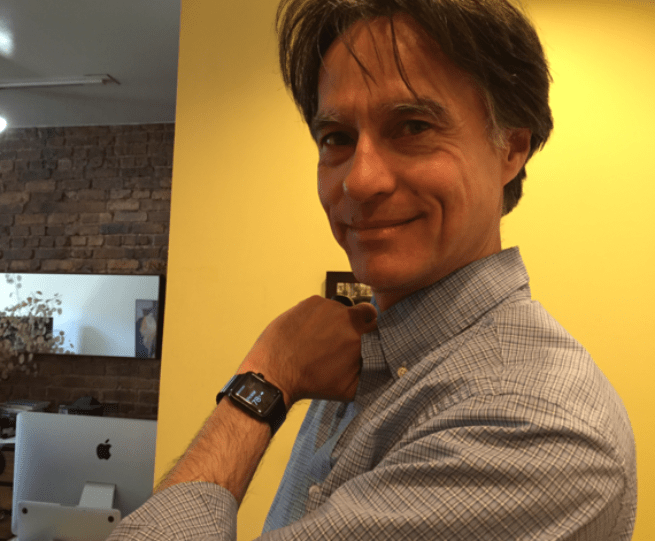
“It’s like I’m wearing you on my watch,” my husband said smiling shyly,  a bit tentative.

It’s been one full day that I’ve been using my new Dexcom G5 CGM – and sharing my blood sugar numbers with the husband. I’ve never shared anything quite this intimate before. If you have diabetes you understand that. Sharing my numbers exposes me: each attempt to keep my blood sugar between those red and yellow lines.

This co-mingling is new terrain for the two of us. While my husband’s enormously supportive, I’m naturally the one who checks my blood sugars ’round the clock and decides what to do about them, when and how. He may notice I’m low like when I return from a morning walk pale or when he hears the plastic coming off the SweeTarts I’m unwrapping. But his caring and concern previously were as a spectator.

Now we both feel he is inside my body, no joke intended. His eyes check my 5-minute glucose numbers on his Apple watch as frequently as my fingers bring the app up on my iPhone. Last night discussing this, he had tears in his eyes telling me what it means to him that he can now keep me safer. For while I didn’t set the share alarm to alert him if my blood sugar drops below 55 mg/dl, not wanting to unnecessarily disturb or burden him, he set it for himself. “I can better protect you now,” he said. And I realize I do feel safer.

Just after lunch today both of us heard the alert that I had dropped below 75 mg/dl due, I now realize, to the after effect of a two hour walk. I went into the kitchen and ate something. Fifteen minutes later he said, “You’re 63.” “I know I said, I’m giving it a bit of time.” “Does it bother you if I tell you that you’re 63?,” he asked crossing this new terrain. “Not yet,” I said.

We know this is new territory we’re exploring. I know this will give him the closest experience of what it’s like to live with type 1 diabetes. What it’s like to constantly have a ticker-tape running in your head calculating what your blood sugar is, if it’s okay where it is, what caused it to be where it is and do I need to do something about where it is, now? I can see him already making the little mind calculations himself as if he were me.

We tread lightly. We realize we may need to establish some friendly boundaries as this sharing continues. We also feel some bedrock has shifted. For while he used to check my CGM in the morning to see whether I was sleeping safely, he can now follow me throughout the day, and at a distance. Like when he’s overseas on business and I’m at home, and know that I’m okay.

I see a deeper understanding penetrate through the skin beneath his Apple watch. The current carries what it’s really like for me to manage my blood sugar every hour, every day, every week, every year. The weight of it lands smack inside his heart.

For even after 15 years of marriage, seeing my diabetes management up this close is a game-changer. And, truth be told, there’s something profoundly satisfying for me to see this transformation occurring in him.

The rest we’ll just have to figure out as we go.