My new treat: a protein shake for lunch

I am not one of those people who enjoys drinking my meals. So when my friend told me that for the past few months she’d been making and enjoying a protein shake for lunch, I thought, yuck not me. But, I am now among the converted.

I tried it largely because many days I do a version of intermittent fasting. I make a cup of coffee when I first wake up. Yes, tis true, I put cream in it, but I sort of don’t register this as breaking my fast. Some will argue, but so be it. That cup of coffee with cream around 8 am fills me up until around 10:30 or 11 am. And here’s something interesting: It’s not that I’m trying not to eat, I’m literally just not indulging in the habit of breakfast, and so find I’m not hungry those first few hours of the day.

So, most days I eat my breakfast – yogurt, a half slice of cinnamon coffee bread (I make myself), a spoonful of almond butter and two spoonfuls of tahini – around 11 am. That means I’m once again not hungry at the proverbial lunch hour. Instead around 2 pm I have an edge of appetite and make myself a protein shake. It’s just perfect to fill that little hole in my stomach with something filling, nourishing and tasty. There are a zillion protein shake recipes online. Take a look.

My shakes (only been doing it a few weeks) are a variation on a theme. Typically, I use a third of a banana, to keep the carbs low and add some berries, which are already low in carbs. I add a few spoonfuls of plain greek yogurt, a cup of almond milk, the green in the picture above was made green by adding some red Swiss chard, (you can add any green veg that doesn’t have a strong taste, many use spinach), then, while the serving size appears to be one scoop, I’m using half a scoop (after all, I am not protein deficient) of my Plant Fusion vanilla protein powder, 4 ice cubes (the ice cubes add heft) and I blend it all in a blender my mother likely gave me when I moved into my first apartment after college.

There are a lot of protein powders out there. I bought this one I’m using above in Whole Foods but I see they also sell it on Amazon, which is the link I included above. I bought PlantFusion because I read all the nutrition labels of all the choice, and this one seemed to hit the trifecta of low carb, healthy ingredients and price.

When I told my friend I was making using that old blender my mom gave me, she said, “Why don’t you get a Nutribullet?” Whereupon I replied, “Why should I? This is doing all I need!” The defense rests.

So if you’re tired of what you’re eating for lunch, or you’re experimenting with different ways of eating, you might consider trying a protein shake for your breakfast or lunch, whatever suits you. My prejudice of not wanting to drink a meal has disappeared. It’s so tasty, satisfying, filling and nutritionally sound. It’s been a wonderful discovery for me, and I don’t see that stopping anytime soon.

When in the void, what to do

As the year winds down, good and bad, I wanted to post this poem. When it was first sent to me, it spoke to me. I found it beautiful and true. No matter what we do, actions great and small, I do believe the world speaks to us if we can be quiet enough to listen.

I have talked a lot over these past 20 years. How many words I’ve uttered on stages, and from behind lecterns, around the world in an attempt to uplift others with diabetes, and the health professionals who tend us. All the words I’ve written that look back at me in three books and hundreds of articles. It’s all good and I am proud.

Still, greeting this moment, this ever present, every changing moment, I wait quietly as the song that is my life falls down into my cupped hands. This is particularly poignant for me as I reflect upon the current stream of my life with the passing of this year.

Please Dexcom, fix this

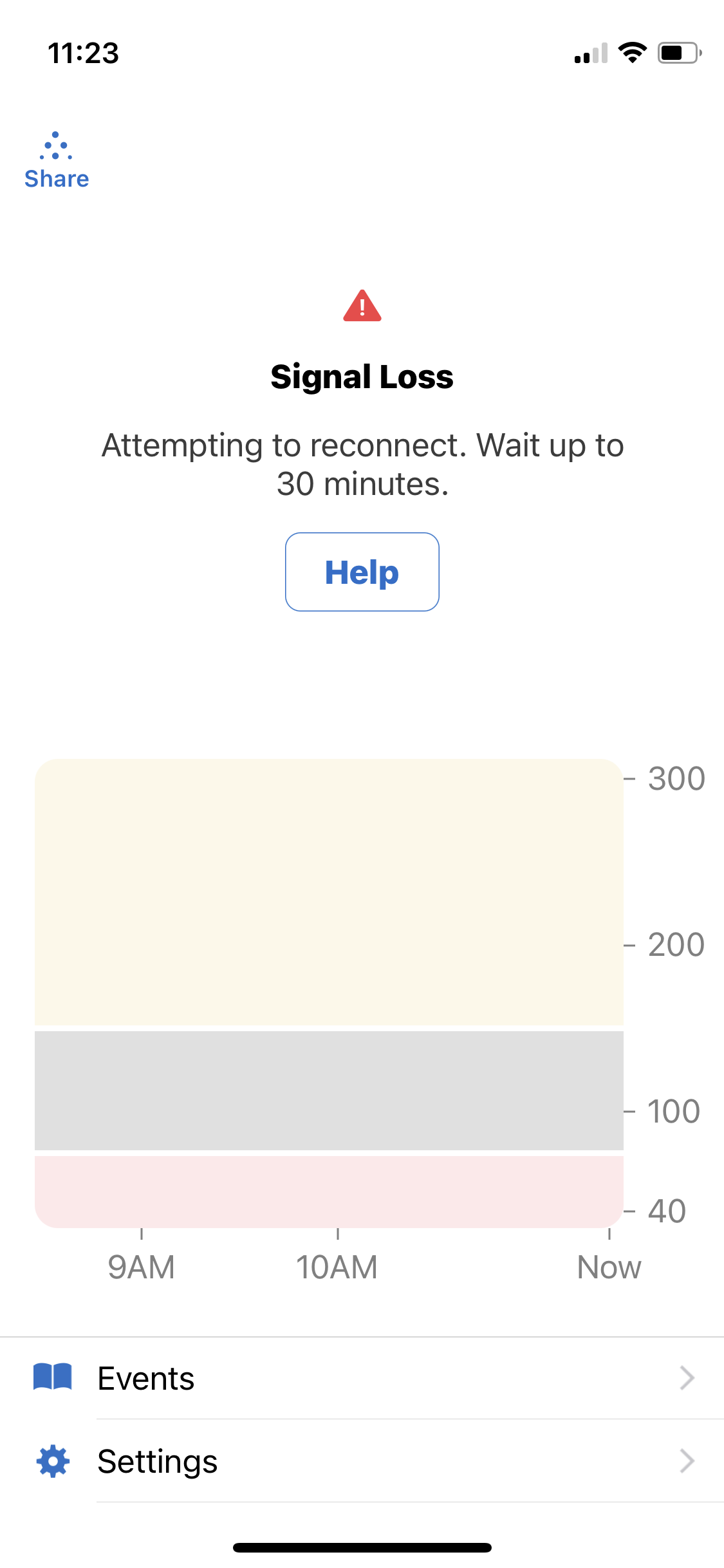
Why is it at least 50% of the time I put on a new Dexcom G6 sensor, I get this message? I follow the instructions, yet this pops up way too often. What’s happening? And beyond whatever is happening, this not knowing whether or not my sensor will work, I notice increases my stress level. As if type 1 diabetes did not already require 24/7 hyper vigilance.

Of all the things people hope the G7 will be – that the sensor is smaller, thinner, more accurate and gives you a farther range, I’m hoping this screenshot above will be history.

Gray Thursday came before Black Friday

I took this photo in front of a Pilates studio in my neighborhood because I thought it was funny. It wasn’t quite as funny when it became true.

At 2:45 am, the morning of Thanksgiving, I awoke with low blood sugar. I was in my mother’s home. I padded out of bed to rummage around the refrigerator looking for juice or fruit or something to raise my blood sugar. Yes, I could have taken a glucose tablet, but when my blood sugar isn’t dangerously low, I’d rather imbibe something nutritious.

No juice to be found, dried fruit would take too long, a jar of raspberry preserves went by unnoticed, I reached for some pomegranate seeds and began munching. Oops, I felt one get stuck in my teeth. Upon closer inspection, there was no seed there, and there was even less of a tooth there. I had cracked my molar and now a piece of it was missing. For the next four days my tongue kept returning to the emptiness where once there was enamel, and getting scraped in the process.

Thanksgiving at my mother’s friend’s home with a broken tooth meant a bit of turkey, roasted sweet potato and something I haven’t eaten in likely three decades for blood sugar reasons, white mashed potatoes. Boy, they were good!

Since it was Thanksgiving weekend, I couldn’t call my dentist until today, and now I’m booked in to see him tomorrow at 9 am. The good news is my tongue has gotten used to the new tooth terrain and is getting scraped far less often. Bad news? That remains to be seen. Still, I’m thankful, there are other teeth in my head standing in for their wounded comrade.

So while my mouth undergoes some redecorating, I am still enjoying my favorite of all seasons, the fall, as the leaves are still golden around here and I smile as the lights begin to come on for Christmas.

One more step to make insulin affordable

I received a mass email this morning from the American Diabetes Association (ADA). In short, the U.S. House of Representatives passed the ‘Build Back Better Act’ that has a national $35 insulin co-pay cap, and allows Medicare to negotiate the price of insulin. This was, in part, aided by the thousands of letters and emails, from us, urging our representatives to support this.

Yet, the bill isn’t a done deal yet, so the ADA is requesting continued support. It’s easy with this form to press this through, it’s mostly written for us.

Let’s keep on them and get insulin down to an affordable price. For the first time I feel it’s within reach.

Celebrating World Diabetes Day and my new dealer, Canada

The husband’s first flight since COVID began was truly memorable. Read on.

Today is World Diabetes Day, the day recognized around the world by a United Nations’ resolution. And this year marks the 100-year celebration of insulin, it was discovered in 1921. You may know it was discovered by Canadian surgeon and medical scientist, Frederick Banting and Charles Best. You may not know Banting and Best sold the patent for insulin to the University of Toronto for US $1.00 – so that no one would ever have to go without insulin. 

Well, we know how that worked out. The last time I walked into a pharmacy to ask how much insulin would cost if I didn’t have insurance, I learned three insulin pens cost $750.

I do have insurance, I have Medicare. Still, the one box of Tresiba pens (five come in a box) that I got a few months ago cost me almost $500 because I had not reached my deductible. That’s $100 per pen. I was told after reaching my deductible, a box would cost around $225. That’s still $45 a pen – with insurance. Plus if you’re on Medicare you cannot take advantage of pharmaceutical patient assistance programs.

Last Wednesday, the husband took his first flight since COVID. Of all places, he went to Toronto, to facilitate a leadership workshop. Having insulin on the brain, I researched how he could purchase insulin for me, while in Canada, knowing it would be cheaper there than here.

I reached out to a few friends and colleagues, they then widened the circle of comrades, and I read numerous articles online. This was a great story. In Canada you don’t need a script to purchase insulin. 

From what I learned, it is legal to order insulin from a Canadian pharmacy and have it shipped to you in the States, but it is illegal to buy it there and bring it home. Grrrr… However, all I talked to who have done it, and each article I read (like the one above) said, if the TSA finds the insulin, they won’t arrest you and they won’t take it away from you. Okay, non-risk-takers that we are, we decided to gamble on this.

The husband’s client for whom he went to Canada is actually in the business of making medicines, so the Chief Medical Officer put the husband in touch with his local pharmacist (thank you, thank you). Yes, the husband could get two boxes of Tresiba from them and they would deliver it to his hotel on ice. For free.

Those two boxes, each with five pens, cost US $218 total. That’s $21.80 a pen! With no insurance! The husband went through US customs on the Canadian side with one box in his vest and one in his carry-on. Both items went through the X-ray machine with no alarms being set off and no police appearing with cuffs. The husband collected his vest and carry-on and walked briskly to the gate whisking his little charges to freedom. 

Of course my two lovely boxes of Tresiba, posing above, were the first thing out of his bag when he walked into the house Friday night. Still, my mind keeps twirling this unbelievable fact/feat around, just like when your tongue can’t stop running over something stuck in between your teeth.

Insulin has always been my drug of choice, but now I have a new dealer, Canada. Thank you Banting, thank you Best, thank you Toronto. Should the husband need to go back again, I might just go with him to thank the nation myself for their sanctity for life – and of course to get some more insulin.

Note of appreciation to Elizabeth, James, Allie, Karlynn, Chris, Michael, Ahmad and, of course, the husband 

Welcome to Diabetes Month

Yes, I’m welcoming you a week late, but if you’ve been scrolling around you’re probably aware this is the month dedicated to raising awareness of diabetes. And November 14th is World Diabetes Day. It’s actually a United National resolution put forth by the International Diabetes Federation.

In honor of diabetes month, I’m participating in a Sanofi sales call tomorrow to talk about the importance of helping more people better understand what diabetes is and the toll it takes.

But this is what I want to share, something just between you and me. It’s a message I’ve long wrote about and often speak about. It flies in the face of what doctors will tell you. And yet it is true.

YOU CANNOT CONTROL DIABETES, OR YOUR BLOOD SUGAR. Statement of fact. So let yourself off the hook when you get numbers you don’t expect. When you do everything right and everything goes wrong.

There are just too many factors that impact our blood sugar. Just to name a few – stress, being sick, temperature, menstrual cramps, lack of sleep, counting carbs, meter readings, how much you exercised yesterday, lacking two other hormones that manage blood sugar as well as insulin… If you’re not familiar, take a look at Adam Brown’s 42 Factors chart. And trust me, there are more.

How could you possibly manually do what your body does automatically? I would like every health professional to experience diabetes for a week and tell me I can control my blood sugar and my diabetes.

Okay, enough said. Whew, it felt good to let that out. So let yourself off the hook. Perfectionism doesn’t work here, or anywhere frankly. Instead, learn how different foods and exercise tend to impact your blood sugar, Learn how to respond to any number to nudge your blood sugar back into range. And then acknowledge that that, just that, is success.

That’s my message for diabetes month. Feel free to share it.

A Treasure Chest of Diabetes Education/Information from Dr. Richard Bernstein

Dr. Bernstein is the well-noted author of the d-bible for so many of us, Dr. Bernstein’s Diabetes Solution. It was the book that made me vacuum most of the carbs out of my diet twenty years ago and I haven’t looked back. (Forgive the photo, he’s not drunk or sleepy, it’s just a screenshot I took from his video.)

I just discovered through a friend and fellow type 1, that Dr. Bernstein has a number of educational videos on YouTube under the heading Dr. Bernstein’s Diabetes University.

I’ve just watched three, one on cholesterol (don’t sweat high cholesterol he says, keep your inflammation down by keeping your blood glucose in range.) One on psoriasis, my new auto immune condition. He says almost every person with diabetes has psoriasis. He listed the auto immune bundle: diabetes, psoriasis, hypothyroidism. Check, I now have all three.

Just wanted to share this newfound resource and his information and wisdom. I’m sure I’ll be back often.

Denmark’s Codiac Conference, no masks!

It was a bit mind blowing looking at a room full of professionals not socially distanced and not wearing masks. Well, that’s Denmark where Covid, for now, is way down and they’ve gone back to life as normal.

I would have loved to have been there but I’m still a bit gun-shy about travel so I was attending the Codiac (Copenhagen Diabetes Consensus) conference online from my home in New York. The two day event was around looking at the impact and value of including us, who they call “users,” in diabetes care, prevention and research. I was one of the two “patients” presenting the value I see in patient involvement.

Midday we were divided into breakout rooms. I chose to go into the one about how to improve patient involvement at the clinic. As I talked about the need to help people with diabetes feel safe throughout the visit with their HCP, another thought came to mind – the need to shift the status quo around diabetes from whether a person is succeeding or failing with their management, to no judgment.

We need to recognize that every day is a new day and the reality of living with diabetes is that even when you’re doing your best things may not go how you hope. Labels like success and failure don’t apply to the complexity of managing diabetes and they don’t help. All agreed so I made some small contribution even if I did have to get up at 5;30 in the morning to attend 😉

Which diet should we all be on?: Keto vs low-fat vs low-carb vs IF vs vegan vs paleo

From all I can gather, and from the podcast I listened to this morning, basically none (diet), or none in particular. If a diet is working for you, fine, stick to it if you want. But know in the end it’s likely, if the diet is extreme in any way, that you won’t be able to sustain it.

Plus, at the end of a year, most every diet leads you to the same place: some weight loss if you keep it up, some weight gain if you don’t.

This morning on my walk I was listening to Leonard Lopate’s podcast from WBAI radio in New York. He was interviewing author Robert J. Davis, PhD about his new book, Supersized Lies: How Myths about Weight Loss are Keeping Us Fat. Not a lot new if you’re no stranger to diets.

Davis, also known as the Healthy Skeptic, wrote the book to debunk what people believe about diets and dieting. The bottom line I took away is our bodies are all different: some diets works well for some people, no diet works optimally for everyone, and the best way to lose weight and keep it off is what we’ve been hearing now for several years: eat healthy, whole foods, veg, fruit, nuts, beans, seeds, grains, dairy, meats, and move. Chuck the processed foods NOW and don’t eat late at night – unless I imagine you work the night shift.

Davis also debunks the myth doctors love to share and we love to feel guilty about: Eat Less, Move More. Exercise, unless you work on a construction site where you’re carrying logs 10 hours a day, does little to aid weight loss. That said, any exercise is a good thing for overall health.

So I would rename the famous mantra: Eat healthy food and move. That really is the end of story. Except of course for all the mega companies that have made, and continue to make, billions of dollars making us think we need special foods or special supplements or special cookbooks or already prepared meals, or frankly to be svelte, skinny, thin.

I can’t quite remember when it was, but somewhere in my youth I reached my all time high weight of 165 pounds. It was likely before I was 18 and diagnosed with type 1 because I remember after my diagnosis in my early twenties I felt I had to lose weight for my health, and I did. I ate less and began running. I only made it to 3 miles, but hey, that’s three miles.

Over the decades I continued to eat healthier foods and smaller quantities (especially after I married a six foot Dutchman who weighed 125 pounds!) and my running became a daily one hour walk. I remember Snackwells in the early days when all we thought about was eating less and being hungry as a natural state. I remember counting calories, giving up salad dressing, and plateauing so, so, many times. But with all that, maybe because it happened over years, my weight came down to 145, where it stayed, then 134, where it stayed and my current, pretty consistent over the past two decades, 124 lbs.

When I did Keto two years ago, I quit as I couldn’t continuously eat that much fat. And I missed everything I normally make out of almond flour. When I did intermittent fasting (IF), basically two meals a day as my first meal wasn’t til 1 PM, and I skipped wine, my weight came down to 117. I loved that, but not enough to keep doing it, as I don’t do it anymore. Instead I have a cup of coffee with cream upon rising and my first meal of the day around 10:30 or 11 am. Trying not to eat after 7:30 PM is tricky as I find I often need something to raise my blood sugar before descending into sleepville.

What works for me may not work for you, but it works for my body, my lifestyle, my environment, my values, and my food tastes. While a fellow type 1-er once yelled at me that not eating bagels was a sacrifice she was unwilling to make, I don’t find it a sacrifice. I make my own scones, biscotti and coffee cake bread out of almond flour which I eat on a daily basis. Overall I’m low carb (not no carb), lots of veg, little fruit, full fat dairy (Fage 5% plain yogurt and cheese) nuts, nut butters, seeds (tahini), rarely grains, fish, some chicken, occasional meat, dark, dark chocolate (combine 85% and 100%) and a glass of vino many nights, along with a 45 minute to one hour walk almost every day. My weight vacillates between 120 and 124 lbs. I’m happy enough.

Bottom line: find what works for you. I would start with the basics: healthy, unprocessed foods, occasional treats – no starvation here or too tight regimes – and move. Again, maybe this doesn’t work for everyone, but I think for now it’s the best we’ve got.