Please, please Santa won’t you take this diabetes away?!

I posted this letter for the first time many years ago, and then a few more times in subsequent years. In truth, given what we endured this year, 2024, there are many more things I’d ask Santa for, but I’m going to keep my request as simple as it always was. 

Dear Santa,

All I’d like this Christmas is for you to take this diabetes away. I’m so tired of it already. All these injections that sometimes leave me black and blue and decisions I have to make. Now that I’m in menopause I can barely tell if I’m sweating because I’m losing estrogen or my blood sugar’s crashing at 50! And, can we talk…I mean the constant figuring out how many carbs are in a ravioli or bread stick or that fried calamari that will be at the company Christmas party. Some days I just want to lay down and shoot myself. Please, please Santa, would you take this diabetes away?

Sincerely,

riva

Dear Riva,

I’m very sorry you’re having a tough time during my favorite season. I only want people to be singing carols and drinking eggnog and feeling good cheer. Unfortunately, it says in my contract, that I’m not allowed to interfere with life’s natural occurrences. So here’s my suggestion, after you open your holiday gifts, look under your Hanukah bush for the gift in having diabetes. You may have to spend a few days looking so why don’t you schedule it for the week between Christmas and New Years while you have some down time? Then you can start the new year fresh.

Best wishes,

Santa and the gang

Dear Santa,

A gift in my diabetes? What are you crazy? Meshuggah? Thanks, but no thanks!

riva

Dear Rabbi,

I seek your wise counsel. I wrote to Santa to take away my diabetes but he wasn’t helpful at all. Surely you who have studied so much and represent our people who have suffered throughout history can help me with this awful diabetes. It’s such a strain, Rabbi. I have to test my blood sugar when I really want to be lighting the sabbath candles. I forgot all about the High Holy days this year because I was so busy counting carbs in the Challah, bagels and honey cake. Rabbi, please, what solace can you offer me? What words of wisdom? Surely you would tell me to just forget about this diabetes thing and study the Torah, right?

Please write soon,

riva

Dear riva,

Santa and I just returned from the Caribbean and he told me about your difficulty. He said he told you you should look for the gift in your diabetes. I concur with Santa, there are many gifts to be found in diabetes if you look. For one, my child, you won’t have to drink the traditional Manishewitz holiday wine anymore. The Counsel all agree it is much too sweet. Bring out the Chardonnay!

When Santa asks you to look for a gift in your diabetes, he is not saying this because you are not Catholic and he is not bringing you anything, although this is true. He is speaking like our brothers the Buddhists, who profess there is a gift in everything if you look for something positive it can bring into your life.

Let me tell you a story my child. My own Aunt Sheila had diabetes and after she stopped kvetching, she went to a spa and learned how to eat healthy. She shopped along Rodeo Drive and bought a cute little jogging outfit and started running. On her jog along the ocean she met her fourth husband, Marvin, and they’re very happy. They just moved into a $6,000,000 mansion in Jupiter, Florida — right next to Burt Reynolds! Everyone’s plotzing! Darling girl, find a gift in your diabetes, because to be honest, since you’re not orthodox, and all I have are these great wigs I got on sale from my cousin Schlomo, I’m not bringing you anything either. And really, it’s not very pleasant to whine.

Shabbat Shalom

Rabbi, Local Union 107

Dear Rabbi,

I thought about what you and Santa said and have decided to become a Buddhist. I picked up the Dalai Lama’s book, The Art of Happiness. He says, “Happiness is a butterfly, which when pursued, is always just beyond your grasp, but which, if you will sit down quietly, may alight upon you.” I told my friend, Joe, I like butterflies and I like the robe, so these aren’t bad gifts. Joe said the quotation meant that we are the source of our happiness, that happiness can only come from inside us regardless of what happens in our lives. Hmmm, I said, maybe I need to learn more. So I booked a flight to Tibet. Now if only I didn’t have to drag all this damn diabetes stuff with me….ohm…ohm…oy. riva

JDRF has a new name, Breakthrough T1D

I just got the announcement in my email this morning although it was announced on June 4th. The long-standing, original, research and advocacy organization, Juvenile Diabetes (Research) Foundation, has renamed and rebranded itself into Breakthrough T1D. The organization originally began as ‘Juvenile Diabetes Foundation,’ then moved to ‘Juvenile Diabetes Research Foundation’ to highlight its research activities, and then ‘JDRF,’ to recognize that not everyone who has, or gets, T1D is a child.

Medscape has some interesting statistics about people living with type 1 diabetes, for instance the median age worldwide is 37 years old.

This year’s rebranding is to bring more attention to the fact that the organization works on behalf of all people with T1D, regardless of age, and that their broader portfolio of work includes trials and projects that are under the radar like funding devices and biological cures, including stem cell trials and research.

It’s worth a look around their new website to see they hope to accomplish for the future, and where they’ve traveled from to get here. That’s just what I intend to do later today.

Forgive the rage bolus, so cunning, so calculating, so primed to take us down

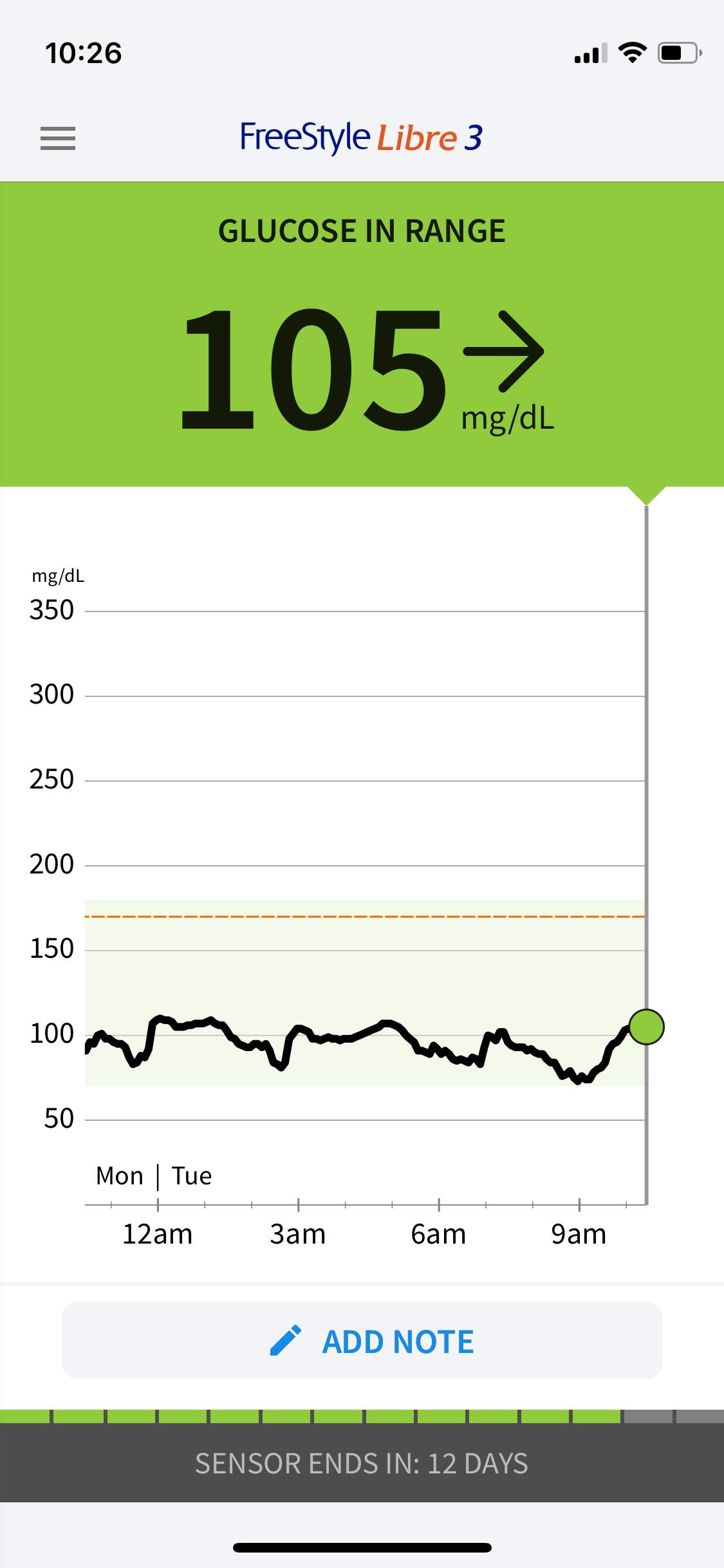
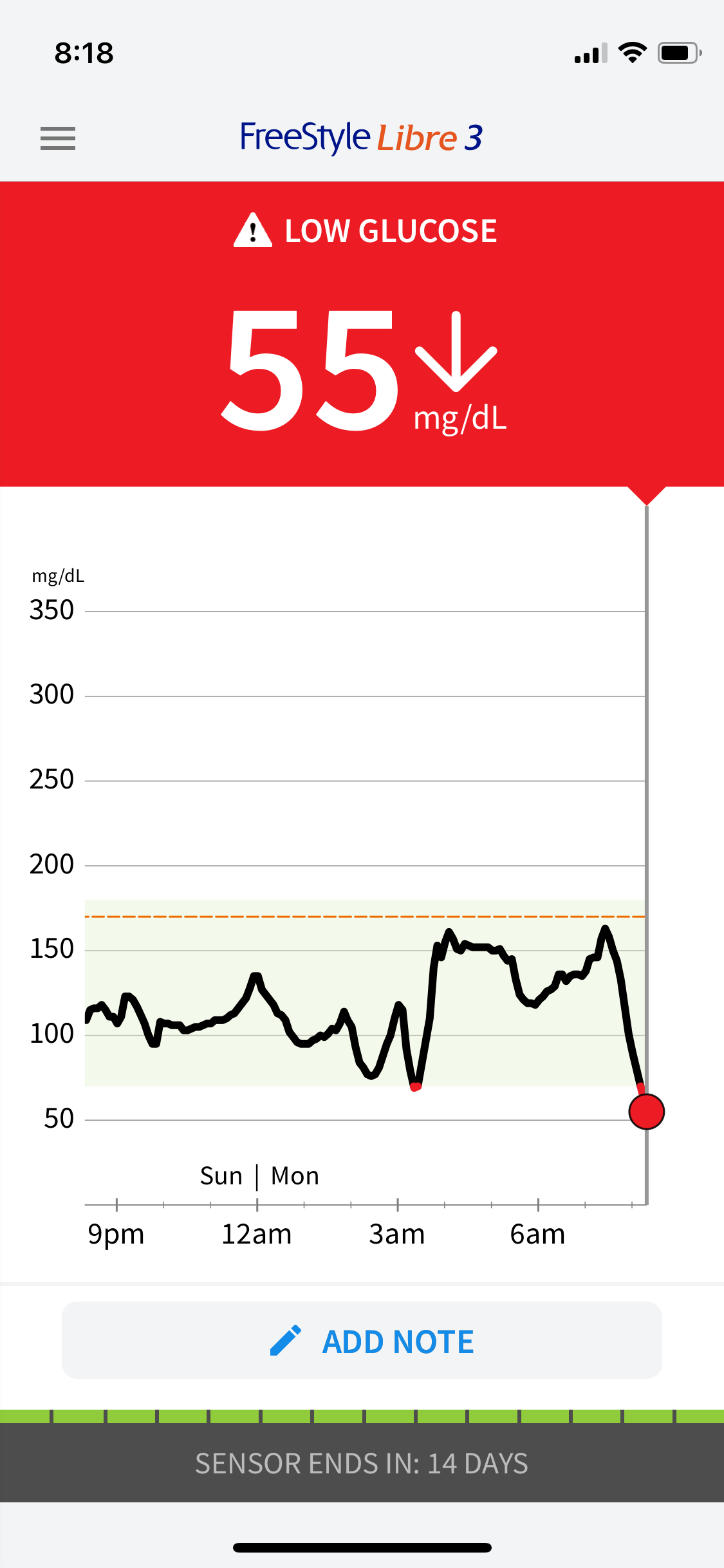
So what the heck is that above? At 4 am I appear to be 170 mg/dl. I was 173 mg/dl when I checked upon waking and 166 mg/dl when I checked on my meter. I checked because this is unusual for me and I just put this sensor on yesterday, and we know they can go wacky in the first 24 hours. Yet, that it was not.

Since I typically need 2 units when I wake up a little high, let’s say 130 mg/dl – one for the Dawn Effect and 1 for my coffee. – my fingers skipped my rationale calculating mind and pushed the plunger down on 3 units. After all, I was 170!

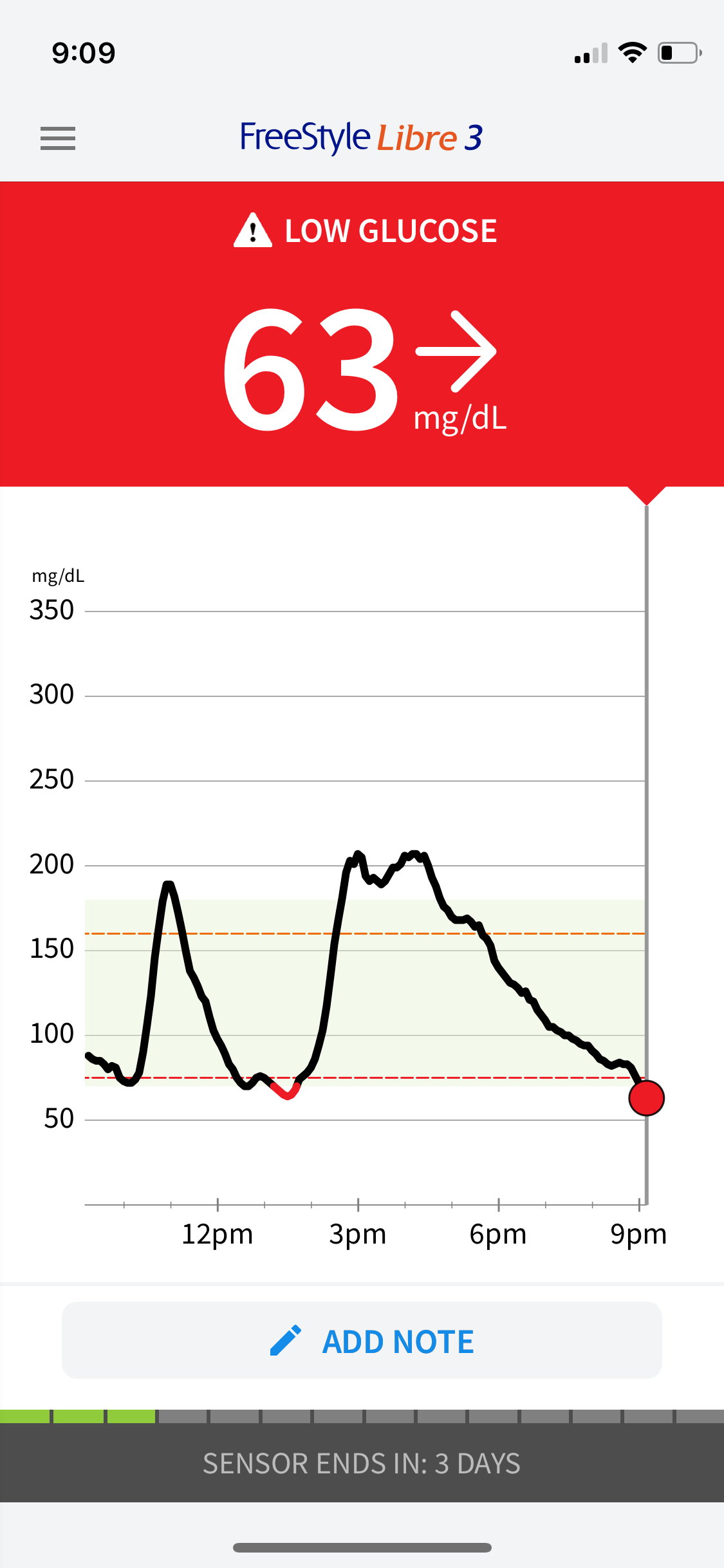
An hour later I paid for my impulsivity. 55 mg/dl (also confirmed on my meter) was the bottom only because I finally ate a teaspoon of honey and 1 jelly bean. FYI I hate to eat for no other reason than I have to, so I usually wait it out like a Tiger Mom watching how far and fast my numbers go up and down.

I think unfortunately the rage bolus is here to stay. It’s just the expression of human emotion. We want to rectify a troubling situation FAST. Even I, who generally follows Dr. Richard Bernstein’s “law of small numbers” (google it for the short explanation) gets sucked in when my emotions override my better thinking; but of course I can blame it on neurobiology saying my perhaps to say it’s really not my fault at all as it’s my amygdala gets hijacked and I just go along.

Then, the only thing you can do, the only route back to sanity is self-forgiveness. Luckily today I had the fortitude to bestow that gift upon myself. I wish you the same.

The wisdom of living 52 years with type 1 diabetes in a nutshell: Each day is a new day.

In two days, February 22, I’ll be “celebrating,” well acknowledging, 52 years with type 1 diabetes (T1D). Since I got it at 18, I have lived with T1D much longer than not. In reality, I have no memory of what it’s like to live without eye-balling carbs, checking my CGM, thinking ahead what and when I’ll be eating, will I be walking, oops that was stupid, etc, etc, etc.

If you think I have tons of wisdom to offer having lived 52 years with this, maybe I do. It would probably pour out of me if we were having a conversation. But since this is a one-sided conversation, here are my nuggets. Yes, they’re purposefully spare because it’s easier to remember a few things than memorize a living encyclopedia:

  1. Use a CGM if you can. If not, check your blood sugar before and two hours after meals and activity. Look for patterns to know better how to dose.
  2. Don’t beat yourself up for your numbers. Few will tell you this truth: You can’t “control” blood sugar. The body’s biological functions are not within your control, and life is unpredictable. You are responsible for your effort, but not your outcome.
  3. Make diabetes friends. No one else will “get it” the way they will, and those friends will put a little self-love back into your heart.
  4. Acknowledge T1D is tough, constant work. You don’t get any days off. In fact, you don’t make any progress, you just work hard not to digress too far. Not a pleasant thought, but the first time I heard it it rang so true. Given that truth, do the work and go easy on yourself. Celebrate the wins and see yourself in a constant experiment mode.

Yes, you thought there’d be five points, but those are the four that strike me this Tuesday afternoon. And here’s my ‘one thing I know for sure.’ When I change my routine, even after 52 years, it’s like I know nothing. Eating and exercising similarly day to day is definitely my special sauce. Case in point:

Routine

Whereas my recent trip to Costa Rica where my eating and exercise, being different and unpredictable, challenged all my “best” decisions

Closing thought, no matter where you are on this road, you’re still here. That’s a testament to all you’ve done.

CDE Carolyn Robertson virtually educating type 1s for free

I heard about Carolyn Robertson many years ago (and that is why I still use the acronym CDE). She was everyone’s favorite CDE in New York City. I never met her at the time as she moved West shortly thereafter.

But she’s been giving free webinars just to help keep all of us on the ball. Last night she gave one specifically for people on multiple daily injections, as opposed to a pump. As her seminars do, this one lasted two hours. She presented great information, we asked questions, shared and I picked up a few tips and reminders, even after 51 years of type 1 diabetes.

Here is what was meaningful for me:

While we want our blood sugar in range, we particularly want to avoid spikes. Spikes in both directions create extra inflammation. So if your blood sugar is too high, for instance, better to bring it down gradually than too fast.

As syringe and pen needles have gotten so short, 4 mm, make sure you inject at a right angle. If your needle goes in at a 45 degree angle for instance, there’s a chance it will not go in deep enough to reach the layer of skin that’s best for taking the insulin where it needs to go.

As I wrote in my last post, if you have a dramatic rise in your blood sugar in the early hours, the Dawn Effect, there’s no harm trying Metformin to see if that helps minimize the glucose the liver pumps out at that time of day. Since Metformin is a GLP 1, it also can cause gastric distress and nausea, so start with a low dose and build up slowly.

If you accidentally double your basal insulin you might need to get to a hospital where they can put you on an IV drip of glucose. This really depends on how much insulin you took.

Carolyn left us with the good news that while we don’t see it, companies are continuously innovating. Pump and Pharma companies are trying to come up with better devices and smarter, faster insulins.

If you want to receive Carolyn’s newsletter, Strong on Insulin Group, go here. You’ll hear about updates and when she’s giving one of her quarterly webinars.

Diabetes patient tips sponsored by JDRF


Yesterday I listened to a number of people with type 1 diabetes share their personal tips for managing their diabetes. Above was the last tip recommended, to watch this video from Dr. Steven Edelman, founder ofTCOYD on “diabetes and drinking.” So while writing this, I did. You should too and have a laugh before we go on to more serious stuff. 

The Patient Tips session was part of JDRF’s ONE Expo. A fairly new outreach program trying to bring – education, engagement and empowerment – to the type 1 community in New York City. JDRF is the largest charitable supporter of type 1 diabetes research.

The session was led by Zoe Heineman, who has started her own Ha!(Hypoglycemia Awareness) movement and is training first responders to recognize low blood sugar. 

Here are some of the ‘Tips & Tricks for Daily Type 1 Management’ that were shared by the group including patients, a mom, a sibling and professional athlete:

• Train everyone around you what to do in case of emergency like for instance where you keep your insulin, glucose tabs.

• Give yourself a break. One blood sugar number does not make an A1C.

• A woman who’s had diabetes 53 years shared that she’s always had high A1Cs until she went on a low-fat, high-carb regimen that brought her A1C down from 8% to 6.5%.

• If you’re in school explain diabetes to your teachers and classmates. And tell your friends. They won’t treat you any differently and you’ll feel safer. 

• This loving sister shared that she’s not annoyed to wait for dinner if her brother’s blood sugar is high and she’s more than happy to do speed walking down hotel corridors with him.

• This mom shared how important it is to accept the diagnosis. A family can’t create a positive nurturing environment until you do. 

• If you have an office job, keep your desk as well stocked as a drugstore – with pump and test supplies and reserves of quick acting sugar.

• Diabetes doesn’t define you, it’s something you have. It needn’t stop you from doing almost anything.

• Diabetes is an art, not a science. You can’t always figure it out. You can’t be perfect at this. Try things out and don’t be defeated. It’s all learning. 

• Use exercise to help maintain your blood sugar. No one ever felt worse after exercising – it helps keep weight off, feels good to move your body, have fun and make it social.

• Check your blood sugar, don’t guess. 95 mg/dl may feel different today than it did yesterday. 

• When traveling, keep some supplies on you and some in checked luggage so if you lose some you have back up.

• HelpAround is a community of type 1s. You can register and always find someone nearby who can assist you if you need insulin or a question answered. 

• If you’re drinking, check your blood sugar frequently and make sure your friends know you have diabetes.

• Don’t have your life revolve around your diabetes.

All good ideas. If I add my two cents I’d tell you to appreciate all the work you do managing your diabetes and find one positive thing diabetes has given you and remember it when you feel overwhelmed.

KIDDs, perhaps the truly unseen group impacted by diabetes

NewImage.png

Last Saturday I spoke at the launch of Marjorie’s Fund in New York City. Marjorie’s Fund is a non-profit organization founded by endocrinologist,Jason Baker, a person himself with type 1 diabetes, and just featured in Diabetes Forecast as “People to Know in 2013.” And deservedly so. 

Until now Marjorie’s Fund has dedicated its energies to empowering youth and adults with type 1 diabetes in Africa by providing resources, education and supporting relevant research. Marjorie’s Fund was actually named after a young woman Dr. Baker met in Uganda, who hard as she tried, given the lack of resources, died at 29 from kidney failure, a consequence of her type 1 diabetes. 

The three hour event gathered about 75 people with type 1 diabetes and their loved ones – parents, spouses and friends – at Chelsea Piers in Manhattan. The event had a triple purpose: to help introduce PWDs (people with diabetes) to local resources, create community and celebrate those we hold dear who support us each day.

Yet, in that list of supporters, I left out a significant source of support – our children. And, I hadn’t really thought about it until 16-year old Hannah approached me and introduced herself and her dad who has had type 1 diabetes for 41 years. Same amount of time as me.

I was truly moved by the loving relationship between Hannah and her father and realized, not having children myself, that children who have parents with diabetes, particularly type 1, are both a source of support and impacted by their parents’ diabetes. It must be frightening to see your parent exhibit any of the symptoms of low blood sugar or at times heart-wrenching to see them check their blood sugar multiple times a day, every day.

Wanting to help other young people whose parents have diabetes, Hannah created the website KIDDs, Kids of Insulin Dependent Diabetics. It culls resources, basic information and gives you, if you are the child of a parent with diabetes, a place to be with others who share your experience.

As we parted, Hannah’s father and I agreed that we’re going for our 50 years with diabetes Joslin medal. I’m hoping Hannah will join us at the celebration dinner. Who knows? Maybe by then she’ll have kids of her own!

“Sugar Babies” film shows wrenching rise in childhood diabetes, and needs funding

Even after living with type 1 diabetes 40 years, tears sprung to my eyes watching the trailer of “Sugar Babies”, the rising epidemic of diabetes in children. Two and three year olds taking shots and pricking their fingers constantly like 4-year old Caidence above. Ten year olds with type 2 diabetes largely because we’re larger. 

Jenny Mackenzie, mother of a type 1 daughter, and award-winning filmmaker is trying to raise $30,000 to finish her eye-opening film on childhood diabetes. Whether you contribute any money or not, a dollar or ten or nothing, watch, you will be moved. You will remember when children live this way what it really is to be, and to have, a child with diabetes.

Isn’t it time that people really understood what it’s like to live with diabetes, and we make it known?

Type 1 vs type 2 diabetes debate continues

Which is worse t1 or t2? Keeping another myth alive.

 NewImage

Wow, I am late to this discussion, but felt it worthwhile to join because it appears the debate continues…

Last month Diabetes Health published “What People with Type 1 Diabetes can Learn from Type 2s” by Clay Wirestone  It set off a firestorm of comments, mostly from type 1s, about how dare you tell us we can learn something from those lazy, fat type 2s!

David Spero, blogger over at Diabetes Self Management then wrote this post, “Type 1s Vs. Type 2s?” calling for type 1s and type 2s to come together for the sake of our health and that both sides are not fully aware of what the other side lives with. Interestingly, the comments posted on Spero’s site were almost unanimously empathetic.

It seems to me, Wirestone’s biggest goof was his argument (that t1s can learn from t2s) and his tone. If he’d approached the topic from the point of view that t1s and t2s share some commonalities and we can each learn something from each other, the war may have never ensued. But it is a fascinating study in how we all emotionally hold diabetes.

You should go read the stories and comments to both stories. In reading all the comments to Wirestone’s post, I found Allison Blass nailed it for me:

“The problem with this article isn’t so much that it’s saying people with type 1 can learn something from type 2, but assuming that people with type 1 aren’t already learning these lessons for themselves. Plenty of PWDs with type 1 exercise regularly, take their medication faithfully, and make small changes to get healthy. These aren’t genius concepts divined by the type 2 community. 


I will say that the amount of misinformation and misconceptions about type 2 diabetes in the comments are disgusting. Type 2 diabetes is not CAUSED by obesity – it’s a contributing factor. Type 2 is not cured through diet and exercise – it is managed, just like insulin. Type 2 diabetes does not have the same flexibility as type 1 – blood sugars have to be dropped through extra exercise or changes in diet, not just a simple bolus. People with type 2 diabetes can go years without being diagnosed, which means that many people with type 2 are diagnosed at the same time they find out they have complications. 


Type 2 diabetes is a bitch, same as type 1 diabetes. And yes, they are different. But we both have to do things that are different, we both have a health issues and learning tactics and strategies for handling certain situations could help. 


In any event, if you don’t like people spreading misconceptions about your disease, you should probably be damn sure you’re not spreading misinformation about someone else’s. It’s not nice.” 


-Allison Blass 
www.lemonade-life.com

And then, as I said, even tho I came late to the game, I felt compelled to add my own 2 cents worth and so I posted this today on Spero’s blog:

“As a type 1 for 38 years I understand the cry of type 1s that no one understands how hard and intense it is to live with this disease, and that we are grouped under the same umbrella of those lazy, fat type 2s who did it to themselves.

Yes, many type 2s engaged in poor health habits that may have led to their diagnosis, but not all. One in five are slim actually. For some the genetic component is so strong they would have gotten it regardless of their actions. And there must certainly be type 2s who are annoyed with the bad press their own brothers and sisters bring them.

But one diabetes being worse than the other? It’s all a matter of perspective. I wrote a book recently, “50 Diabetes Myths That Can Ruin Your Life and the 50 Diabetes Truths That Can Save It”  and the myth I always quote is, “Type 2 diabetes is not as serious as type 1.”

It is one of my favorites, because the emotion runs so high and because the answer seems so obvious, but is not. Both are extremely serious because they can both lead to the same devastating complications. While type 1s will never get off their insulin, and endure more intense management, type 2s are asked to undertake preventive behavior, which anyone can tell you, is a bitch.

Since most type 2s are diagnosed years after they have the illness, many already have complications by time they’re diagnosed. And while most type 1s will live with their illness longer than type 2s, many will also live more healthfully with it because they developed healthy habits earlier and they see more directly the positive result of healthy habits.

When “What People with Type 1 Diabetes Can Learn from Type 2s,” appeared on Diabetes Health what incensed most readers was the cavalier notion that type 1s aren’t doing good enough, so obviously we could learn a thing or two from type 2s. That reeks of presumption and offends.

We all have something of value to share from our experiences, and it’s up to us as individuals how we manage our diabetes. And, how we choose to see it – some see themselves as victims and only see hardship, others see diabetes as a welcome wake-up call and get healthier, and others see diabetes as a signal that life is precious and go about making the most of it.

Since no one can argue with your experience, it’s foolish to throw rocks at someone else’s. And while personally, I would vote to change the names of type 1 and type 2 diabetes to better reflect the differences and educate the general public about the differences, when it comes to helping each other out, let’s not overlook that living with any chronic disease we share many similarities.”

What’s your take on this?