World Diabetes Day, again, hmmm and again, and again, and again, and again, and again

I’ve had type 1 diabetes for 52 years. You may know that. Diagnosed at 18. I was told, like almost anyone diagnosed with type 1 diabetes in any year, “We’ll have a cure in five to ten years.” Well, of course we don’t. Nor do I actually expect one in my lifetime.

That’s not to say I’m not grateful for all the advances we have: better insulins, faster insulins, peak less insulins, smart insulin pens, continuous glucose monitors, insulin pumps now cozy with continuous glucose monitors, looping etc. Most of these advances have come in the past decade. Somehow speed begets speed. Advance begets advance.

Yet, still each year we stand up tall and honor a single day in the year when we attempt to bring awareness to this condition that many of us have lived with a very long time. I’m sure that’s better than not doing so, but it feels like it feeds a complacency. It quiets the masses.

I’d rather we were doing more, if that’s possible, I don’t know. What I do know is, in part, these campaigns promoting diabetes day with blue balloons and roses and the sharing of stories are lovely for the newcomers to our ranks, but this old rank and file member feels these efforts carry a whiff of distraction because we’re still so far from that original promise.

In all honesty, I had no idea when I began writing this post that I’d end up here. I expected to share with you the campaign that Breakthrough T1D (formerly JDRF) is running this laudable day and extend the opportunity to participate. So here it is – ‘What do you want T1D breakthroughs for?’ And, yes, that’s nice.

Yet, wouldn’t it be nicer to no longer have a World Diabetes Day because there’s no reason to recognize an illness that no longer exists.

Diabetes Sisters brings outstanding peer & professional support to women with diabetes

Diabetes Sisters has a new look – and a forward looking agenda. They are working to be THE support organization for women and their health, and they’re well on their way.

The photo above documents their offerings. Among them are weekly virtual meet-ups. While a few years ago the groups were run locally face to face, the pandemic brought the groups online where they have stayed. The advantage is now you can attend any group, anywhere, and as many as you like.

I’ve been doing a lot of work with the leads of Diabetes Sisters, Donna Rice, Michele Polz, Shelby Kinnaird and Kristy Farnoly since last November when I wrote an article in their December newsletter that we can’t control blood sugar. I can vouch that these women’s concern is you. To bring you everything in their power to help you thrive.

I can also vouch that flourishing with diabetes lies very much at the foundation of Diabetes Sisters’ new platform. There are regular expert talks on issues that affect women’s health. Some are given by medical experts, others by patient experts. And I kicked off the Expert Series last month with a webinar on flourishing with diabetes.

May 29th I’ll be showcasing live guest Amy Jordan and her amazing triumphal story. Amy lives with type 1 diabetes, blindness, a damaged leg due to being hit by a New York City bus. Yet, she still leads a dance company, her lifelong passion, and has never stopped taking giant-sized bites out of life, with a sense of humor. You can watch Amy’s documentary, Amy’s Victory Dance, and I strongly suggest that you do. Then join us on the 29th for the conversation.

While the organization has put on a new face, much hasn’t changed. Founded by Brandy Barnes in 2008, and then run by her successor, Anna Norton, and including the women who have run the meet-up groups over the past years, everyone has held the same desire – to help women with diabetes not feel alone, not be alone and live their best life.

There’s a lot going on and there’s a warm community waiting for you with open arms.

The wisdom of living 52 years with type 1 diabetes in a nutshell: Each day is a new day.

In two days, February 22, I’ll be “celebrating,” well acknowledging, 52 years with type 1 diabetes (T1D). Since I got it at 18, I have lived with T1D much longer than not. In reality, I have no memory of what it’s like to live without eye-balling carbs, checking my CGM, thinking ahead what and when I’ll be eating, will I be walking, oops that was stupid, etc, etc, etc.

If you think I have tons of wisdom to offer having lived 52 years with this, maybe I do. It would probably pour out of me if we were having a conversation. But since this is a one-sided conversation, here are my nuggets. Yes, they’re purposefully spare because it’s easier to remember a few things than memorize a living encyclopedia:

  1. Use a CGM if you can. If not, check your blood sugar before and two hours after meals and activity. Look for patterns to know better how to dose.
  2. Don’t beat yourself up for your numbers. Few will tell you this truth: You can’t “control” blood sugar. The body’s biological functions are not within your control, and life is unpredictable. You are responsible for your effort, but not your outcome.
  3. Make diabetes friends. No one else will “get it” the way they will, and those friends will put a little self-love back into your heart.
  4. Acknowledge T1D is tough, constant work. You don’t get any days off. In fact, you don’t make any progress, you just work hard not to digress too far. Not a pleasant thought, but the first time I heard it it rang so true. Given that truth, do the work and go easy on yourself. Celebrate the wins and see yourself in a constant experiment mode.

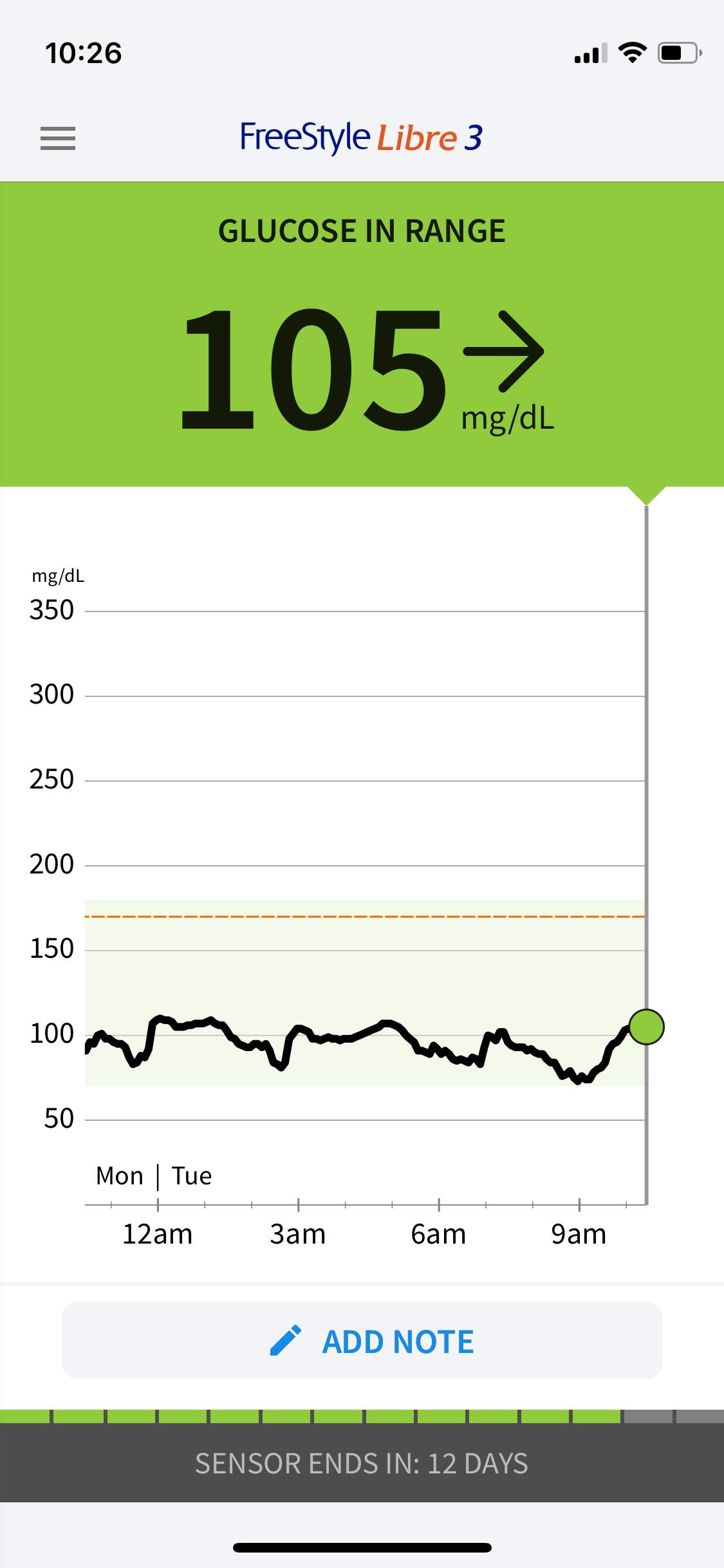
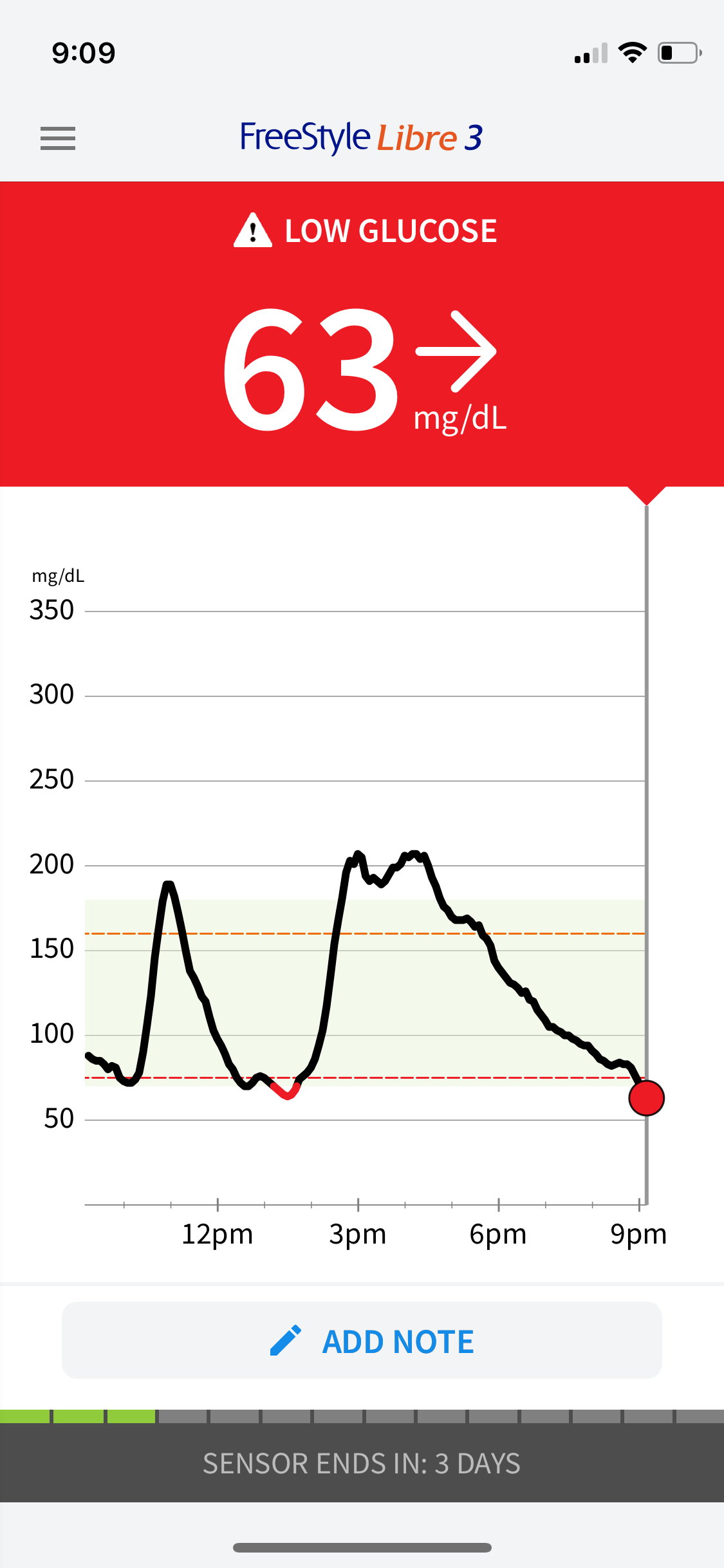
Yes, you thought there’d be five points, but those are the four that strike me this Tuesday afternoon. And here’s my ‘one thing I know for sure.’ When I change my routine, even after 52 years, it’s like I know nothing. Eating and exercising similarly day to day is definitely my special sauce. Case in point:

Routine

Whereas my recent trip to Costa Rica where my eating and exercise, being different and unpredictable, challenged all my “best” decisions

Closing thought, no matter where you are on this road, you’re still here. That’s a testament to all you’ve done.

CDE Carolyn Robertson virtually educating type 1s for free

I heard about Carolyn Robertson many years ago (and that is why I still use the acronym CDE). She was everyone’s favorite CDE in New York City. I never met her at the time as she moved West shortly thereafter.

But she’s been giving free webinars just to help keep all of us on the ball. Last night she gave one specifically for people on multiple daily injections, as opposed to a pump. As her seminars do, this one lasted two hours. She presented great information, we asked questions, shared and I picked up a few tips and reminders, even after 51 years of type 1 diabetes.

Here is what was meaningful for me:

While we want our blood sugar in range, we particularly want to avoid spikes. Spikes in both directions create extra inflammation. So if your blood sugar is too high, for instance, better to bring it down gradually than too fast.

As syringe and pen needles have gotten so short, 4 mm, make sure you inject at a right angle. If your needle goes in at a 45 degree angle for instance, there’s a chance it will not go in deep enough to reach the layer of skin that’s best for taking the insulin where it needs to go.

As I wrote in my last post, if you have a dramatic rise in your blood sugar in the early hours, the Dawn Effect, there’s no harm trying Metformin to see if that helps minimize the glucose the liver pumps out at that time of day. Since Metformin is a GLP 1, it also can cause gastric distress and nausea, so start with a low dose and build up slowly.

If you accidentally double your basal insulin you might need to get to a hospital where they can put you on an IV drip of glucose. This really depends on how much insulin you took.

Carolyn left us with the good news that while we don’t see it, companies are continuously innovating. Pump and Pharma companies are trying to come up with better devices and smarter, faster insulins.

If you want to receive Carolyn’s newsletter, Strong on Insulin Group, go here. You’ll hear about updates and when she’s giving one of her quarterly webinars.

A Christmas Gift from me to you: You Can’t Control Blood Sugar

I’ve been saying this for quite a while, now I’m writing about it: You cannot control blood sugar or diabetes. Yes, you can manage it, influence it, navigate it, wrangle with it, bolus rage it, but you cannot “control” it. You cannot do x, y and z and get the precise number you want. There are a multitude of interacting factors why. If you’ve had diabetes long enough for the shock to wear off, I will go out on a limb and say you agree, as everyone does once I explain this. Surely you’d think after having type 1 for 51 years I’d know every trick to control it – geez, hasn’t happened yet.

So here’s my Christmas present to you – you’ll learn why you can’t control it and what to do instead : “The Myth of Controlling Blood Sugar, And a Better Way to Manage It.” It’s in DiabetesSisters’ newsletter this month.

It’s truly amazing that this falsehood has been told to us for decades, by our health professionals, the media, and now device companies. Is it wishful thinking? Our love of speaking in sound bites? Medical training for acute conditions that fails miserably for chronic conditions.

Whatever it is that causes us to repeat this myth, without scientific or anecdotal evidence, or much thought at all, causes people with diabetes to expect the impossible from themselves, and then feel bad, sad, frustrated, disappointed, angry, shamed, burned out you name it when they don’t ace it.

So steal away sometime today and have a read. The reward is immediate. And need I say, will be a gift that just keeps giving each and every day.

Happy Insulin Day!

UnknownFrederick Banting

Did you know that on this date — October 30 in 1920, Frederick Banting woke from his sleep and wrote down the method to isolate insulin? Don’t worry, I didn’t know either. A friend, who is an M.D., just sent this salutation to me in an email and it gave me a moment’s pause. Banting’s dreamed method was so on the mark that in January of 1922 he treated the first patient with type 1 diabetes successfully! In that regard I am very happy to wish you a fabulous insulin day.

Think today how lucky you are. Millions died from diabetes before insulin was discovered and had to subsist on starvation diets before their grizzly end. So, maybe on Happy Insulin Day we should all celebrate by indulging in a favorite food — pizza, Drake’s coffee cakes, cherry pie, mocha fudge ice cream (oops, my fantasies) — because we know we can manage it with insulin. And, yes, tomorrow is another day.