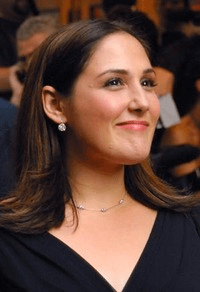
The Ricordi Chamber stars on “Grey’s Anatomy”!

I thought it was way cool while zoning out last night in front of prime time’s soap, “Grey’s Anatomy” to hear the words the “Ricordi chamber.” 

There I was wondering would Meredith make Mr. Dreamy realize she’s not just his wife but a fine resident? Would Calli ever stop screaming about her pregnancy? Would Mark ever tell Lexie about the baby he’s fathering? Then while Dr. Bailey’s performing surgery that Lexie’s twittering about in the background – much to the consternation of the Chief – someone either in the operating room or via twitter says they need a “Ricordi chamber.” The Chief looks doubtful but a twitterer (I think, because now I’m leaping over to my computer to send a fast email about this) helps them realize the viability and that there’s one down the road at a nearby hospital.

The Ricordi chamber is the creation of Dr. Camillo Ricordi, Scientific Director at the cure-focused premiere Diabetes Research Institute. The Ricordi chamber extracts healthy beta (insulin-producing) cells from a damaged pancreas that can be used for islet infusion. 

I interviewed Dr. Ricordi a few months ago on the Huffington Post, where he spoke about the Ricordi chamber, and much to his dismay having it named after him.

Dr. Ricordi: One night they were discarding a pancreas at the university. I waited for everybody to leave the lab and did a secret experiment. I thought if it doesn’t work I won’t tell anyone. If it does I’ll tell my boss. It worked, and within a few weeks all the engineers at the lab switched to this new procedure I’d tried. It’s based on a chamber.

Riva: This is the Ricordi Chamber?

Dr. Ricordi: Yes, but it was not my idea to call it that. I had called it the Automated Method.

Riva: How did you come up with it?

Dr. Ricordi: Truly, I was inspired watching a log burning in a fireplace. I thought you could develop a process where the pancreas would sit inside a chamber and like the slow, continuous process of disassembling a log in a fireplace, we could disassemble a pancreas and liberate insulin-producing islet cells. At the time it was very tough to break down an organ and get the islets out. They used a very heavy mechanical device not unlike a kitchen grinder. So my idea was quite radical. People laughed, “Sure you want to put a whole organ into a chamber and have things coming out the other side!” But it worked.

My leap to my computer was to email Tom Karlya, Vice President at DRI, whom I’d recently lunched with, and Lori Weintraub, VP of Marketing and Communications. Tom emailed right back, “Cool, huh?” Lori wrote back, “Thanks Riva!”

Yes, it’s ever so cool seeing a conversation about our lives coming out of the mouths of Dr. Bailey and her team over at Seattle Grace Hospital.

“Eat less!” says the government

images

It makes you wonder why it’s taken the government so long to say the obvious to a nation of people two-thirds of whom are obese, “Eat less!” Finally they’ve said it in their latest nutrition guidelines that came out on Monday.

Along with those blunt words come equally blunt words naming names – drink “water” instead of “soda.” Oh, my.

Of course I wonder what finally got the government to get with the program given the entrenched powerful food lobbyists in Washington who cannot be pleased. Not when the government says eat more nutritionally dense foods.

As for general dietary recommendations regarding what to eat, those haven’t changed: eat more fruit, vegetables and whole grains and less salt and saturated fat. 

Margo Wootan, director of nutrition policy at the Center for Science in the Public Interest remarks how much more valuable these guidelines are than the “big vague messages” of, well, …hmmm…only last year. She cites before these new guidelines just issued that the message was to eat more vegetables which could have meant adding a slice of tomato to your hamburger. Now the recommendation is to fill half your plate with fruits and vegetables. Of course I know a lot of diabetes educators and dietitians who’ve been saying that for years. It’s called the “Plate Method” and is an easy way to create a healthy meal.

Many food manufacturers have recently begun reconfiguring their recipes to cut down on added sodium. Will restaurants now cut down on portions? When I eat out, I typically share an appetizer and take half my dinner home. 

As obvious as the government’s recommendation is, equally obvious, at least to me, is it will not be easy to do this unless everything around us supports eating less. For instance, government farm policies need to be overhauled to provide incentives for farmers to plant more fruits and vegetables. Prices for them need to drop and access to them needs to rise. School cafeteria food needs to change, airport kiosks need to have healthier options etcetera, etcetera.

But I’m pleased. After decades of the government, like in the fairy tale, “The Emperor’s New Clothes”, saying what beautiful clothes the naked Emperor is wearing, federal regulators have finally put on their glasses and declared,  “hmmm…you look a little naked there Emperor.” 

You can read more in, “Government’s Dietary Advice: Eat Less,” in the NY Times.


“Breakthrough” at the NY historical society ends

Screen Shot 2015-02-07 at 5.04.27 PM

As I posted this title I thought about the many meanings of “breakthrough.” 

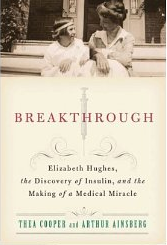
“Breakthrough” is the name of the book released last year that follows the discovery of insulin in 1922 by Dr. Charles Best in Toronto and one of its first recipients, Elizabeth Hughes, an 11 year old girl with type 1 diabetes.  

“Breakthrough: The Dramatic Story of the Discovery of Insulin” is also the name of the exhibit, based on the book, that just closed at the New York Historical Society

“Breakthrough,” of course as the book’s title, represents a medical breakthrough – the discovery of insulin. Now one could have diabetes and live. But now I find the word “breakthrough” bittersweet. As “breakthrough” is the dream that lives in the heart of all of us with diabetes still waiting for the big one almost 90 years later – a cure. 

I attended the exhibit a few weeks ago and particularly enjoyed seeing the antiquated pumps, meters and syringes patients had to live with only a few decades ago. I am eternally grateful that just about the time I got diabetes, 39 years ago next month, disposable syringes were already on the scene.

Here are a few snaps from the exhibit.

Apart from seeing what’s pictured here, however, the best way to soak up the story is to read the book

Diabetes foods I can’t do without

Screen Shot 2015-02-07 at 4.55.46 PM

I don’t eat “diabetic” foods. I don’t eat anything that says, “made for diabetics” and I hardly ever eat sugar-free foods. If I want something like chocolate or jam I eat a small amount of the real thing. I’m more concerned what chemicals they put in when they take the sugar out. Besides, many foods “made for diabetics” have as much carbohydrate as the real thing. 

I’ve even managed to reduce my dependence on artificial sweeteners. It’s been a long slog. But now, a little half & half in my coffee or tea makes it mouth-satisfying enough that I don’t want, or even like, the sweetness anymore that a Splenda or Equal gives it. And oatmeal and cottage cheese without sweetening taste just as good, as my sweet-tooth has waned. 

But here’s a food made for diabetics that is always in my pantry:

Extend Snacks. I found Extend Bars, one of the company’s original products, years ago and they’ve been in my house ever since. If when I’m going to sleep, I’ve had enough wine with dinner that I know my blood sugar will drop significantly through the night, I eat one-third of this bar and I wake up fine. (Amount may vary for you). Extend Snacks now include crisps and shakes and all their products work on the same principle: they contain cornstarch which breaks down very slowly and helps maintain level blood sugar for 7 to 9 hours. 

Extend Snacks were created by pediatric endocrinologist Francine Kaufmanafter she noticed cornstarch’s ability to help patients with severe lows. If that sounds a little too medical, the bars taste really good. Peanut Butter Chocolate Delight is the most popular and my favorite.

Extend Snacks are available at Walgreens and other chain stores. Or you can order online as I do because they’re not in the NY area, yet. In fact just recently I’ve been part of a letter writing campaign to try and bring them to New York City chain drug store CVS and Walmart.

By the way, Extend Snacks hasn’t asked me to write this. I just like to share what works for me in the hopes it may work for you.

Diabetes Sisters’ “Weekend for Women”

UnknownDon’t miss out! April 29-May 1

Isn’t it time you gave yourself a pat on the back for all you do, more learning in a fun setting, and the joy of mixing with your ‘diabetes sisters?’ 

That’s exactly what’s waiting for you at the 2nd annual DiabetesSister’s (run by the powerful, gentle Brandy Barnes) “Weekend for Women”.

Friday evening April 29 to Sunday afternoon 1 PM, the conference takes place in Raleigh, North Carolina, a little hotbed of diabetes activity. 

The conference is open to gals-only (sorry guys) type 1 and type 2s and features sessions & workshops that deal with issues women care about: body image, pregnancy, spirit, strength, menopause, monitoring, cooking and moving,  relationships, sex and  self-acceptance. You’ll find quite an age range and people from around the country.

Gloria Loring, steamy song stylist from the ‘70’s, now mother of a child with diabetes and advocate for the Juvenile Diabetes Research Foundation and  Ann Albright, a Director at Center for Disease Control, are key speakers. 

I’ll be conducting a “flourishing with diabetes” session Saturday night after our ‘Celebration of Strength’ dinner and many other experts are on board.

So come for a run, some fun and what most of us enjoy most of all, mingling with those who walk in our heels.

Here’s the agenda.  $100 covers the entire cost of the conference including meals. Registration is open to the first 200 registrants, but don’t delay.  Last year registration closed six weeks early, so make your booking now. Then come up to me at the event and say hello. 

Reduce Your After Breakfast Blood Sugar 40%

If you haven’t heard there’s some new news about reducing those after breakfast spikes in your blood sugar if you have type 2 diabetes.

Based on research that showed a reduction in blood sugar after the second meal of the day (lunch for most of us), it was hypothesized that high blood sugar after breakfast could also be reduced if there were a pre-breakfast snack, in a sense making breakfast the second meal of the day.

Researchers studied 10 men and women who controlled their diabetes with diet or diet and metformin and gave them a high-protein, low-carb snack before breakfast. Measuring blood sugars the results showed a lower rise in plasma glucose (blood sugar) after breakfast. 

Researchers say they are still searching for the perfect pre-breakfast snack and the perfect time lapse in-between the snack and breakfast. Plus further studies need to be done to see whether a high-protein, low-carb snack before breakfast improves A1cs, but for now it seems worth a try. Why not conduct your own experiment?

For more details check out “How to Reduce After Breakfast Blood Sugars 40%” in DiabetesInControl.com.

A rebuttal to the news that genes are not responsible for diabetes

I reported here that DiabetesInControl.com ran a story that genes are not responsible for type 2 diabetes. The findings of a study revealed little evidence that inherited genes cause common diseases like diabetes, heart disease, autism, cancer, depression and dementia. As you might imagine that has created a stir and some sharp criticism. 

To share both sides of this controversial issue, here’s one expert’s rebuttal to that study from Constantin Polychronakos, M.D., F.R.C.P.C., Professor, Departments of Paediatrics and Human Genetics, Director, Division of Endocrinology, McGill University Health Centre. Now that’s a lot of titles!

Sharing insights on ‘Transforming Diabetes’

Screen Shot 2015-02-07 at 5.00.24 PMLessons from 38 years of my journey with diabetes

I had the pleasure of beinginterviewed on a fantastic radio show coming out of Portland, Oregon by two deeply caring health professionals. 

Heather Clute, counselor, wellness coach, and a type 1 herself, and MD Jeff Horacek, were the hosts who teased out my story (not that it takes much teasing) of my 38 year journey with diabetes and what I’ve learned along the way to stay emotionally strong; rising to the challenge of managing diabetes and doing my best every day – well, most days 😉 O.K., we did discuss whether diabetes is a disease or a condition, and I said it “depends on the day.” 

I love the title of this radio show from Integrated Diabetes Care – ‘Transforming Diabetes.’ It’s what I’ve learned to do after many years of living with it; use it as a catalyst to stay healthy, appreciate what I have and help others, which gives me profound joy and satisfaction. 

My talk will give you some tools to stay strong and a lift. We’ll be doing a Part II specific to tools for “Flourishing with Diabetes,” living in that space where you make diabetes “a part of” your life not the “whole of it” and look forward, not backward, to creating your best life. I’ll be sure to post that when it’s done. 

After the podcast, check out the Show Archive too. You’ll find leaders in the field like Susan Guzman from Behavioral Diabetes Institute and topics as diverse as overcoming depression, Robert Keegan’s work on investigating assumptions, reversing type 2 diabetes, mindfulness meditation, holiday eating and more. 


The Ricki Lake Type 1 Blunder

Goof & apology from Ms. Lake

 NewImage

 Last week on “Good Morning America” actress and former talk show host, Ricki Lake, said juvenile diabetes was preventable. She’s since apologized. “This was a mistake on my part and in no way was meant to offend anyone dealing with the very serious disease of juvenile diabetes.”

Lake was speaking about her new book and AllStride program to combat childhood obesity when she made her mistake. “I commented that juvenile diabetes was preventable when in fact it is type 2 diabetes. This was a mistake on my part and in no way was meant to offend anyone dealing with the very serious disease of juvenile diabetes.”

I’m not offended. In fact, I’m a little delighted. Her mistake only confirms the public’s confusion about type 1 and type 2 diabetes. Even Lake’s interviewer smart guy, George Stephanopalous, didn’t catch her mistake. Now that is one thing I am sorry about. That the error was not snuffed out in its tracks and may deepen the confusion for those who didn’t catch Lake’s apology.

You’d think Lake, who’s advocating stemming the tide of childhood obesity – linked to the rise of type 2 diabetes in children – would know better than to confuse juvenile diabetes (type 1) with type 2 diabetes (adult onset diabetes). Type 1 diabetes is an auto-immune condition, not related to weight or a sedentary lifestyle and it’s not preventable or reversible.

Lake probably does know better, and it was probably a glitch of the mind, just a slip of the tongue. Then again, she actually made two mistakes. The name “juvenile diabetes” was changed to “type 1 diabetes” in 1997.

Then again you’d think Dr. Oz, “America’s doctor,” would know better. When he appeared last year on Oprah Winfrey’s program on diabetes he actually said, “Type 1 is also called juvenile diabetes and you are born with it.” Oh, my, born with it. That’s a pretty HUGE mistake! Just to clarify, while type 1 diabetes occurs more often in children than adults, you are not born with it.

Do I blame Lake for her blunders? Not at all. These are the type of mistakes the general public make all the time. Most people don’t even know there’s such a thing as type 1 diabetes as we are so overshadowed by all the media and pharma attention on type 2 diabetes. I am less understanding however how Dr. Oz could get it so wrong.

Maybe you’re thinking what’s the big deal? The big deal is multi-pronged. I believe the lack of recognition of type 1 diabetes and understanding its daily life-threatening nature, impedes urgent and necessary funding toward a cure.

The fact that type 1s are judged harshly by the public for “causing their condition” is just plain hurtful, just as much as to type 2s. The fact that we are invisible against the large canvas of type 2 diabetes is often painful. The fact that the public is so misinformed and uninformed may actually hinder life-saving treatment when a type 1 needs it.

So let’s go back to that “life-threatening” part: As a type 1 every day, every few hours, I have to test my blood sugar and then often do something to return it to a near-to-normal, safe zone. If my blood sugar’s too low I can fall into a coma and die. If my blood sugar’s too high my body can produce toxic acid in my blood stream called ketoacidosis, and over time I will likely succumb to a premature heart attack, blindness, amputation, host of nerve conditions and have a life span 15 years shorter than if I didn’t have type 1 diabetes.

If you’re interested, you’ll find a side by side comparison of type 1 and type 2 diabetes in“The type 1 versus Type 2 Diabetes War.” 

One thing I noticed in the diabetes community regards Lake’s mistake was upset from parents of children with type 1 diabetes. If you want a little window into living with type 1 diabetes ask any parent who has a child with it. A mother or father who has to hold their five year old down every day to give her several injections a day. Who has to poke their child’s hurting, tiny little fingers all through the day to get a read and regulate her blood sugar. Who has to force their child to eat when she doesn’t want to and stop her from eating when she does. Make her move when she doesn’t want to and stop her from moving when she does.

Most parents go to sleep fearful every night that their child will not wake up due to a dangerous blood sugar drop overnight that can not always be predicted or prevented. 

I have asked these parents what it’s like. I also know that children with type 1 diabetes grow up and become the person sitting next to you, sitting unseen with her invisible life-threatening disease.

I think type 1 diabetes needs the recognition that type 2 diabetes has gained. I think the roughly 3 million people with type 1 diabetes, living in the shadow of the almost 25 million with type 2 diabetes, deserve to be acknowledged for what they live with and what they do to keep living, every day. For their courage, for their hope, for their tenacity. 

So Ricki, while some say your mistake has added to the myths of diabetes, I thank you for what it has also done – brought more media attention to type 1 diabetes than we’ve had in a long time.

Make yourself a diabetes drawer

IMG_2944

I just thought as I emptied another two bags of syringes into my kitchen drawer that if you don’t already have one, you ought to have a designated diabetes drawer. A drawer or a cupboard devoted just to diabetes supplies.

Mine is in my kitchen, second drawer down, on the right. When I began interviewing people with diabetes my very first interview was with a young couple who had a three year old with diabetes. She showed me around their apartment and pointed out the supply closet where they stored only and all their son’s diabetes supplies. “It makes it much easier to have everything in one place,” she told me, “and to keep track of what we’re running out of and need to reorder.”

I keep my boxes of supplies in my kitchen pantry closet, top shelf and then move things into my diabetes drawer to have a current stash to draw from.

You can see what’s in my diabetes drawer right now: syringes, glucose tablets and sweet tarts, lancets, vitamins and my Extend Bar. Oh, yeah, somehow take out menus seem to nestle in there too. 

It’s a good project, if you don’t already have a diabetes drawer to create one. Trust me, it makes it all the easier to reach in one place to get the daily stuff you need.