Giving a workshop at TCOYD on diabetic peripheral neuropathy

Kim Lyons, team mate, fitness expert and certified nutritionist

 NewImage

Tips on living with diabetic peripheral neuropathy
 NewImage

Arlene after leading a group of new snow-shoers

 NewImage

OK, I think I’ve never, ever traveled this much but Friday – just as I’m getting on East Coast time back from Asia – I’m off to Albuquerque, New Mexico to talk at a Taking Control of Your Diabetes (TCOYD) event!

If you attend please do join Kim Lyons, fabulous fitness expert and former trainer on TV’s “The Biggest Loser,” and me at our workshop, “Take the Next Step: Get Motivated,” to learn more about painful Diabetes Peripheral Neuropathy (pDPN).

This diabetes complication results from nerve damage and causes burning, tingling, stabbing and throbbing pain most often in the feet and/or hands – or it can leave you without any sensation at all. At worst without feeling in your feet, you can injure your foot and not know it, which can lead to a foot ulcer and amputation. pDPN affects more than 20% of people with diabetes.

While pDPN can interfere with every day activities, sleep and being active, there is help – simple exercises, medication if necessary, and discussing how to treat the condition with your doctor. You’ll find more information here.

In our workshop I’ll be sharing stories of some amazing people who live a full and active life with pDPN – like Tom who rode 70 miles on his bicycle to celebrate his 70th birthday and retired schoolteacher, Arlene, an active DESA member, who’s climbed all 46 Adirondack peaks and leads hiking tours. Kim will demonstrate exercises that can help one live more comfortably with pDPN.

If you can’t make it to Albuquerque, you can find Kim’s exercise videos, management tips and guidance on how to speak with your doctor on the Take the Next Step web site.

If you miss this opportunity in Albuquerque, Kim and I will also be at TCOYD in Tampa, October 1 and San Diego, November 12th. We’d love to shake your hand if you attend. TCOYD events are a great one day health event all across the country for patients to learn more about taking care of their diabetes, and all for a very small fee.

I’m really excited to be part of this effort and hope to meet you somewhere along the way. “Take the Next Step: Get Motivated” was developed and supported through a collaboration with Pfizer Inc.
An amazing hospital in Singapore and reunion in Japan


Screen Shot 2015-02-07 at 4.12.22 PMI landed back on New York soil Friday night from almost two weeks traveling in Singapore and Tokyo. I was invited to speak to medical and diabetes professionals at two major hospitals in Singapore – National University Hospital of Singapore and the ground-breaking Khoo Teck Puat Hospital, the manifestation of innovative CEO, Teng Liak, who believes a hospital should be a place of healing in all respects.

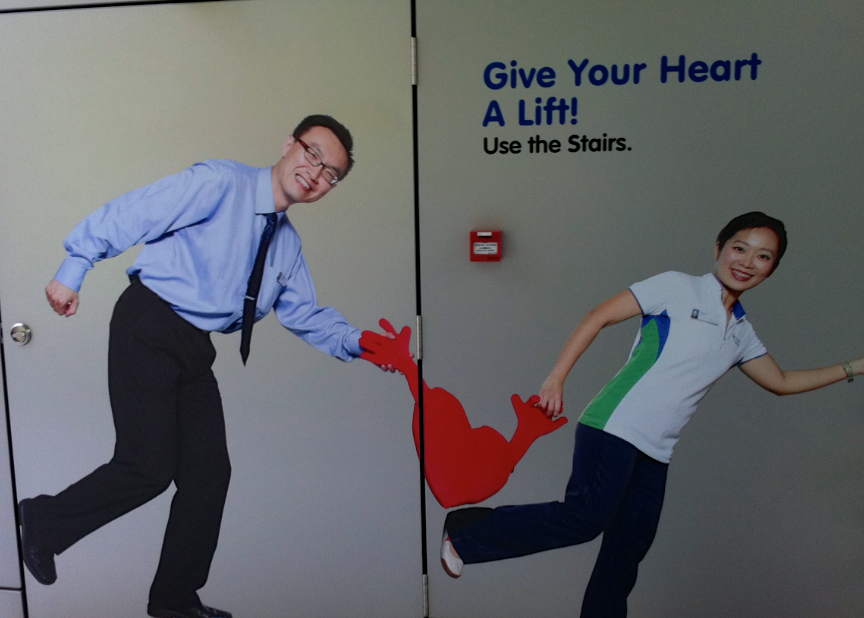
I was given a personal tour of the hospital by Mr. Liak and include pictures here. Throughout the hospital are bright bold colors to find wards easily and lift your spirit. Each building contains learning centers where I consistently saw staff in workshops. Learning displays are mounted in almost every hallway. 

Each patient room has an intentional  view of greenery for its calming effect. And each patient has a remote control to open and close the blinds in their room, increasing their overall sense of control. Rooms are equipped with coffee and tea service for family and visitors.

The hospital was built in the north of Singapore because that is where the population is growing – bring the hospital to the people. Clinics contain no more than 5 doctors to keep the feeling personal and collaborative. Patients’ information is captured, not only in electronic records, but in a way that promotes health and healing. It is organized around: 1) Know Me 2) Identify Me 3) Direct Me 4) Track Me 5) Clear the Way For Me 6) Close the Encounter With Me and 7) Stay in Touch With Me.

Singapore’s technological achievements are not widely known in the U.S., but they are on display everywhere: waiting times are posted, computers are front and center in each clinic for patient feedback and patient facial recognition is becoming standard. 

Wards are clearly marked from both inside the hospital and out and names are clearly displayed for all staff. The hospital grounds contain several restaurants that not only serve healthy food, but it is priced lower than unhealthy food. 

On the rooftops are organic farms where volunteers from the surrounding communities come to work together growing food for the hospital and socialize. Mr. Liak husked an ear of corn which we ate right off the tree, sweet to the taste. 

The hospital also serves Singapore by helping to maintain its eco system and rain forest. 29 species of butterflies exist on the hospital grounds, as well as a sanctuary for exotic birds, indigenous plants and ponds for thousands of fish. 

The mission of Khoo Tech Puat Hospital is to, “Provide good quality affordable and hassle-free healthcare with science, love and wisdom.” In the words of Mr. Liak, “We are trying to build a village.” To say I was duly impressed is an understatement.

I was also impressed that 200 doctors, educators, students and staff came to hear me speak. I shared with them what it’s like to live with diabetes; that they lead patients on a journey and their expectations are critical to that journey; that hope is a powerful force and that it is possible for us to not just cope with diabetes but flourish with it. 

I was rewarded with their deep appreciation, respect for my knowledge and wisdom, and I learned that these clinicians face the same growing epidemic of diabetes that we do and the same struggles to help patients change behavior.

After my four whirlwind days in Singapore, I dropped down to Tokyo to visit friends. I lived and worked in Tokyo from 1986 to 1992 and every few years take a trip back to see friends and get my dose of a place that has become a second home. 

This time I saw small signs of the recent earthquake – Ginza, usually lit like Times Square, was not nearly as bright, less busses and elevators were running and less air conditioning, all in an effort to conserve energy. Also my hotel had some cracks that ran through the walls, but I was told no major damage. 

Otherwise the only sign in the city that a major quake had occurred was the scarcity of foreigners. “Gaijin,” the name for foreigners in Japan, has been newly expanded to “Flyjin” and “Byejin” commemorating how many foreigners have left. But if you’re planning a trip, there’s no reason not to go.

So I return fresh with professional and personal satisfaction, and the hope that my next trip to Tokyo might just be for the Japanese launch of my book, “The ABC’s Of Loving Yourself With Diabetes.” A friend of mine is translating it into Japanese 😉

Upcoming speaking and travels

I’ve already blown it. I put the “Vacation Responder” setting on my outgoing emails last night and now everyone in my address book has gotten a message! Forgive me.

That said, this spot will go quiet for the next two weeks. 

Today I leave for Raleigh, North Carolina, weather permitting, to attend, and be the Saturday evening dinner speaker, at Diabetes Sisters’“Weekend for Women”. If you haven’t heard about it, check it out for next year. It’s just for us girls: 2 days of bonding, lectures geared toward diabetes and women, activities, great speakers and general diabetes care information. This year’s theme is “Celebrating our Strengths” and I’m delighted to be a part of it.

Then I’m off to Singapore where I’ll be addressing the endocrinology staff of Singapore University Hospital and medical students. Of course, I’m salivating  over the hot stone massage I hope my friend is booking. I had one there the last time I was in Singapore and I practically melted off the table. Of course that was after a ten-hour flight from Sydney. So, it promises to be doubly good after a 20-hour flight from NYC!

From Singapore I’m dropping down to Tokyo to visit friends. I lived there from 1986-1992 and I am always made to feel like an honorary guest when I return. And yes, for everyone who’s asked am I really going after all the destruction and earthquakes, I am. As I wrote on the Huffington Post, Tokyo is like a second home. Plus I have always figured when your number’s up, it’s up, and you can be anywhere.

I’d like to say I know exactly how to handle my insulin and blood sugar on these travels, but I’d like to say that; nothing could be further from the truth. I have no idea given the amount of time zones I’ll be crossing and jet lag and different foods I’ll be eating. And, I’ve never found any really good, clear information how to manage insulin while traveling. 

So I’ll use my usual method: test an annoying amount of times and keep adjusting till I seem to be on track.

So sayonara, be well and see you in a couple of weeks.


Hospitals searching for better glycemic control

I never like to use the word “perfect” when it comes to diabetes. Far less when it comes to being a “perfect” diabetic, although so many of us, including this recovering “perfectionist,” share this impossible desire.

So when I first saw this article,Seeking the Perfect Diabetic Day,” my face immediately turned into Munch’s painting “The Scream” and I was completely ready to condemn whatever the article said. 

Then I read the article and realized “the perfect diabetic day” is a measurement for hospital administrators to quickly see how well their institution is managing the glycemic control of patients. 

Seemingly a step in the right direction as we know hospitals tend to be monoliths with a hundred heads, silos that don’t cross, and filled with overworked providers and staff who need you to write on your body which arm should be operated on. And since practical wisdom says, “no one should be in a hospital without an advocate,” I’ll take all the help we can get.

According to Kalman Holdy, MD of Sharp Memorial Hospital in San Diego, the measure simply looks at the proportion of days during which every blood glucose measurement for every diabetic patient is within the recommended range for hospitalized patients — 70 to 180 mg/dL. 

In an informal poll of 51 nurses, doctors, and pharmacists, the vast majority (98%) said they preferred using perfect diabetic days over average blood glucose values as a performance metric. Personally, I’m all for doing what providers prefer provided it’s not life-threatening to me.

The benefit of using this measure Holdy says is that each hospital unit can improve their glycemic control. Tracking their performance, the percentage of perfect diabetic days increased overall from 33% in 2002 to 43.8% in 2010. 

That’s good, however this next statement seems irresponsible. In terms of a bottom threshold, says Holdy, values lower than 35% should require that some action is taken to improve the quality of institutional glycemic management. Well, that’s kind of scary – 36% glycemic control is considered good enough not to do anything?

I applaud any institution trying to make improvements and when I looked at Sharps a little more closely they do seem to stand out from the pack. They’re making lots of improvements to improve care: lowering noise to increase calm and redesigning the flow of the hospital for greater efficiencies. Not unlike an amazing hospital in Singapore I visited a few years ago.

That said, I do know one other way that better glycemic control can happen in the hospital setting. Let educated patients control their own blood sugar, provided they’re conscious and know their name. I’ve heard way too many stories of one’s insulin and syringes being taken away by a nurse who knows diddly about blood sugar management.

Hold onto your center

Screen Shot 2015-02-07 at 4.16.07 PM

Katie Couric was on the morning news Today show last week and said something that stuck in my head. “Some days you’re the pigeon and some days you’re the statue.” It’s a quote from a book by news woman Linda Ellerbee.


Couric raised it talking about how when she first moved from the anchor desk of the ever-popular Today Show to host the CBS Evening news, she seemed to have immediately morphed from a pigeon into a statue: Every critic (shit on) found fault with her.   


It’s such a simple, freeing statement, “some days you’re the pigeon and some days you’re the statue.” It reminds me that there will be days I’ll be doing great and other days, for whatever reason, someone may want to find fault. So be it. What’s true is, when other’s find fault it usually has nothing to do with you – it’s their stuff.  Hold onto your center.


It’s comforting I think to be reminded that’s just how life is – for all of us. And it’s a great visual to remind yourself of when things seem dark. So, when you are the statue, just hold tight. One day you will look around and realize you, my friend, are once again a mighty pigeon. 

PatientsLikeMe isn’t like any other social media site


Screen Shot 2015-02-07 at 4.17.19 PM

If you don’t know them, you should,PatientsLikeMe. Unlike most social media sites, this one isn’t so much about “chatting” with patients like you as much as learning the real-life health experiences of others by seeing shared treatment plans, meds and symptoms. 

Last week PatientsLikeMe expanded its platform and, while diabetes wasn’t previously represented, now anyone with any condition can join. The site is free and 5 years in the social media space, has almost 100,000 members and represents 500 conditions.

What’s the benefit to joining? In addition to feeling less alone, it’s seeing how others are treating your same condition, how they’re doing and learning what does and does not work for others.

PatientsLikeMe was founded by three MIT engineers, brothers Benjamin and James Heywood and friend Jeff Cole after Stephen Heywood, brother and friend, was diagnosed with ALS (Lou Gehrig’s disease) at the age of 29. As the founders describe it, we believe we have a health data-sharing platform that can transform the way patients manage their own conditions, change the way industry conducts research and improve patient care.

Surprisingly, or maybe not so, its members, who are very open in what they post on the site, revealed in apoll conducted by PatientsLikeMe  that 29% have withheld certain health information from their doctor for fear of being lectured or made to feel bad. 47% have chosen not to share certain health information with their employer for fear of losing their job or being passed over for promotion, and 14% have withheld information from insurance companies for fear of not having a procedure covered.

It is the hope of its founders that PatientsLikeMe will help patients help themselves by sharing their real-world health experiences in a world where patients are obviously afraid to share certain things with their health care providers.


More “After The Diagnosis”

Screen Shot 2015-02-07 at 4.19.01 PM

My last post was about the book I’m reading by kidney specialist, Dr. Julian Seifter, After the Diagnosis.

Last night I read two other thoughts Seifter expresses that I thought worth posting. He talks of the human spirit being able to find possibility and joy even in the face of devastating illness:

“Illness represents a hard limit – an unyielding reality that closes off possibility, compromises freedom, undermines desire and hope. At the same time, being sick opens up unexpected opportunities for creativity and growth. By taking away the ”taken-for-granted,” illness invites, even forces, new awareness and new learning. 

By exploring parts of the self that were once hidden by everyday routine, a sick person can find his way to creative expression, personal transformation, emotional enrichment. And though being sick is hard, very hard, it’s not the end of playfulness and joy. All of us who suddenly face an illness can discover within ourselves these capacities.

Facing up to adversity is less a matter of deciding to be strong than of letting go and seeing what comes next. What is most required “after the diagnosis” is the capacity to stay open to experience. By letting life happen and time go forward, we can hold onto future hopes and present meanings. 

What I take away is that there is still hope and love and joy even when life turns upside down and things look their darkest. What I know, from personal experience, is that you can let go and feel a kind of freedom even while living with chronic illness, when you know you know enough to manage your illness well. 


How do we behave after the diagnosis?

An engrossing and humane read by a doctor/patient

 NewImage

I’m reading a book I love – After the Diagnosis written by kidney specialist, MD Julian Seifter.

Doctor Seifter has diabetes himself, and so shares his own actions, or rather inactions, (he’s a notoriously bad patient the first several years) but it’s really in the background of this book. 

The book’s focus is the stories of his patients. Since all his patients live with kidney disease and generally face the unpleasant, yet only life-saving measure of dialysis, they each face life-altering decisions and are in different stages of their conditions. Seifter relates their stories, their journeys and how they prevail.

It is a fascinating look at the human spirit, and for me made all the more interesting told by a physician whose first orientation is clinical. Yet, he is deeply human and not afraid to share that side of himself with his patients; this often becomes the key for his patients to take the next step they might not otherwise. 

Here is a short bit from the book


Dr. Seifter meets Lyla, a young West Indian woman, who has end stage renal disease, diabetes and AIDs. Lyla went missing after her first dialysis appointment where she was prepped for future treatment. When Seifter next sees her he asks how her blood sugars are. She doesn’t know. They take out her meter and he helps her test, which she doesn’t know how to do. 183, “That’s not so bad,” he says. And then he realizes he has not put on gloves and this is probably the first time in years Lyla has had blood taken without someone wearing gloves. Seifter thinks of referring her to the dietitian, but does not when he thinks how culturally-insensitive she is. She will only hand Lyla the same standard diet she hands everyone. Instead he asks Lyla what she eats. When she tells him rice, beans and potato chips he asks her to match her carbohydrates with protein and make her portions a little smaller. He asks next how she’s feeling about dialysis, “I’ll try it,” she says.

Connecting with the patient, not the illness, is one of a physician’s greatest tool. Yet, it is not what’s emphasized in medical school In fact, I recently spoke with a physician who told me in a way humanity is trained out of  medical students. 

This book is written for patients and physicians alike. There are the stories and interwoven many of Dr. Seifter’s insights. For instance Seifter encourages doctors to help their patients be more imaginative and playful when considering treatment options. Doctors, he says, are instrumental in giving patients confidence, even permission, to keep going. If a doctor, for instance, doesn’t clearly encourage treatment a patient may hear, “Don’t do it!” 

If this is your cup of tea, as it is mine, you will take away a great deal fromAfter the Diagnosis

Take one cartoon with every meal

Food police

I first became acquainted with cartoonist, Haidee Merritt, on Amy Tenderich’s blog, DiabetesMine

Haidee is the new Sunday cartoonist in residence over there. And her weekend funnies are fantastic! 

There’s the absolute “getting it” as a girl who got type 1 diabetes at the tender age of two. And then there’s the living with it for the past 38 years.  

Haidee’s passion led to her book – One lump or two?. What began as a few doodles she says represents a lifetime of personal struggles and experiences. And they sit now here on my coffee table offering me a momentary release from the tedium of diabetes. 

Haidee said squirreling herself away to draw helps her temper her feelings about diabetes and the cartoons are a way for her to confront and accept things that are sometimes hard, and communicate with others. 

I know reading her work is a way for me to gain a reward belonging to this exclusive club – diabetes – I wouldn’t have picked for myself voluntarily.

Haidee writes in her bio, along with her artistic credentials, that her goal is to become a Celebrated Diabetic Personality, hmmmm…CDP, a new canon among the CDEs and NPs and LDs and MDs. Also, she says she has an opinion on just about everything, so just ask. Should you care to, you can contact Haidee at her website and also see more of the artist’s work. 

I told Haidee I’d rationed myself to one cartoon with each meal because each gives me such a lift I didn’t want to run out too quickly. She assured me she has enough material for book #2 and all she needs is the funding. So I’m personally appealing to anyone who appreciates the healing power of laughter and has a bit of a wad to spare to get in touch with this very talented and rising CDP.


March was Kidney Disease Month

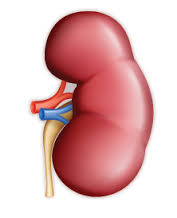
UnknownMeet Ms. Kidney

It doesn’t matter that it’s almost over, what matters is that you know something about kidney diseasebecause poorly controlled diabetes is a major contributor. 

Chronic kidney disease is a diabetes complication that usually takes 10 or more years to develop, and if your blood sugar and blood pressure are not well managed, you’re at risk.

The kidneys sit just under the rib cage in the middle of your back. Their jobis to filter waste and water from the blood, regulate blood pressure and maintain the proper balance of salt and minerals in the blood. When your kidneys are impaired wastes build up in the bloodstream making you feel sick and lead to high blood pressure, weak bones and nerve damage. 

Early kidney disease has no signs or symptoms so you should get a blood test every year that  indicates how well your kidneys are working. You should also have your urine tested to check for albumin, a protein that leaks into the kidneys when there is damage.

Symptoms you may begin to feel as kidney disease progresses, is more frequent urination,  particularly in the middle of the night, your urine may be foamy or bubbly, it may contain blood or you may feel pressure while urinating. Your may have swelling in your legs, feet, face or hands, feel fatigued, have a rash or severe itching, nauseaus or vomit, feel short of breath or more.

While you’re calling your doctor to make an appointment for your tests, you can take the National Kidney Foundation’s Kidney Quiz! right now to see if you’re at risk. 

Kidney disease is usually treated with an ACE inhibitor or ARB to slow damage. You may also need to cut down on eating protein. Of course, kidney dialysis is used when the disease is severe. Check here for more information.

Just looking into this, I realize the more you can do to avoid kidney disease, the more you should. Now I can’t wait to see what April is national month for…