Top 2018 diabetes blogs and organizations celebrated by Healthline

Screen Shot 2018-05-08 at 12.32.06 PM.png

It’s nice to be recognized yet again by Healthline as one of the best Diabetes Blogs of 2018. The recognition bestows merit for quality content among other criteria, and specifically for my work, the Flourishing Treatment Approach which helps expand the way we look at diabetes treatment. I am honored.

Here are just a few of my fellow bloggers on the list:

DiabetesMine

Scott’s Diabetes

A Sweet Life

Diabetesaliciousness

D-Mom Blog

DiabetesDaily

Six Until Me

Diabetogenic

There are almost another 20 web blogs and sites collected here including diabetes organizations. Frankly this is an amazing list of online resources for education, information, community and support.

SUBMISSION: Lastly, Healthline is celebrating and showcasing people who have tattoos that were inspired by their diabetes. If that is you, you can get more details to share a photo and your story here.

Mannkind’s Afrezza is a game-changer to manage blood sugar


I admit it, had I not been invited to a two-day meeting to learn about inhaled insulin, Afrezza, I would still have the same general misconceptions most people do about the product. Primarily, that it may damage your lungs. Secondarily, that as a type 1 I can’t use it because the smallest insulin dose is marked ‘4 units.’ But I have been educated, and I have converted my own views now learning what a fantastic add-on to my blood sugar management Afrezza can be. I know many type 1s use the product and have said the same before me.

Mannkind manufactures Afrezza and invited about a dozen online diabetes advocates to meet with their senior leadership team at their office complex in Danbury, Connecticut. Readying themselves to get the word out about Afrezza in a much bigger way, they wanted to familiarize us with the product and learn from us how they should use social media.

Factory tour.JPGFour dynamic fellow diabetes advocates. From left to right Kelly Kunik, Christel Oerum, Meri Schuhmacher and me.

After a lovely meet and greet dinner Monday night, the formal meeting began Tuesday. After introductions we had a factory tour, seen above. Both the inhalable insulin compound and inhaler are manufactured right at their facility. We also got and a detailed explanation how Afrezza’s crystal insulin compound is created and gets broken down and into the lungs and bloodstream. We actually tested whether we were breathing it in properly and we all quickly agreed on the necessity of making sure people get instruction on how to breathe it in or you could miss your dose.

But what I learned in the afternoon from CEO Mike Castagna and CMO David Kendall was well worth the trip. I’ve listed the major points below. Principally, that Afrezza begins working as soon as you inhale. It travels to the lungs and within seconds crosses over to the bloodstream. All this occurs in less than a minute. The mere speed of Afrezza is stunning when you are used to rapid-acting insulin. And that means spending much less time having high blood sugar.

Mannkind has a wealth of positive data from clinical and comparative trials with injectable insulin because they’ve actually been in the diabetes space for years. In the last year or two they partnered with Sanofi which didn’t work out, yet unfazed, leadership are passionate about their product and bringing it to the public.

As a small company devoted currently to one product they are the “David” amongst the “Goliath” pharmaceutical companies ike Novo Nordisk, Lilly and Sanofi. But expect to be hearing about them over the coming months. In the meanwhile –

What I learned:

  1. Afrezza begins working in 12 minutes, peaks in 35 and is mostly out of the body in 90. Compare that to any rapid acting insulin (Humalog, Novolog, Apridra). Because injectable insulins need to go through layers of skin and fat and get transported to where they can get absorbed, they take 20 plus minutes before they start working, two hours to peak and leave the body in 4 to 7 hours. I know my biggest annoyance with insulin therapy is how long rapid acting insulin takes to start working. Part of this problem is the liver continuously puts a small amount of glucose into the bloodstream. When your blood sugar is high, the liver continues to do this until your insulin starts working. With Afrezza, beginning to work almost immediately, the liver shuts off its glucose output into the blood and you now have two mechanisms helping your blood sugar come down.
  2. Clinical trials show no evidence of lung damage, people show lower A1C, spend more time in range and Afrezza reduces severe hypos by more than 30%.
  3. The Afrezza cartridges of inhaled insulin come in 4, 8 and 12 packs yet they don’t translate into injectable insulin in the same unit amount. For instance the 4 unit pack actually works like 2-2.5 units of rapid acting insulin.
  4. Currently Afrezza users are 50% type 1s and 50% type 2s. In fact, some type 1s who use a pump use Afrezza for their meal-time insulin because of its quick action.
  5. Afrezza can cause weight loss for some. Reading point 1 again on the list, often you have to take so much insulin to come down from a high you end up going low and then have to eat to treat the low. With Afrezza, avoiding the spike, you avoid the extra calorie intake.

Mannkind is working hard to help people go through the process of getting Afrezza approved by their insurance company. I know for myself, anytime I approach my insurance company for a newish diabetes product I have to go through prior authorization from my endo and sometimes three attempts before I get approval. Word on the street has it that health insurance companies have been advised to reject many drug requests on the first ask and it is those who persevere who often get that rejection overturned.

Because I am an insulin-sensitive type 1 who follows a low carb diet I am disappointed I cannot use the product for most meals. The dose would be just a bit too much. I have, though, almost not believed my eyes when I have taken it when I am over 180 and watched my blood sugar slide back down to where it should be in just half an hour. Gorgeous.

So I plan to use Afrezza, provided I can get it from my insurance company (I tried a 6 pack sample my doctor gave me) to correct highs and when eating the occasional pizza or pasta.

All in all, it was an enlightening two days and as always a delight to spend time with my fellow diabetes friends and acquaintances I don’t see often enough. Thank you to Mannkind’s Mike, Chad, Joe, David, Matt, Azul and Naomi for bringing us in to hear the patient voice and to be part of the strategy roll out.

Disclosure – My expenses to attend the meeting were covered and an honorarium was paid. However I was not asked to write about Afrezza.

#8 – HuffPost, “I think she’s drunk.” I wasn’t, I was in severe hypoglycemia

If you’ve been here a time or two before you may know I’m doing a countdown on 10 top posts I’ve written over seven years for the Huffington Post.

This was one of my last posts and the first time low blood sugar made me feel, and appear, as if I was drunk. My blood sugar was in the 30s and my mind absolutely refused to think straight. Luckily, I was with a friend, and while she had no idea this could be low blood sugar, she knew something was really wrong.


What It’s Like to Get Diagnosed with Type 1 Diabetes: Real Talk from Patients


Screen Shot 2018-04-09 at 4.50.55 PM.png

Last year I was part of a video shoot for HealthiNation to talk about type 1 diabetes. Now there are 7 short and accessible, two minutes in length, videos of what it’s like to get and live with T1D.

Each video features reflections, learned wisdom and snippets of advice from myself and two other diabetes advocates. Topics range from the title above, “What It’s Like to Get Diagnosed with Type 1 Diabetes” to “Common Myths About T1D Debunked” …to…“Getting Through the Day as a Diabetic.”

Please ignore the fact that the producer chose to call us “diabetics” and “patients,” which we only are when with our health providers, and that some of the videos begin with a Trulicity advertisement.

Rather enjoy the opportunity to bask in the camaraderie with two fellow T1D-ers – Craig Kasper, diagnosed at 27, whose website is bravest and Liz Van Voorhis, diagnosed at 15, an athlete and fitness trainer, and yours truly nearing ever closer to that 50 year Joslin medal.

All videos can be found here.


Dexcom G6 CGM gets FDA approval


Expected to be available in the U.S. in the next few months.

New advantages – no fingerstick calibrations, easy inserter, 10-day wear time, (bad news hard shut off, you can’t extend the sensor) approval for ages 2 years and older, no acetaminophen interference.

Mike Hoskins over at DiabetesMine did a great write- up.

Love the video, if nothing else the music will get you excited –

The Type 1 Versus Type 2 Diabetes War

HuffPost #7 – For this post I reached back to my second year writing on HuffPost. But the story is as relevant today as it was then.

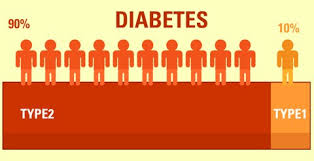
There’s long been a friction of sorts between type 1 and 2. A sense that “you don’t understand what it’s like for me” no matter which side you’re on. The feeling among many type 1s that they live in the shadow of type 2, and a difference of opinion whether either side would benefit if we were more distinct?

That along with myths busted from my second book, “50 Diabetes Myths That Can Ruin Your Life and the 50 Diabetes Truths That Can Save It” and more in this post, including a full and clear description of each condition.

Unknown.jpeg


JDRF trains type 1 diabetes specific psychologists

Screen Shot 2018-03-19 at 3.16.45 PM.png

I think this is great news. And I wrote about it on Thrive Global. I know there’s always been a raging debate where the JDRF should put its efforts. Many think only on research toward a cure for type 1 diabetes (T1D) or also helping people live wth the day to day of T1D.

I’m in the latter camp. I’d love a cure, but until that day I’ll take anything that helps make getting through the day easier. Not only will psychologists who understand the lived experience of type 1 diabetes help those who are struggling, but help us all. Find out how in the post.

HuffPost #6 – The Antidote to Living with Diabetes

On this Sunday evening, I hope to send you off to sleep with reason to congratulate yourself. You work hard managing diabetes, own what you do.

I first wrote this article for a creative expression contest run by Eli Lilly many years ago. I later included it in a HuffPost that today makes the sixth of my top 10 posts I’m recalling here.

As I was told by a wise man when I did volunteer work at a diabetes clinic for the poor in Bangalore, India, “Be good, do good, feel good.”


Final. The antidote to diabetes - Living Proud

Got my Stanford peer leader certificate and first taste of yuca

Stanford Class.jpg

This is my graduating class: warm, dedicated, wonderful women who are also a mosaic reflection of New York City. We each received four days of training to become peer-leaders of the Stanford Diabetes Self-Management Program.

The program is now under the auspices of the Self-Management Resource Center  but it’s the same program Kate Lorig, PhD Professor at Stanford University School of Medicine and Nurse, created while at Stanford. It became the gold standard for diabetes education.

I interviewed Lorig only a few months ago for HuffPost when I wrote about this educational program going online.

A funny feeling to be back “in school” forty years later yet each of these women knitted a small circle of support around each of us so that, as we hunched over our training manuals, nervous like newbies, we all got through boot camp.

I’m grateful to our master trainers, Guedy and Chris, who do this work in the community and have now equipped a score of us to make a difference in the lives of people with diabetes.

I’m grateful to my new peer-leader partner and friend, Meryl, who will co-lead classes with me, and I know, without a shadow of a doubt, is my partner.

And I’m grateful to my adventurous friend, Susan, who left our classroom each day at lunchtime to walk the streets of Harlem in search of her favorite yuca, a vegetable I had never tasted before, and each time she returned victorious and shared her delectable find with me.


Online diabetes peer-support… now a resource to guide you

Something’s new in the world of diabetes online social media and it isn’t a new site. Rather, it’s a simple, engaging 3-page guide to steer you to excellent and trustworthy diabetes web sites. Sites where you’ll find a wealth of both general and very specific information, and, be able to connect with others living with diabetes.

I’m impressed by the collaboration between medical professionals and diabetes advocates. Together they did the hard work to make the wealth of diabetes information and support found online more attainable and useful to both people with diabetes and diabetes health providers alike.

Knowing this started as a conversation some years ago, I’m also inspired by how mountains can move when people decide to move them.

Screen Shot 2018-02-23 at 11.27.39 AM.png

This effort was led by former President of the American Association of Diabetes Educators, Hope Warshaw,  and founder of DiabetesDaily, David Edelman, who had the help of many diabetes advocates. The guide points you to vetted diabetes peer support communities, blogs, news and magazine sites, organizations, government resources and advocacy organizations.

True, this community of patient resources and patient compassion has existed on the internet for some time. What’s different is now you have a guide where and how to find them.

I cannot stress enough how taking advantage of the information and emotional support online, from people living through what you’re living through, can change your every day life.

ALERT: Learning, and hooking in online, does not replace your health care providers. This rich world adds to your knowledge and support by offering communities where you may make new acquaintances, feel less alone or inspired to get involved, and you can ask questions and get real, lived advice.

As someone, myself, in this online diabetes community, I have made stellar friends and acquaintances, I constantly learn what’s new and what’s coming, and I often get answers to questions I would never think to ask my doctor. And I’m healthier, and more engaged in my self-management, for it.

Warshaw and Edelman share a letter why this effort began and what it truly offers – not just to people living with diabetes but those who treat them and care for them.

As a diabetes nurse, educator, dietitian or physician, as a community health worker, social worker or psychologist who works with people who have diabetes, you will benefit from seeing what’s being exchanged online between people with diabetes. You’ll get deeper insights what diabetes is like to live with and you’ll be able to give your patients and clients a resource that may help them get more motivated, committed and engaged in their own care.

Susannah Fox, healthcare and information technology researcher and former Chief Technology Officer of the U.S. Department of Health and Human Services, does a great job outlining the benefits of online peer support in this video.