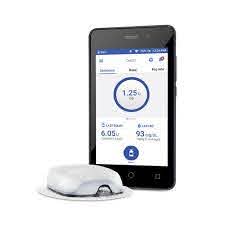
Omnipod tubeless insulin pump offers free 30 day trial

I want to share this information I read on diaTribe. Click here for fuller article.

Basically, Omnipod is available for a free 30 day trial if you want to give this tubeless, disposable insulin pump a try. You’ll get a script which you can take to the pharmacy for your free pump.

Note: You are not eligible for the free 30-day trial if you have Medicare, Medicaid, or other federal health insurance, if you are a member of Kaiser Permanente or United Health Care, or if you are already an Omnipod customer.

Click here to get to the Omnipod website to request your free 30-day trial.

Happy World Diabetes Day!

COVID levels are rising so me and the husband decided this may be the time to make our last outing. Not that we’ve had many at all for the last eight months, ever since we went into lockdown in March, when someone in our building was diagnosed with COVID.

We took the ferry for the first time from Manhattan to New Jersey where we met a friend and did some shopping in the Japanese stores there (large Asian community) and had our last dinner out for I’m sure months to come. Of course we were masked all along the way.

The Empire State building is lit up blue today and we are appropriately pinned with the universal symbol for diabetes. Happy Diabetes Day – and stay safe.

Hypoglycemia from the lived experience

I am currently consulting with Forefront Collaborative, a medical education and accrediting company, helping to educate health professionals about hypoglycemia. Below shares one of my experiences of a severe hypo and further thoughts regarding this serious side effect of using insulin and any blood glucose lowering medication.

Q: Riva, can you please describe a time you had severe hypoglycemia? What happened and what did it feel like?

A: It was 10:00PM, and I was weaving on the boardwalk of the beach community where I was staying with a friend. “Are you okay? Are you okay?” Susan, an acquaintance who was walking with me, kept asking. I couldn’t respond. My brain wasn’t working. Like a firefly, it was flitting on, off, on, off, refusing to hold its light. 

I’d been leading us back from a fireworks display to our mutual friend Carol’s house. We’d been walking for 25 minutes, and I knew we were practically there. Yet, even after having done this walk three times earlier that day, nothing looked familiar. I was staring at Google Maps on my phone—and all I saw were zig zags. I had enough mindshare to register that Susan was frightened but not enough to explain anything. Then I heard Carol’s voice; we’d been only 100 feet from her house! 

Susan said, “She’s drunk.” Carol said, “No, it’s her blood sugar.” I bounced my way into the house and weaved down the hall to get my glucose meter. “32,” I whispered, pushing Carol’s cookie away, while I began chewing glucose tablets. With all the energy I could muster, I breathed, “the cookie…take too long.” 

As you’ve surmised, I came through this episode and all it took was my glucose meter, four test strips, my meter’s coaching service call, three glucose tablets, a slice of rhubarb pie with ice cream, half a banana, and the warmth and safety of the five people in the house keeping an eye on me for the next 90 minutes. I went to bed at 136 mg/dL and woke up at 129 mg/dL. I know mostly why this happened—the walk was unexpected, dessert was supposed to be served right after dinner but it wasn’t, and I was eating things I don’t normally eat so I couldn’t guess my carb load as accurately. 

In 48 years of living with type 1 diabetes, I have only experienced severe hypoglycemia four times. I’m extremely disciplined in my management, and I’m lucky. This was the first time someone thought I appeared drunk, not recognizing this was a severe hypoglycemic event. The symptoms associated with both inebriation and severe hypoglycemia include both physical and cognitive impairments. Due to this, people with type 1 diabetes have been falsely arrested and shamed as the true underlying cause, severe hypoglycemia, may be unrecognized. 

Q: How does the potential of future hypoglycemic events make you feel? How does this impact your life? 

A: I’m not frightened of hypoglycemia as an everyday feeling, but there is a general sense of potential danger in the back of my head. To ameliorate the potential danger, I do a few preventive things. First, I wear a continuous glucose monitor; it’s a game changer to be able to see your blood glucose in real time. Second, I carry small plastic containers that hold four glucose tablets. I have one in every purse and backpack and one on a table by my front door so I can slip it in a pocket. Also, for 46 years of my life living with diabetes, I never had glucagon because it was so difficult to administer. But now I have two nasal glucagon puffers in my drawer should I need them, and my husband can easily administer them if I can’t. 

Before newer insulins, I would wake at 3:00AM almost nightly, sweating through my nightgown from a moderate low, because that’s when my basal insulin peaked. Luckily, the basal insulin I take now doesn’t have a peak, and my blood sugar stays pretty steady through the night. And each night before I go to sleep, I do my best to have my blood sugar around 100 mg/dL. 

I know many people with type 2 diabetes who live in terror having experienced a low, and everyone with type 1 fears a severe hypoglycemic event during the night from which they will not wake up. Unfortunately, that makes many people keep their blood sugar higher than it should be, and this can have adverse consequences over time. But I feel confident by being prepared, and I would tell people to get familiar with their blood sugar patterns and then plan a preventive treatment approach with their healthcare professional. 

Q: What would you like healthcare professionals to know?

A: When your blood sugar goes low, it is both a physical sensation and a mental fog. When my blood sugar is moderately low, like in the 50s and 60s, I feel my heart beat more rapidly, I’m a bit lightheaded, I may start sweating, and I’m ravenous. And the emotional upset for me is I have to eat when I don’t want to! As my blood sugar drops lower, my body movements become uncoordinated and my brain becomes muddled; I can’t hold on to a thought. The lowest my blood sugar has been is 29 mg/dL, when I found myself in the middle of the night, gripping the bathroom sink and staring into the mirror wondering why I was there. 

I find it shocking that such a dangerous side effect of insulin and other blood sugar lowering medications is barely discussed. Given the potential severity of hypoglycemia, I believe everyone on these drugs should be prescribed glucagon and shown how to use it in their healthcare professional’s office.

Get 75% off the ‘fake’ list price of insulin 

I got this information from Scott Strumello, a noted diabetes advocate and diabetes sleuth: investigator, statistician and as he describes himself, ‘general badass.’ As long as I’ve known him, actually at least a decade now, he’s been searching through the weeds and uncovering the truth about Pharma.

Scott asked me to share this information about apps and coupons that drastically reduce the cost of insulin. Scott wrote on his blog specifically about coupons here. So, while you’re weighing your decision of perhaps what health insurance plan to choose during this open enrollment season, have a look into these options as well. 

The bottom line is a number of coupon-generating websites/apps, provide major assistance regarding the cost of insulin, even for people who would otherwise not qualify for manufacturer patient assistance programs.

Look into:

1. I know GoodRx as an app you download on your phone. GoodRx can also be found on Twitter @GoodRx and on Facebook @GoodRx. It offers patients lacking insurance (or those still trying to satisfy a deductible) access to PBM-negotiated discounts on insulin and many other prescription drugs. Scott says their discount on generic U100 Lilly Insulin is $68.38/vial sold at Walgreens and some local pharmacies. Novo Nordisk Aspart costs about $72.

2. RxSaver (on Twitter @RxSaverOfficial and on Facebook @RxSaverOfficial) offers Novo’s Aspart a few dollars cheaper for $67/vial at Walgreens and some local pharmacies. It also offers Lilly’s generic Lispro but in reverse, for about $71. Pens are a bit more costly. 

Both these apps/websites offer savings which amount to 75% off the list price for Humalog and Novolog respectively. Unfortunately Scott says he hasn’t yet found such discounts for basal insulin. But, there are coupons available from the manufacturers of Basaglar and Semglee (generics for Lantus) which can be used at most pharmacies. 

As for what’s to come, perhaps we can be cautiously optimistic. Another two biosimilar (generic) insulins are pending FDA review and Scotts says Wall Street notes historically when there are three or more competitors manufacturing the same product, costs start to fall. 

If you’d like to read about the nuts-and-bolts of why insulin is so costly in the U.S. check out Scott’s blogpost here

Talking Type 1 diabetes on the Talking Type 1 podcast

My chat with Daniel here.

I had the good fortune to be interviewed by Daniel Newman. Part of that good fortune was listening to his lovely British accent, part was his genuine curiosity, generosity and incisive questions during our talk. In short, he knows how to have a refreshingly open, inquisitive conversation. Daniel, a fellow T1D, publishes these beautiful learning experiences for all on the Talking Type 1 podcast.

Daniel and I talk about my living with T1D more than 48 years, what changed when I saw a diabetes educator after 32, how to have a better conversation with your HCP, the current paradigm of healthcare and everything in-between.

I am Daniel’s 19th podcast interview. Enjoy them all; they’re perfect company on a walk, in the car or cooking dinner. Especailly if you have a penchant for a British accent.

NIH study on Diabetes Distress and you can participate

This came across my inbox this morning from diaTribe.

Clinical Trials Identifier: NCT04016558

Trial name: Behavioral Approaches to Reducing Diabetes Distress and Improving Glycemic Control (EMBARK)

This study will measure self-reported diabetes distress over a year as well as any change in A1C. You will interact with a leading diabetes psychologist and diabetes specialists. This large, NIH-funded study aims to reduce diabetes distress and improve A1C.

The study:

Is virtual

Lasts 12 months

You must have type 1 diabetes for at least one year

An A1C of 7.5% or above, and

A high level of distress assessed at screening

To learn more details and how to apply, click here.

Christel Oerum shares her tips for staying close, and six feet apart, during COVID-19

Christel Oerum above (Check out Christel’s bio and websites at the end of this post) is a diabetes advocate and fitness trainer who’s been mulling social distancing during COVID-19. Below she shares some thoughts.

Given how people with diabetes – both type 1 and type 2 – can be at higher risk for the coronavirus and have worse outcomes if they get it, I, like Christel, am staying safe by socially distancing and not meeting many people.

Christel: Change is certainly the defining feature of 2020 and that includes how we interact with others, whether that’s family and friends, or the strangers we pass on the street, or in the supermarket.

As COVID-19 has swept the world, most of us have had to significantly change our social habits to protect ourselves, as well as those around us, from exposure to the virus.

And while keeping your distance, and limiting social gatherings and interactions is the right thing to do, it can leave you feeling lonely or deprived of human interaction. So what can you do? We can’t change the world we live in, but we can make the most of it!

My First rule…

First of all, I think it’s important that we each individually decide what our boundaries are and what we’re comfortable with. That’s what I call the First Rule.

For me, my First Rule is I don’t meet up in person with anyone who doesn’t adhere to the California (where I live) social distancing and mask-wearing guidelines. 

I have one friend whom I haven’t seen in person since March, since he still goes to parties and doesn’t wear a mask. That’s his choice, but that means we won’t be interacting in person for a while.

I’m not too nervous about contracting COVID, but I’d rather not, and the thought of having to deal with such an aggressive condition, while managing my type 1 diabetes, is somewhat overwhelming. I imagine you feel the same, whether you have type 1 or type 2.

How I’ve sustained my social connections

Once you have your first rule down, you can decide how to actually see people. Because we as humans are social beings, it’s important we somehow continue our human interactions. 

If your first rule is that you don’t leave your home, we’re lucky to live in a time with a lot of virtual resources. We can connect through our Phones or do video calls through Zoom, Skype, Facetime, or other media. 

I am fortunate enough that I have three women in my circle of friends who are all on the same page on social distancing and mask-wearing. Trusting each other is safe, we’ve been meeting up regularly. I call them my “quarantine crew.”

They are women I know and trust, and I know they respect their own health, as well as mine. In the first month of COVID-19, none of us really left our homes. Instead we scheduled Zoom call ‘Happy Hours’ where we’d chat for an hour or two online. I liked best the calls where we all have our cameras turned on, it just adds to the social experience.

As spring came along, and we became more confident in venturing out, we started to meet at our local park. We brought our own food and drinks and sat in the grass and chatted for hours in a big circle, all sitting 6 feet apart. 

We all missed hugging, but in the early days felt that wasn’t safe, so we implemented our own greeting. Instead of a handshake or hug, or even the elbow bump you’ve probably seen, we created our own greeting: we’d touch feet. Right foot to right foot. I have long legs, so in that way we could still maintain an adequate distance and get the feel of physical human contact. If you have some tall friends, you can give it a try, or create your own special greeting.

As we move into winter it might not be so comfortable to just sit outside, but moving outside with others, as in a walk, combines socializing and exercising. Dress appropriately, including a mask and walk the recommended six feet apart.

There are a lot of things I have had to let go of this year, but I’m glad there are still ways to stay close to people, even when we’re separated by a few feet or a screen.

Author Bio:

Christel is a Los Angeles based speaker, writer, diabetes coach, and diabetes advocate. She has been living with type 1 diabetes since 1997 and at an early stage decided that it wasn’t going to slow her down. Her motto is “There is Nothing You Can’t do With Diabetes”. She writes about how to be Fit With Diabeteson DiabetesStrong.com and great food on DiabeticFoodie.com. She also coaches people with diabetes from across the globe, online and in-person, and supports them in meeting their health and fitness goals. 

Facebook: https://www.facebook.com/DiabetesStrong

Instagram: https://www.instagram.com/DiabetesStrong_IG /

My first success restarting a Dexcom G6 sensor

I may have already written about this – restarting your sensor. But admittedly, the first two times I tried to do it, it failed. Once, completely, the second time I only got 2.5 days extra and then it went downhill.

But, I’ve just come off my first successful restart. A full second round of 10 days, with first round accuracy. I believe there are two reasons for my success, and they are also the reasons for my failure. So, if you try this following the video, note:

  1. Take a photo of the code, don’t enter the numbers manually. That means keep the little piece of paper with the code on it when you first put on your sensor.

Actually, I was visiting my mom in Connecticut when I wanted to restart my sensor, and I had kept the paper with the code, but it was back home. My husband took a photo of it and sent me the photo. Feeling very daredevil, I held my phone up to the photo of the code, and wham, it registered it!

2. Wait an hour after your first session ends to start your second session. I don’t know if you have to wait that long, I’ve seen people say wait 15 minutes, but an hour makes me feel safer.

Good luck. I can’t guarantee it will work every time, or any time, but it’s definitely worth a shot.

Latest Freestyle Libre 3, launched in Europe, is smaller & thinner

The FreeStyle Libre 3 has been cleared in Europe for anyone ages four and older. The new continuous glucose monitor is as small as two stacked US pennies, provides real-time readings directly to the mobile app via Bluetooth, and has the same low list price.

There’s no timeline yet for when it will be available in the US. For the fuller story, please see the piece (including video) on diaTribe.

diaTribe is also offering a free webinar open to all on the challenges of stigma and diabetes. October 13th 3 PM Pacific time/6 PM Eastern time. You can click here to register

.

.