10 nutrition myths debunked by experts

This article ran in today’s New York Times, “10 Nutrition Myths Experts Wish Would Die.” If you have access to the Times, you can see the full article. For those who don’t I thought I’d do a brief summary.

Myth No. 1: Fresh fruits and vegetables are always healthier than canned, frozen or dried varieties.

Non fresh can be just as nutritious, sometimes better if fresh isn’t so fresh. One caveat: they can contain added sugars, saturated fats and sodium so read the label.

Myth No. 2: All fat is bad.

This myth was published in the 1940s when experts found a correlation between high fat diets and high cholesterol. In the 1980s everyone reported a low fat diet could benefit everyone even though there was no solid evidence. Food manufacturers replaced fat with sugar, remember SnackWell’s? (I do!). Now the experts say while saturated and trans fats (red meat, cheese) can increase your risk for heart disease, monounsaturated fats (nuts, fish, flaxseed, avocados) can decrease it. Don’t assume “fat free” means healthy.

Myth No. 3: ‘Calories in, calories out’ is the most important factor for long-term weight gain.

Yes and no. Follow the above and you will lose weight for the short term, but not the long term. Stay away from refined carbs (cereal, starchy snacks, crackers, baked goods, soda) they digest quickly, raise your blood sugar and turn into fat in the body. Eat healthy overall, quality over quantity.

Myth No. 4: People with Type 2 diabetes shouldn’t eat fruit.

Everyone benefits from the nutrients in fruit — fiber, vitamins, antioxidants. Even people with diabetes. Always choose fruit over fruit juice.

Myth No. 5: Plant milk is healthier than dairy milk.

Not true. Cow’s milk has more protein. (Still, personally, while I do put light cream or half n’ half in my coffee, I drink almond milk for the lesser carbs.)

Myth No. 6: White potatoes are bad for you.

Yes, they can spike your blood sugar, but they are rick in vitamin C, potassium and fiber, especially consumed with the skin.

Myth No. 7: You should never feed peanut products to your children within their first few years of life.

Surprise! Experts say it’s best to introduce kids to peanut products early on – unless your baby has eczema. Also feed baby a diverse diet the first year to prevent food allergies.

Myth No. 8: The protein in plants is incomplete.

All plants contain all the amino acids necessary for building protein. But to a greater or lesser degree. So eat a variety of plant based foods every day. Most Americans get more protein than they realize or need.

Myth No. 9: Eating soy-based foods can increase the risk of breast cancer.

While isoflavones found in soy stimulate breast cancer in animal studies, it’s not been verified in humans. So for now, scientists are not linking the two. Instead, soy products may be protective toward breast cancer.

Myth No. 10: Fundamental nutrition advice keeps changing — a lot.

Dr. Marion Nestle, food guru and professor of nutrition, points out that in the 1950s people were advised to stay away from saturated fat, high sugar and salt products, and that hasn’t changed. Author Michael Pollan says in his book Food Rules (which I loved) “Eat food. Not too much. Mostly plants” and Nestle agrees.

I’m sharing a new paradigm designed for flourishing with diabetes

Join me tomorrow at noon, EDT. It will be my pleasure to share with you how we ended up with our current treatment approach, which is aimed at coping, and how we can flourish instead. If you have diabetes, type 1 or type 2, pre-diabetes, a loved one with diabetes, or are a health professional, you’ll learn something valuable.

Register here. If you can’t attend, a recording will be sent out afterward.

This webinar kicks off Diabetes Sisters new Lifestyle Webinar Series.

My first webinar this year on flourishing with diabetes

Join us March 21, noon EDT. I’ll be giving you a short but impactful look at why our treatment approach to diabetes is set up to help us cope, and not flourish, and how we can do so. Whether you have diabetes, pre-diabetes, are a loved one or health professional, join me bringing you this insightful look with the wonderful peer support group organization, DiabetesSisters.

Register here. I’ll cover:

Shift Your Perspective: Discover why the current diabetes treatment paradigm focuses more on coping than flourishing and how to change that narrative.

Practical Strategies: Gain valuable strategies to cultivate flourishing, whether you’re directly affected by diabetes, caring for someone, or treating people with diabetes.

The Myth of Control: Discover how people with diabetes are set up for failing rather than flourishing and how to reverse this.

Take 30 minutes to learn something new. Join us.

Vanilla ice cream diabetes style

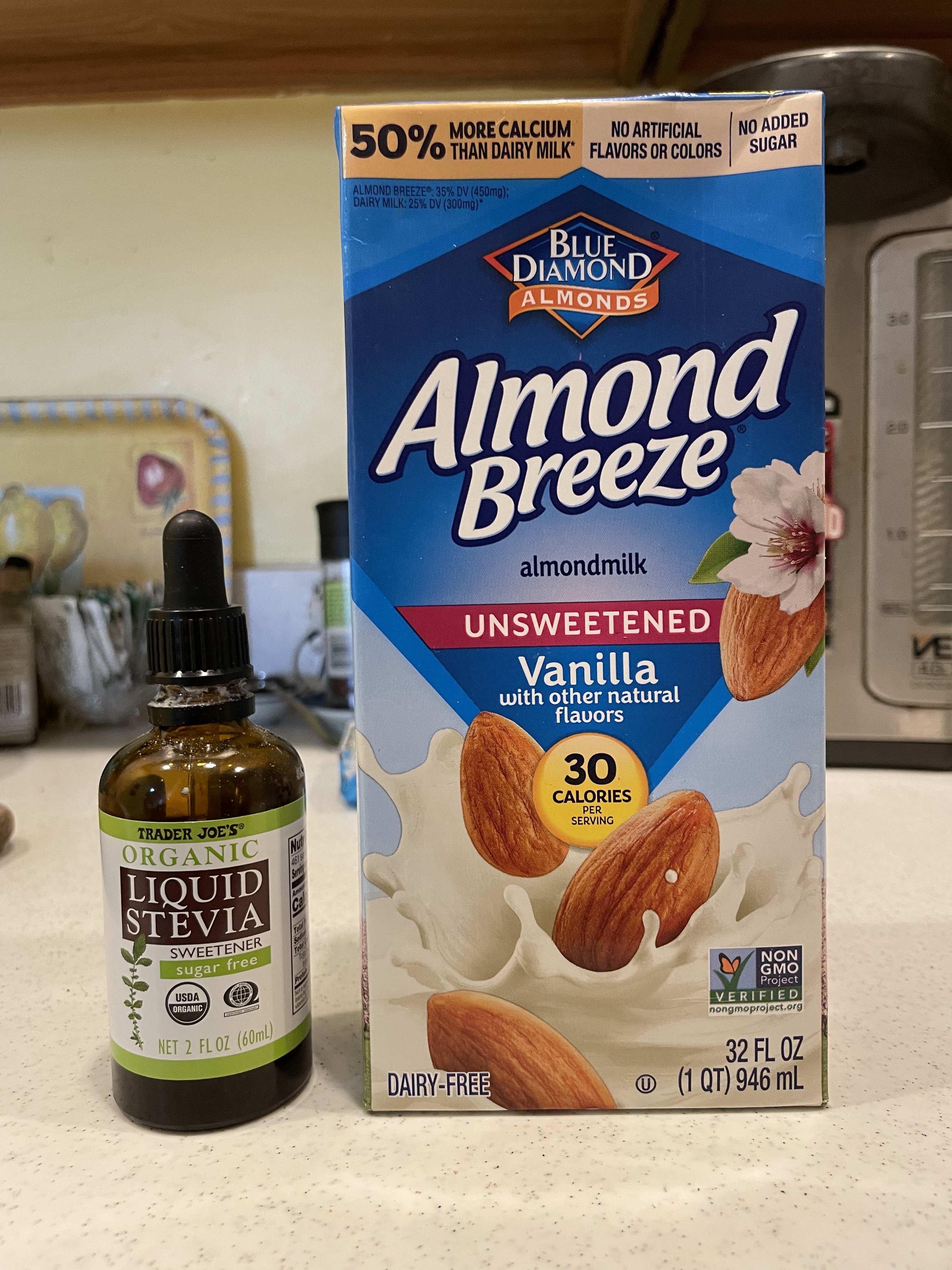
Okay, call me crazy, I really don’t care. But every time I have this I say to myself – this tastes like vanilla ice cream! So I figured I’d tell you. Pour unsweetened vanilla almond milk in a glass. Add a few drops of stevia to taste for a bit more sweetness. Drink.

No, it’s not the consistency of ice cream, but if you just want an absolutely clean treat it can’t be beat. There is 1 carb in a glass of the milk, 1 gram of protein, 2.5 grams of fat and 30 calories. There’s 0 carbs, 0 protein, 0 fat and 0 calories in the Stevia. I get these both at Trader Joe’s. Enjoy.

It’s difficult to disbelieve an entrenched idea, like that we can control our blood sugar. We can’t.

I wonder if there’s any synchronicity between Facebook crashing today and so the article I have pushed tirelessly to get published, which did get published today, I couldn’t even link on Facebook. Ah, man plans and God laughs.

The article was published on diaTribe – “Why ‘Controlling’ Blood Sugar Shouldn’t Be the Goal.” I’m indebted diaTribe. A variation of this article was published in Diabetes Sisters’ newsletter in December, “The Myth of Controlling Blood Sugar, And a Better Way to Manage It.” I thank Diabetes Sisters too.

That said, there’s a back story worth noting I think. It took more than four months, pitching to three organizations, push back, rejection, and numerous rewrites before these two articles were published. That’s not anyone trying to give me a hard time; that’s the power of an idea that is so entrenched, even though it is not true.

You see the sentry that stand over this myth believe that if we tell people with diabetes the truth – that we can’t control our blood sugar – that we will set our hair on fire. That we will be so dismal, disappointed and depressed, so frustrated and disempowered, that we will give up entirely on our management, and ourselves.

What I know is that when we tell people the truth, they feel validated, un-wronged and seen. They feel more powerful. Every time I tell someone that they can’t control their blood sugar, that they are responsible for their effort but not entirely responsible for the outcome, they practically cry in my arms from relief.

We’ve heard “control” and “blood sugar” in the same breath for so long so often, it’s so obsequious in the language of diabetes, that no one thinks to question it. I questioned it and I’m telling you, outright, it’s not true, and its falsity is supported by science, particularly neurobiology and complexity science.

Read the article and share it. I hope it takes you off the hook too many people, with all good intentions, have hoisted us upon.