I’m sorry to say I’m not loving Dexcom’s G7

I would say I’m late to the game but honestly I haven’t seen much discussion about Dexcom’s relatively new G7 CGM. I actually received my initial order back in mid-March, but waited til a week ago to try on my first, as I wanted to use up my G6 sensors and transmitter first.

Given the title here you know I’m not loving this new version, but before I get to my negatives, I’ll tell you what I do like based on just a week of wear.

What I like

Half hour or less to warm up. Yup, it’s fast and that feels terrific, no more endless two hour wait. The reason it’s typically less than even 30 minutes is by time you’ve gone through the few insertion steps, you’ve shaved a few minutes off.

Sensor and transmitter in one piece. Yes, I do like this. No more extra step to stick the transmitter into the sensor cradle or worry I’ll lose it somehow.

12 hour grace period. I haven’t used this feature but I know you get 10 days and 12 hours out of the G7. Presumably the extra 12 hours is to make it convenient for you whenever you change your sensor.

What I don’t like

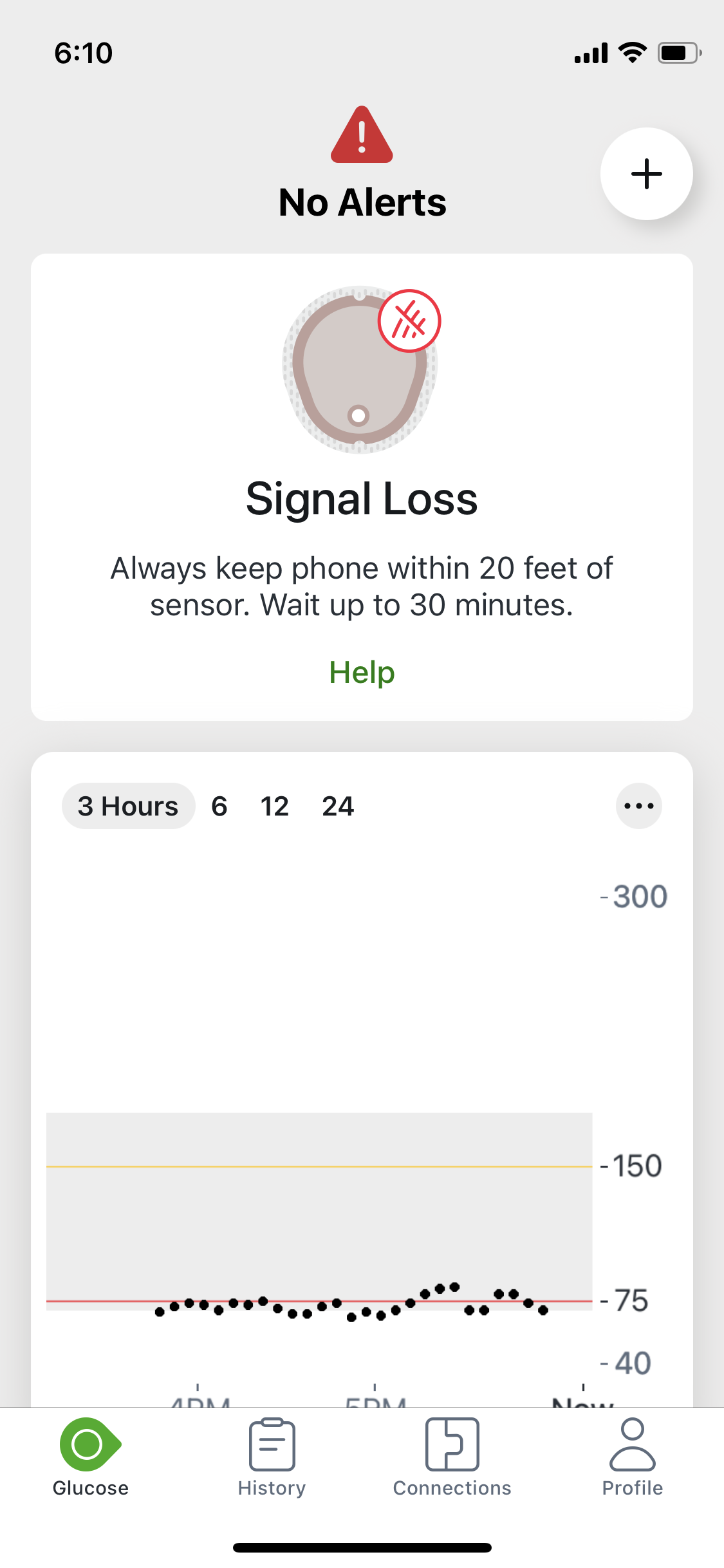
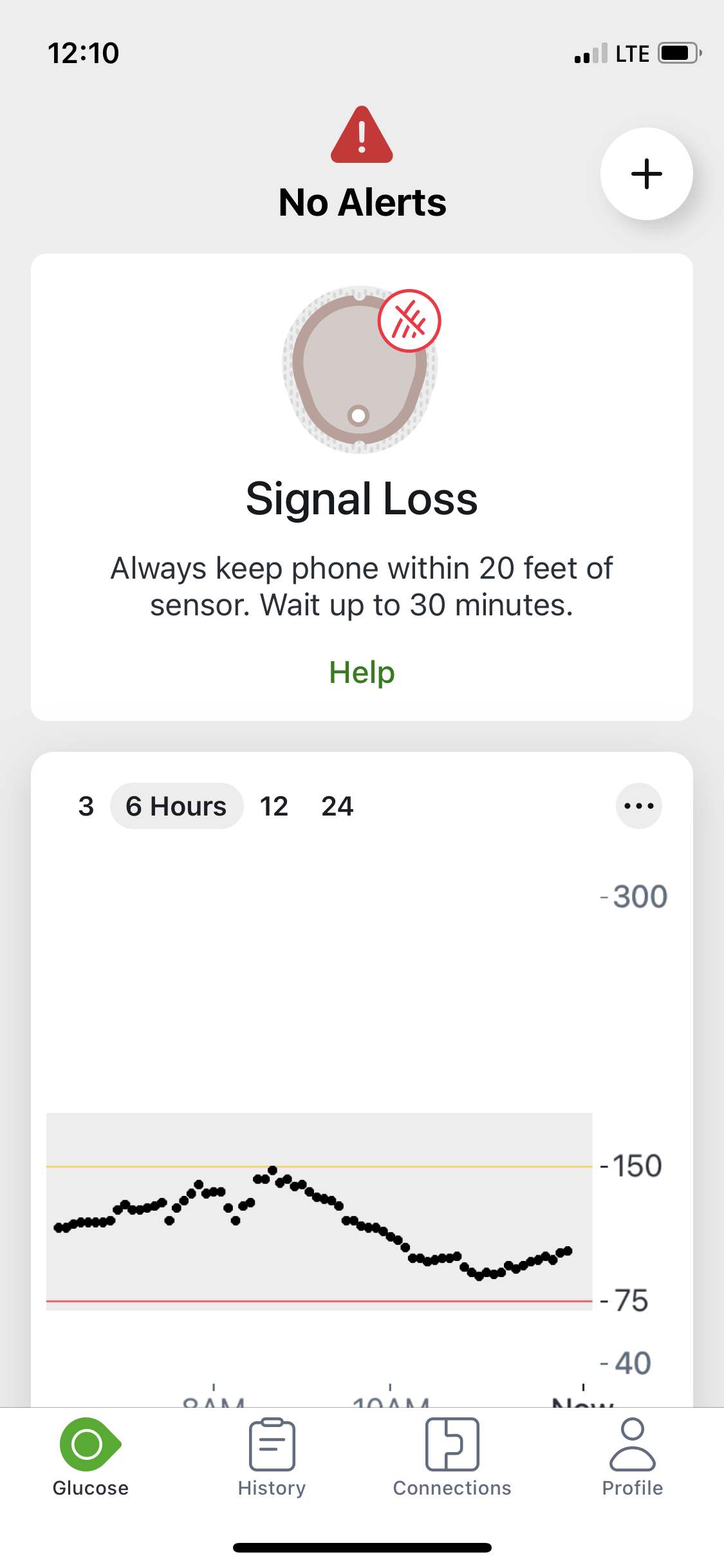
The signal gets dropped multiple times a day. The G7 has the same range as the G6, 20 feet. Yet half the time I look for my number (I use it on my iPhone, I didn’t get a receiver through Medicare, and wouldn’t use it anyway), there’s no signal and I have to wait a few minutes for it to show up. And I know I’m never out of range, I can’t be further away from my phone than 20 feet in my small apartment. This lost signal ‘feature’ is as annoying as the 30 minute warm up time is great.

No widget. With the G6 I never had to open my iPhone to see my numbers. No such luck with the G7, I have to go into my phone, what a pain, to pull it up.

First day numbers. Terrible, inaccurate. With the G6, half the time the sensor worked right out of the box, the other half my first 6-8 hours were spot on with the next 16 wonky. With the G7, the first 24 hours are wonky.

The interface. The G6 range graph was relatively attractive, as attractive as one of these can be. The zones were demarcated in pink, grey and yellow. This face is simply black, white and grey. Devoid of color I find it more clinical and less friendly.

The inserter. No I don’t like it any better than the G6 inserter. In fact, the very first sensor I inserted caused me to bleed and I wore it for two painful days and it never got accurate so, of course, I changed it out. While my second insertion went fine, I experience the insertion as a bullet’s impact (not that I’d know) but definitely too powerful.

The overpatch. Each sensor comes with its own overpatch. There’s so little adhesive around the sensor Dexcom gives you an overpatch, which they instruct you to put on immediately. For me, the smaller size of the sensor is all but ruined by this big piece of white tape running around it. I hate it. I ruined the second overpatch as it stuck to my fingers, so I hauled out the old sheer tape I used to tape the G5 down with, which made me wonder: why couldn’t they at least have made the overpatch clear?

The app. It’s spared down, nothing seems to be shelved where I’d expect to find it, and not user friendly.

In conclusion, the smaller size and rounder shape don’t mean enough to me to compensate for the things I don’t like. The MARD, which means how accurate it is, is slightly better than G6 but, for me, unnoticeable. There’s a feeling Dexcom rushed this one out of the gate and I wonder how many PWDs they consulted with. I can’t imagine a lot of these hiccups would exist if they’d listened to users.

Compared to the Freestyle Libre 3, I think Dexcom has reason to worry. When Libre finishes jumping through the FDA’s hoops, which will likely be this year, and is Medicare covered, I’d absolutely consider switching. Libre is still smaller and thinner than the G7, yes it has one hour warm up time but 14 day wear as compared to Dexcom’s 10, I find it a better inserter, I didn’t experience a dropped signal when I wore the Libre 3 as a courtesy for six weeks, and its accuracy is just about the same.

If you’ve tried the G7, I’d be curious what you think. If you want to see the G7 in action, have a look.

Danelle Ofri, MD, gives us another gorgeous story

Danielle Ofri is one of my favorite author/doctors. She has written numerous books and is the Editor-in-Chief of the Bellevue literary review, the first literary journal from a medical establishment. Yes, she is really an internist at Bellevue, New York City’s public health hospital, where she’s been practicing for decades.

I had the distinct pleasure of interviewing her at her apartment in Manhattan when I was writing on the HuffPost.

She doesn’t write sweeping novels like Abraham Vergese or critical thinking pieces like Atul Gawande, but examines the doctor/patient relationship, the humanity and how it is trained out of medical students, and lovely stories of her patients and what they teach her.

I was particularly struck by the tone of this most recent essay where she shares the story of an elderly Chinese gentleman and what was so important to him during his treatment that would be all but hidden to most physicians, and less honored. I think you’ll enjoy it, “The Little Things.”

CGMs to be covered for type 2s on insulin

How nice! A bit of sanity and reasonableness in an insane world. Starting July 1st UnitedHealthcare is covering continuous glucose monitors (CGMs) for people with type 2 diabetes who take insulin. The article I read on diaTribe. Dexcom and Abbot Freestyle are the two CGM manufacturers who dominate the US market.

This follows Medicare’s move earlier this year to cover CGMs for people with type 2 on insulin and those not on insulin but who suffer from hypoglycemic events.

It’s not rocket science to understand that when people see, with the use of a CGM, how food and exercise impact their blood sugar, a whole new world opens up to them – making healthier choices. People can immediately see that their actions have consequences. That is a beautiful equation for adopting healthier behaviors and driving down complications and the exorbitant amount of money the US spends on diabetes complications.

Earlier in my CGM wearing history, my husband wore one of my sensors to understand what it was like. He was astonished to discover how much carby foods raised his blood sugar, and he does not have diabetes. After that experience, he followed my eating style to eat far less carbs, and mind you this is a Dutchman raised in bread country, the Netherlands.

This can help many, many of the millions of people, (37 million in the US have diabetes, 95% of whom have type 2) put the power of choice more visibly in their hands.

If you have type 2 and take insulin, watch this 12 minute video below from endo Steven Edelman.

A fave new diabetes book and type 1 diabetes explained

Photo courtesy of Haidee Soule Merritt from her new book, The Sweet Taste of Misery

Haidee is a friend and fabulous cartoonist who uses her pen scathingly to put diabetes in its place – and us in a better place.

The Sweet Taste of Misery is her third cartoon book and I guarantee you’ll find sweet recognition and a new Soule-mate.

Given the fact that New York City is currently suffering from more than 150 Canadian wildfires, enduring the worst air pollution in decades, this cartoon seemed particularly apt.

On the flip side I offer you an article I wrote several years ago for HuffPost, “Type 1 Diabetes Finally Explained”. Every so often something causes me to re-read something I’ve written some time ago. This morning it was the article above.

At the time, it went viral and people told me it gave them a way to talk to family members about what life is like with type 1 diabetes more than anything they’d ever read. That’s about as good as it gets for me.

Camp Nejeda’s ‘Survive and Thrive’ weekend for type 1 adults

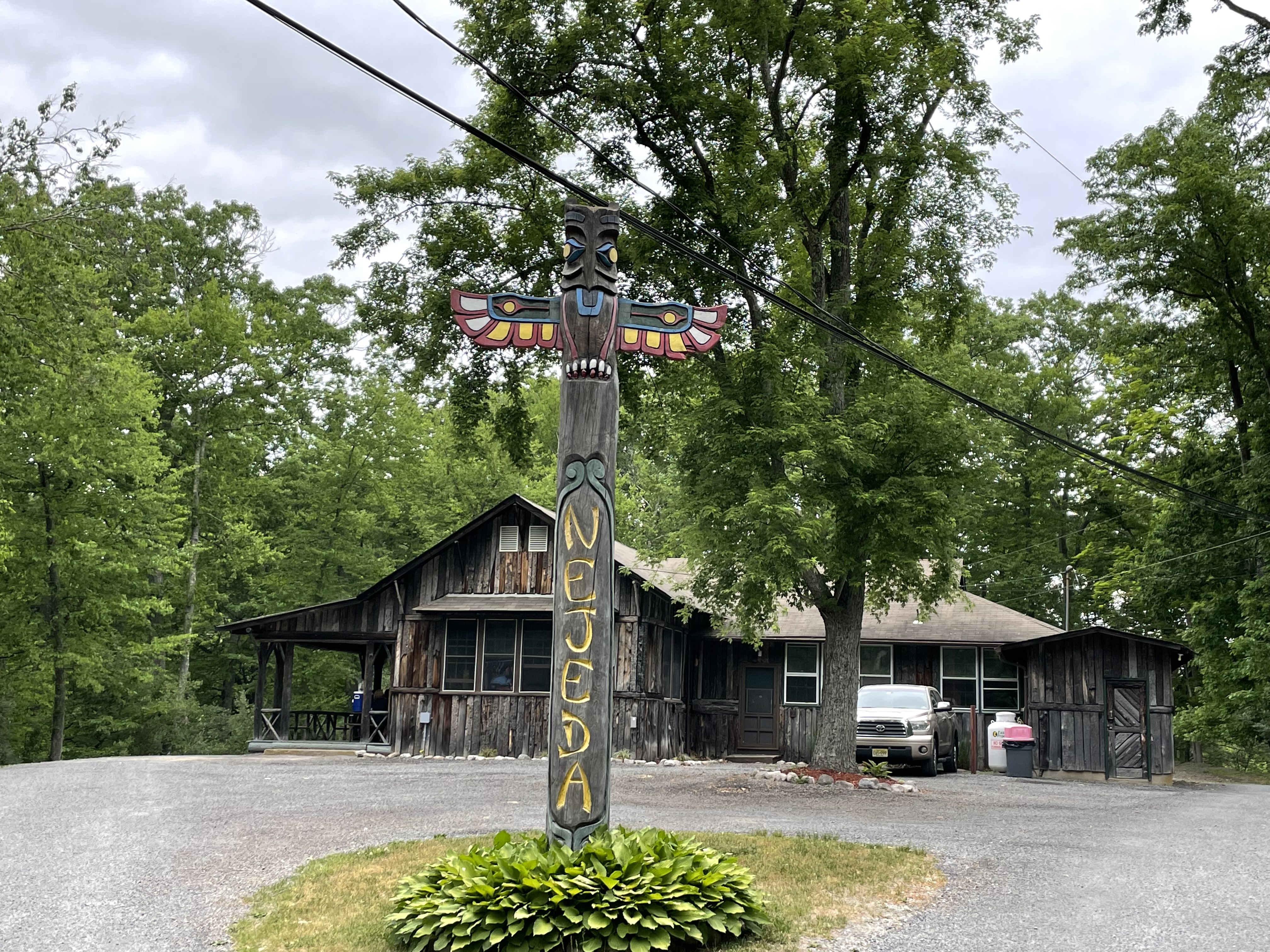
Having never gone to diabetes camp myself, diagnosed at 18 years old in 1972, I was invited to run a workshop on ‘Increasing diabetes happiness and advocacy’ this past weekend at Camp Nejeda’s Survive & Thrive weekend for adults with type 1 diabetes. Twenty 21 to 70 year old campers got to reflect on something they’ve gained having diabetes, discover their strengths and ponder the meaningfulness in their personal diabetes story.

I arrived Saturday afternoon so I missed the Friday evening bonfire, inspirational talk from power lifter Chris Ruden, and informational lectures from endo Robin Goland. But I did get to enjoy psychologist Ken Gorfinkle’s Q&A discussion on ‘What don’t our doctors know’, a balloon competition, at least I think it was, outdoor movie (what else but ‘Dirty Dancing’?!) and the chance to make new friends (I did).

Of course, what’s just as important at diabetes camp to any activity is the opportunity to let down your hair while letting your insulin pump alarm without concern amidst of sea of pumps. Of course I was told to my face, affectionately, that I’m ‘old school’ when I pulled out my vial and syringe. Well, it takes all kinds, and at camp, all kinds are present and welcome.

What impresses me about Camp Nejeda is how this long-running camp offers a weekend for everyone. For instance there’s BFF Weekend for kids– bring your best friend or sibling with you to diabetes camp. That’s both next weekend and September 15-17th. There’s also a weekend for families. Here’s the summer schedule if you have a child with T1D or perhaps know someone who does. I also believe the camp is looking for camp counselors if you know an older teen who’s interested.

My new camp friend came all on her own and felt perfectly at ease among all the friendly faces. That’s the special magic of being in a place where having type 1 diabetes is the norm, where alarms alarm, insulin T-shirts abound and snacks are everywhere just in case.

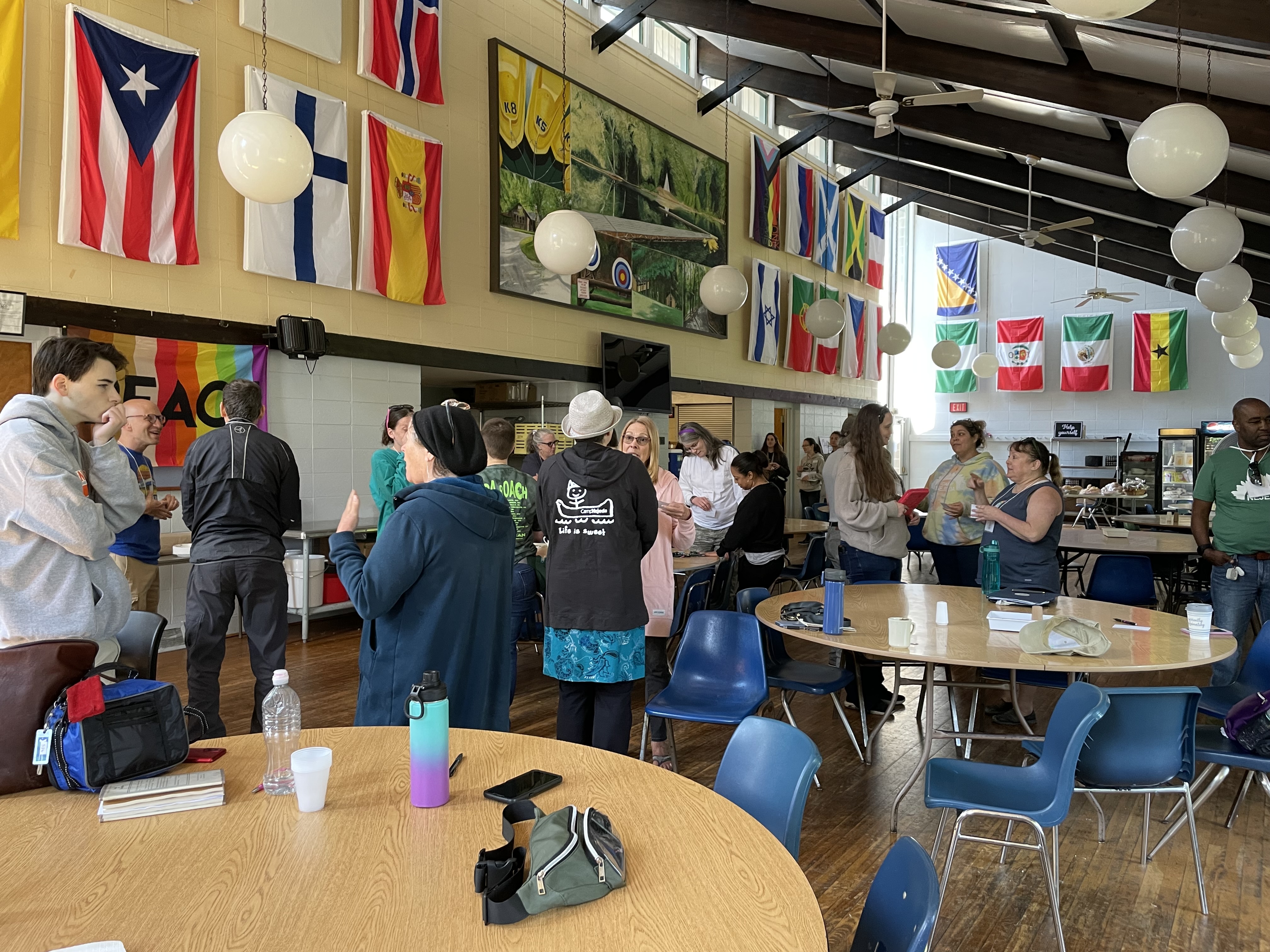
Participants sharing during my workshop in the dining hall below.

Loneliness, the new old epidemic

This is not a post about diabetes, except indirectly. I am reading more and more articles about how many people in the US, and worldwide, are lonely. In the US the number is one out of every two Americans is experiencing some measurable level of loneliness. In the US, in my mind, it’s a direct result of our win/lose, individualistic, go it alone, pull yourself up by your bootstraps, car and cowboy culture.

April 30th the New York Times printed this guest essay from our Surgeon General, Vivek H. Murthy, “Surgeon General: We Have Become a Lonely Nation. It’s Time to Fix That.” If you don’t subscribe to the Times, the main takeaway was how disconnected we’ve become from each other; young people move away from their parents, are on their phones constantly, neighbors don’t know each other, and health difficulties without support can often tip loneliness into depression.

Everyone agrees loneliness is a problem and it’s everywhere, but few offer any solutions. The Times printed a follow-up article titled, “Seeking Cures for Loneliness” and readers wrote in. The effort to ease loneliness that really touched me was offered by Mary Mulvihill of New York.

She is the founder of Seniors Taking Action. She referred to what’s called “talking or chat benches,” which are common in the U.K. and Australia and according to Mary spreading across the world. These are designated benches in parks and common areas, often pained a different color designating them as places where anyone can take a seat and chat with whoever may be sitting there or arrives.

Mary says they are working on having these in her community in New York City, and I thought immediately, what a wonderful, easy and workable thing to do. Don’t we know the casual interactions we have all the time with the supermarket cashier, salespeople, people on the bus or subway, or in the park, are almost always a lift for both involved.

If you’d like to help lower the loneliness epidemic or you’d like a place yourself where you could chat with someone, maybe you can make it happen in your community. We all know living with diabetes, without enough educational resources or the support of friends who have diabetes, can throw us right into the loneliness pool.

Even I’m blown away hearing how complex managing blood sugar is for us with type 1 diabetes

I just listened to naturopath Dr. Jody Stanislaw being interviewed by blogger, podcaster and fellow type 1, Nayiri Mississian. Jody starts out telling her “diagnosis story” and by time we’re twenty minutes in, I’m overwhelmed by the complexity of what I do every single day, my best to keep my blood sugar between my own set targets, 75 and 150 mg/dl. I’m relieved someone gets it and looking forward to learning what Jody is going to share, and she does not disappoint.

Stanislaw has been educating and counseling type 1s for years. You can find tons of informative short videos on her website.

I know most of what Jody says (we once had drinks in lower Manhattan so I feel permission to call her Jody) in this interview below. For instance I know it’s ridiculous to follow the pre-bolus rule – take your dose 15 minutes before your meal – without any context. Am I going to eat a lot of simple carbs or hardly any carbs and a lot of fat, which will delay any rise? Did I just come in from exercising at the gym, which will continue to lower my blood sugar?

Yet, when Jody says it’s all about “insulin dosing” I know I have to listen. And I hear insights from Stanislaw. Like why walking in the morning won’t bring down high blood sugar. It more likely will bring it up. And that cold showers increase insulin sensitivity, which is really interesting because the husband recently discovered Wim Hof, a fellow Netherlander, who is all about cold showers. I hear him, the husband not Wim, gasping every morning. But I digress.

Take an hour and watch the video below. I think you’ll be surprised how much valuable content is in this interview as the good doctor tells it like it is after she’s experimented on herself endlessly for her, and our, benefit.

Diabetes standards of care, 2023

I think endocrinologist and Professor, Anne Peters, is a warrior out there fighting the good fight as she has all her career. Her credentials and advocacy are beyond impressive. In her clinical practice she tends to people with diabetes in economically disadvantaged East Los Angeles.

Here, she gives the update to the Diabetes Standards of Care. What strikes me is how oriented we are to solve everything with medicine. For instance in the Netherlands, and I happen to know this because it is the husband’s home country, depression is first treated with walks in nature and music. Interesting.

From this video, I was quickly reminded if you have type 2 diabetes you’re likely on anywhere between six and ten pills, there’s barely a mention of psychosocial support, and the lower targets and plethora of medicines that form the standards make me wonder, “Who is truly benefitting?” I don’t have the answer, but this video begs the question – for me.

A celebration of journeying with type 1 diabetes from Children with Diabetes

I had no idea until recently, but June of last year Children With Diabetes (CWD) issued their Journey Award. Similar to the Joslin Diabetes Center, CWD honors the passage of 10, 25, 50 and 75 years living with type 1 diabetes. Joslin, to my knowledge, has now added a medal for 80 years!

If you have been living with type 1 for more than 10 years, you are welcome, no you are encouraged, to apply to receive your medal celebrating your journey. There’s a brief CWD application form which you’ll find here.

Meanwhile, if you have a child with type 1 diabetes, I can’t think of a better place to spend part of your summer than at Children with Diabetes’ annual Friends for Life conference in Orlando. It’s an extraordinary experience for families to get together to learn, bond, have fun and feel less alone. Details here.

Personally, having received my 50 year medal from Joslin last year, and now from CWD, in all honesty, I can’t imagine 75 years. That’s 25 years from now when I would be 94 should I live that long.

That’s a lot of years where much could change in the management of type 1 diabetes, even the discovery of a cure. But I don’t tend to think that way; I’m grateful for all the advances we have over the past 10-15 years that have made living with the condition easier compared to the first several decades I journeyed with this condition. Hopefully the good stuff will just keep coming.