Everybody’s got a story: here’s mine


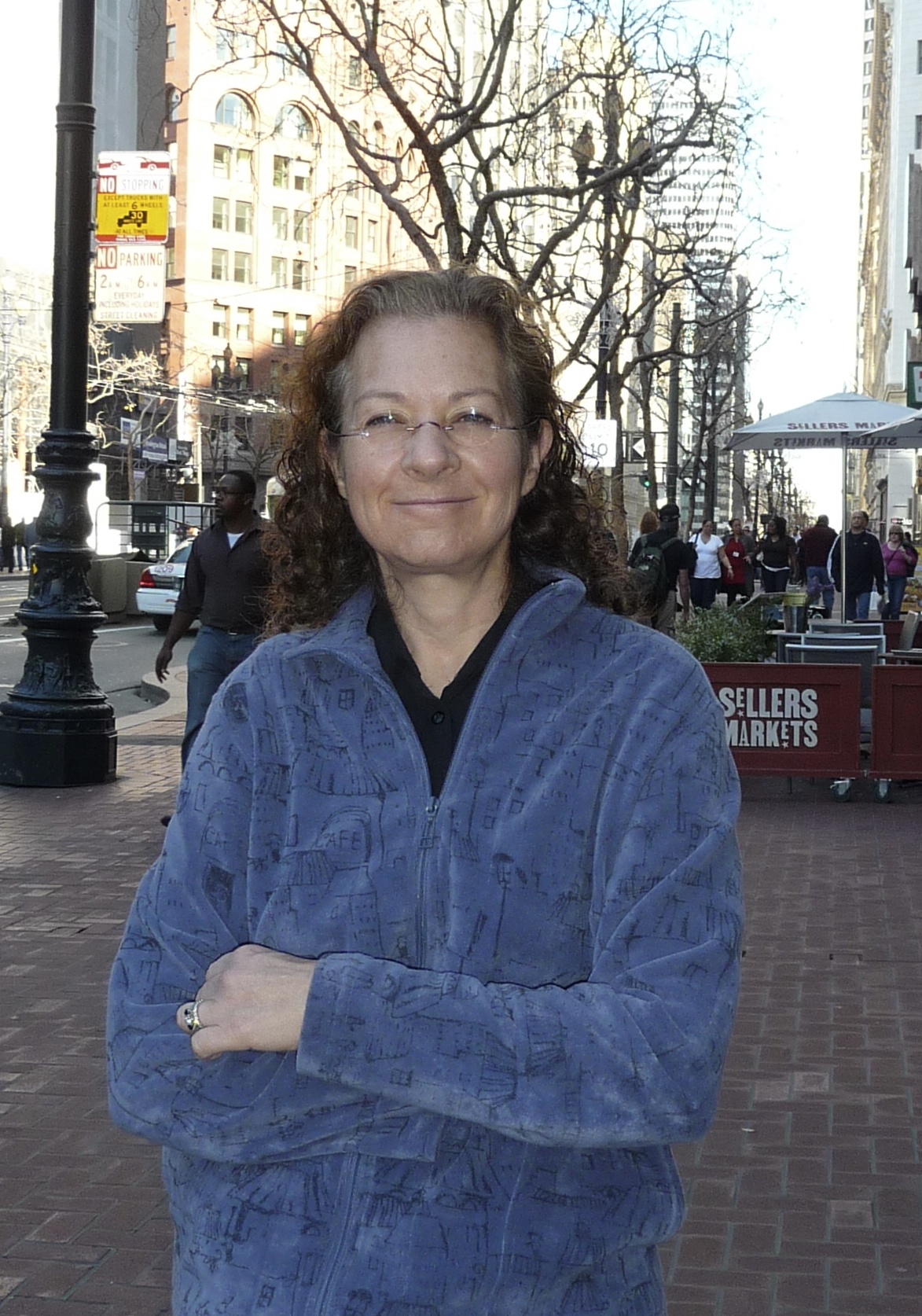
thoughtful riva

I always wonder how people get to where they are in their lives. Best I can figure my curiosity began when I was nine. At the diner my family went to for the occasional dinner out, I would scan the room and notice others laughing, animated in conversation, or a couple with not even a word passing between them.  Who are these people, I wondered? What do they really think and feel? 


It’s not surprising that as I grew up I wanted to write the human interest features column for a newspaper, or that over the past few years I’ve interviewed more than 135 people with diabetes: I am fascinated by people’s “stories.” So here I share mine over the last several years since moving into this work. I hope it may offer you some clarity, or inspiration.


Warning: It’s lengthy. Perhaps think of it as a chapter in a book if it helps, definitely not a tweet. We know I’m not much good at that. 


Modified from a contest entry for “Second Acts,” that More magazine was running about changing one’s life after forty. 


My Second Act


I was 48 years old, planning my wedding, (my first thank you) and going into the hospital for diabetic frozen shoulder surgery. As if that wasn’t enough excitement, I fretted whether I’d still have my health insurance coverage for the surgery. This was seven years ago and the dot.com I worked for was bankrupt; every month scores of people were being laid off. I was to be one of them—luckily it would happen two weeks after my surgery. 


On the cusp of fifty, I had lost my job, was going to physical therapy three times a week and the rehabilitation chair that moved into my small apartment, which I had to use to raise and lower my arm an hour a day, gave me a time-out: What did I really want to do with my life? I was in what my friend Pat refers to as “The Void.” I didn’t know what I wanted to do for a living anymore. In my heart I didn’t want to continue in marketing communications, I’d always wanted to be in a helping profession. Yet, I didn’t want to go back to school for four or six years to earn a degree for the profession I’d toyed with – psychologist. While I wanted to help people, I wasn’t convinced that listening to their problems was an effective means for helping them change their lives.


At this same time something else happened that set me along the path that would become my new work– this work. I went to a diabetes educator. I have had type 1 diabetes since the age of 18, thirty years at the time, yet never had I been to a diabetes educator before, someone trained specifically to help people with diabetes manage their illness. After my first visit with the educator, I contemplated becoming a diabetes educator myself. I assumed it would be a six-month course. But this was not the case. I needed to first have a Master’s degree in pharmacology, nursing or social work. Then it was a two-year program and I’d have to practice 1,000 hours before I could become certified. So, I began looking for a copywriter job again. It was what I knew. Trouble was I also knew I didn’t want to do it anymore.


A year later in the midst of doing some freelance work, going on exploratory interviews and reading the famed career book, “What Color Is Your Parachute?” for the third time, my husband said, “You’re a writer and you’d like to help others who have diabetes, why don’t you write about what it’s like to live with diabetes?” I looked at him sweetly, rolled my eyes and said, “Honey, who’s going to buy a book about what I think about living with diabetes?!?” But five years later that’s exactly what’s about to happen. This July, my book, “50 Diabetes Myths That Can Ruin Your Life: And the 50 Diabetes Truths That Can Save It”will be published. And included along with knowledge and advice from diabetes experts and fellow patients is my own.


The road to here began with a roadmap. It wasn’t the first, I’d been drawing them most of my life, but this one was more specific. After I lost my job my husband and I sat on a bench one balmy afternoon and wrote down my vision: To help educate and motivate others with diabetes to better manage their condition. That vision sat in the center of a large blank, daunting white sheet of paper. Then we drew colored lines coming out going in all directions: these were to be the steps to my dream: 1) Write a column for a diabetes magazine, which I do now. One day after reviewing the four major diabetes magazines, I called the editor of Diabetes Health, the magazine that felt like it best matched my voice. I told her I wanted to write a column and led her to my web site to see the work I was doing. Presto—she called me back and said, “Looks great, what would you like to write about?” If it hadn’t happened, I would have told you, not possible. 2) Write and illustrate a bookthat would help people with the emotional management of diabetes. I did that in 2007 and self-published it. It was in the bookstore at the annual conference of the American Association of Diabetes Educators last year. This year it will be there again along with its Spanish translation. 3) Give talks to patients, and medical staff. I do that now across the country through an organization called Patient Mentor Institute (PMI). When I first heard about PMI, I immediately called but they told me they hadn’t yet scheduled their next training. Six calls, one every month, put me in the next training session six months later. Having my roadmap in place, and my heart, mind and body in sync with what I wanted to do, created the foundation I needed to keep putting one foot in front of the other. 


At the beginning of this road, when my husband first suggested that I write a book (and I felt that cold fear like a steel blade pierce my heart!) it didn’t hurt that a week later we met with my friend who worked as a copywriter at an advertising agency. She told us how miserable she was there. The next morning my husband said, “I couldn’t sleep all night thinking about you going back to that kind of work. Why don’t you interview other people with diabetes and write a book that shares many peoples’ experiences.” So that became my first real step: To interview others was so right it reverberated in my bones. I could capture a myriad of stories that would create a shared community and lessons learned. 


For two years I interviewed people. I still interview people. It’s usually a phone call, sometimes a coffee in their house or a coffee shop. I bring a little tape recorder and they bring their story. All I have to do is ask, “How did you discover you had diabetes?” and a lifetime pours out of them. My very first interview I practiced with a good friend. My first “real” interview was with a couple who discovered that their three year old son had diabetes, and they will never forget the date, September 10, 2001. While in the hospital the following day experiencing their personal world collapsing, the World Trade Center towers were doing the same a few short miles downtown, the smoke visible from the hospital hallway windows. The gravity of this interview was a sign to me to keep going. I branched out to interview acquaintances I knew who had diabetes and asked them who they knew. My circle of fellow patients grew quickly as did a community of diabetes educators, nurses and psychologists. In capturing peoples’ stories I have amassed a research library of sorts, collected a wealth of learning and understanding, and also a network of people I now know with diabetes, and in diabetes. 


But this book of interviews was not the book I would end up getting published, for I learned a lesson about publishing two years after beginning the interviews. While you may have what you think is a great idea, a publisher may not. I couldn’t sell the interview book. But the woman who was to become my book agent (whom I was introduced to having met her friend while on a train going to my brother’s house in Connecticut for Thanksgiving—trust me, that’s a whole ‘nother story) said let’s look for an idea you can sell. I shelved the interviews for the time being and we spent three months writing a new book proposal for my diabetes myths book and after shopping it to twenty publishers we had a deal—and I began all over again. As it would turn out, numerous nuggets from my interviews are featured in the book–so while we may hit detours in life, I know nothing is a waste. It’s been seven years now since I lost my job and embarked on this journey and five of those I’ve been avidly working in diabetes. I stopped freelancing two years into this venture because I knew if I didn’t jump in fully, I might never jump in at all. 


If you’ve been on this web site before, you may be acquainted with what I’ve been doing, if not, this blog began about two years ago and all my posts are archived here. I contribute regularly to Diabetes Healthmagazine. I’ve just been featured in Diabetic Living magazine. I’ve been invited to speak at the Mayo Clinic this September both about diabetes, and about my books. “Patient-expert” is a title I wear proudly now and I have earned it by putting one foot in front of the other and following my heart. I could not have told you with assurance that I would end up here, only that when I began I felt trying was worth the effort.


One of my messages has become that you can create an exceptional life–notdespite having diabetes–but because of it. That it can be a catalyst to greater health, happiness, meaning and purpose. What’s required is knowing how to medically take care of yourself and having the emotional resilience to weather the ups and downs. I don’t mean that you become a “Pollyanna,” but once you deal with the stages of shock and grieving, (and mind you they will re-visit you from time to time) that you will reach a crossroads that invites you to answer the question, “How am I going to live from here?” You will be better served if you can recognize that “What is, is,” and choose to honor your life by managing this sometimes-beast as best you can, and embracing more spiritual qualities like appreciation, joy and giving back. This is where, after decades, I have arrived. It wasn’t a quick trip, but I hope I can now shorten the passage for others.  


I knew in my late forties, as sure as I breathe, that it was time for me to finally nosedive into my dream of making a difference and create my singular road that would lead me there. With my husband’s financial support I could take a break from earning a living. With his emotional support I was loved and encouraged to keep going. The biggest challenge looking back was social: I missed having people to go to lunch with, and, admittedly, deadlines someone else gave me. What helped, however, and still helps, is having a routine: Taking a yoga class, my daily walk around the park and meeting my interviewees face-to-face as often as possible. And now seeing the early fruits of my labor. 


I say all the time now, “The universe keeps dropping gifts at my feet.” My husband says, “Don’t discount all the hard work you’ve done.” And I don’t. Yet I’m convinced that being on the right track, leading with your heart and following with your feet opens more doors than you can possibly imagine. Don’t be discouraged if you can only pry the door ajar slightly now. Keep tugging at it. One day it will open.


Today I associate most closely with something Mahatma Gandhi said: “Happiness is when what you think, what you say, and what you do are in harmony.” From the very first bench meeting my husband and I had to when he recently told me enthusiastically, “We’re only two degrees of separation from Oprah!” it amazes me where I’ve arrived. We joke that one day I’ll be sitting on the Oprah show and she’ll be holding up my book saying, “And everyone is going home with a copy of Riva’s book today!” 


You may laugh, most days I do too, but dreams have a way of turning into reality when you hold them fast and keep putting one foot in front of the other. 

A new friend and a shared view of being inspired by diabetes

Unknown

These days I know many people who live with diabetes unlike the first three decades of my life when I couldn’t drum up any such acquaintance. Over the past few years I have looked into numerous patients’ eyes at health fairs and support groups and I work with colleagues with whom I share a professional bond. 

I also now have real and true friends with diabetes with whom I do fun friend-things like riding around Mississippi for a week, and the more everyday activities of lunching, and on the weekends, spend free minutes trading intimate details of our dealings with this beast. I am awash with endorphins during those calls, secure in the knowledge that I need not explain anything; they understand the wacky ups and downs of blood sugar, the need to chew while on the phone, the positioning of our call after my walk but before lunch, the foolish thing we heard so and so say the other day and the hopeful sharing of some new research that may ease our burden one day.  

Then, every once in a while I meet a fellow traveler who is so much a mirror of myself I have to glance twice, and then again. That happened last week when I interviewedHeather Clute. Heather lives on the West Coast so it was a scheduled phone call and a last minute confirmation. She told me once we were on the call that she had wondered where in the world she was going to fit our one hour interview into her day. Yet, she decided to nontheless.

Fifteen minutes into our talk, I was chatting with a new, old friend. We had so much in common — grown women with type 1 working in wellness, our search for meaning and purpose through diabetes, our constant exercise to keep a positive outlook and a shared practice of mindfulness. I said that we’d be twins “if” not for her three children. OK, I admit it, three children is a big “if.” And so we laughed. 

I had googled Heather before I spoke to her and skimmed a few posts she had blogged. During our interview I read a few lines to her that she had written, “…we are all either choosing to be conscious or “unconscious” to the possibilities and opportunities around us. For me, diabetes has brought a deeper level of awareness to ALL of life, to every moment’s potential and every moment’s grace.” She laughed and thanked me for reminding her, it was just what she needed to hear that day.

After our talk I went back to read her posts. There are only four as Heather’s busy life, kids, school, work, staying physical, caught up with her, but I think you’ll like them. They are beautifully written and share a view of diabetes from the inside-out. 

It’s always a joy to meet someone with whom you immediately connect. It’s all the more when much as you may not want to, you share diabetes.


A wordless conversation about life with diabetes

Over Passover I left my Apidra insulin and syringe on my brother’s dining room table where we had just finished the seder meal. We had all expected to go back in for dessert, but dessert happened spontaneously in the kitchen with everyone stuffing honey cake and chocolate covered strawberries into their mouths too engrossed in conversation to move back into the formal dining room. Thus, my insulin and syringe were left to themselves on the dining room table unnoticed, and I didn’t realize it until I returned home hours later.


It wasn’t a big deal as I had extra insulin at home so I emailed my brother and asked if he would bring my insulin and syringe to a family gathering, a baby naming we would both be attending, two days later. Sure enough, when I saw my brother again, he handed me a little plastic baggie and inside, safely nestled, were my insulin and syringe. You should probably know at this point my brother and I never talk about my diabetes, except on the rare occasions when his ad agency is pitching a diabetes product and he comes to me to learn something, or find out something. I was 18 and he was 13 when I got it, and I have always felt while he is certainly sorry that I have it, the resentment he felt as a teenager who all of a sudden had his parent’s attention removed, started his drift away from me, and it has remained, and with it he has adopted a comfortable ignorance. 


However, as I took the baggie from his hand, I saw that little plastic container as a sign of tenderness, and concern. I imagined that his having to handle my insulin and syringe gave him pause to think about what it’s like for his sister to live with diabetes: To take injections several times a day, check her blood sugar throughout the day, and do all the other things I have to do; whether he really knows what they are or not, he knows there are things I have to do in order to live. I wondered too if it created a conversation for him with his two girls, 14 and 17 years old, who’ve never talked with me about my diabetes, but have seen occasional signs of it, whether it’s taking an injection or asking their mother what’s for dinner so I can figure out my carbohydrate intake and my dose.


Maybe you’re thinking, so why doesn’t she just start a conversation about it? Some habits are hard to break, and some familial patterns, harder. And while I go across the country and talk to patients about managing their diabetes, there just never seems to be an appropriate opening to start a conversation about diabetes with some family members. My work is rarely a topic of conversation when we’re together and when it is it is more like, “So, did you finish the book yet?” 


One day, however, I do think a real conversation will come along about living with diabetes, maybe it will come with his girls when they are old enough to get to know me on their own, not just the seven times a year they see me at holidays. 


Yet, unknowingly leaving my insulin and syringe behind, perhaps began a conversation, perhaps between my brother and his girls, perhaps between my brother and myself, just without words. And right now that’s O.K. For rather than get in anyone’s space, I prefer to just recognize that my lifeline came thoughtfully wrapped when my brother handed me my insulin and syringe in a little plastic baggie.

The new face of chronic illness

Screen Shot 2015-02-08 at 12.58.32 PMMichael J. Fox’s new book

I just watched Michael J. Fox in his appearance on the Oprah Winfrey show this week. Yes, working for myself gives me the liberty to take a break at 4 P.M. and recharge my batteries. 


Fox is an emblem of living gracefully with chronic illness. If you don’t know, he’s had Parkinson’s disease for the past 18 years, and looks just as youthful and boyish as he always has. Just now he shakes–a lot. Oddly, he said, the shaking is not from the illness, but rather the medication for Parkinson’s. If not for the medicine, his muscles would freeze. But there’s certainly nothing frozen about his mind, his enormous optimism, or his activism. 


Fox has gone to Washington repeatedly to seek funding for stem cell research and Obama has just passed legislation to make that possible. Of course where was Fox? Not in Washington, but climbing the Himalayas in Bhutan. He joked, it’s not so easy to get out of the Himalayas at a moment’s notice. He also told us that while there his disease affected him less. He could breathe more easily, odd because such altitude usually hampers breathing, and his muscles moved more fluidly. We also saw a demonstration in a segment of him playing ice hockey: he looked little different than his younger self who was an amateur player growing up in Canada.


Part of Fox’s appearance was also to promote his new book, Always Looking Up: The Adventure of an Incurable Optimist. And that was the face of illness that we saw: someone who is accepting, living fully and treasuring each small moment with his wife and children, someone who even savors the turn his life has taken saying if this hadn’t happened, he wouldn’t have met the amazing people he’s met and done the amazing things he’s done.” And, we got that he feels his life has been enriched. 


Some days he has more trouble tying his shoelaces than others or his medicine kicks in too slowly to avoid an incident he would not have asked for, but he said that vanity was the first thing to fly out the window once his symptoms began to show. And that he is not afraid, but eating life. 


As Fox says, “Parkinson’s doesn’t define me, it’s just one part of my life.” He also tells his children when they ask about his shaking, “My brain doesn’t work the way yours does.” How simple those few words are. So simple, a child can understand, and it leaves judgment out the door. It’s we adults who have to struggle to see past the jerky movements and our assessments based on outer appearances. 


Well, my pancreas doesn’t work the way yours may, so I’m a little different, not damaged or less than. That thought gave me a new window from which to see my diabetes. I think Fox truly is inspirational and an example of how to live with a chronic illness. He wears it well and so can we.

The Secret – we create what we expect

Staring out the staff lounge window at the Cumberland Hospital in Fort Greene Brooklyn, just outside the auditorium where I am going to speak, I watch the traffic move along the Brooklyn Queens Expressway. Manhattan’s skyscrapers sit just beyond. I look up at the sky and whisper, “Thank you for where you have brought me.” This is my second presentation in my native Brooklyn. I’m not being so literal as to be citing Brooklyn in my thanks, but on the larger canvas of my life, to be doing this work.

I am critically aware in this moment that you never know what life has in store. Where you might be a year from now, five years from now. Surely, I never could have guessed I’d be standing in a hospital staff lounge about to speak to a group of fellow diabetics to motivate them toward better diabetes management. Not much more than five years ago I gave my diabetes management little thought. 

I always wanted to teach people that our lives are the projection of our thoughts,  and so we should plant the ones we truly want to reap, and accept our gifts and believe in our dreams. I just never knew sharing these ideas would have anything to do with diabetes. Honest, never.

When I speak to audiences I stress shifting their focus from the burden of diabetes to the rewards of doing the work — whether it’s to spend time with the grandkids, have more energy, pursue a beloved hobby or second career, or give back to the community. Most of diabetes education is about numbers, but the fabric of our life is mostly our thoughts and feelings.

Now at Cumberland Hospital I have finished my hour presentation and a woman raises her hand. After apologizing for coming late she says, “Maybe I missed this but how do you do it? How do you manage your diabetes so well?” The side conversations stop and the room quiets. Everyone is fixed on me. I begin listing all my tricks: my daily one hour power walk, using smaller plates, choosing more veggies and fiberous foods, sweeping most of the carbs out of my diet, and as the preacher in me takes over, the knowledge that my care is entirely up to me and that I don’t harbor a single doubt that I am committed to my best health.

18 pairs of eyes hold mine seeking answers from my passionate pontification. I wind down realizing how revved up I am. This rag-tag group of African American type 2 diabetics, one in a wheelchair, one with a cane, who when I began my talk seemed to only half listen, now applaud this slim white woman. I smile shyly almost shooing away their gratefulness out of embarrassment, yet I know they have been moved and the greatest gift I can give them is to accept their gratitude. 

This is what they don’t get from their doctor or their CDE — the understanding and insight of someone who lives where they live and has conquered the demons diabetes throws at them — at least most of the time. Moreover, many people I speak to are weighted down and held fearful by the loss of family members who have died from diabetes or those currently struggling with its complications. I try to bring them to a place where they can see that the possibility for their life is of their own making, not the legacy of their family members.  

Last year I learned something about my own family legacy. I interviewed my parents to get their take on what it was like for them when I got diabetes at 18. My mother told me something I never knew. “When you were diagnosed,” she said, “my heart broke.” Your father’s mother died in her fifties of a heart attack from diabetes and just before it happened they were going to cut off her leg. All I could think was this would be your future.” I was shocked to hear her say this, both because it was a revelation and by the information itself. But now that I’ve addressed enough audiences where diabetes is rampant in their families, I am grateful I didn’t know. 

Maybe if I had known what happened to my grandmother, who died before I was born, I would not have believed I could be as healthy as I am. Maybe I would have believed my grandmother’s fate would be my own, as so many people with diabetes similarly believe. Maybe not knowing allowed me to manage my diabetes and expect that if I did it well I’d be well. In fact, I believe diabetes can be a great stimulus to creating a healthier and happier life rather than falling victim to it and all the negative messages around diabetes. But maybe I would have been derailed on my way to these thoughts if I’d known what happened to my grandmother. 

I am pretty healthy after 35 years living with type 1 diabetes and I am resolute that I will continue to control what I can to have the best health that I can. It’s never been a secret to me that we create what we expect. Truth be told, that’s the good news and the bad. If you catch your thoughts more often and plant the ones you want to sow, I believe you can weight your fate for the better. Ah, see, I am teaching people just what I thought I would so many years ago.


Diabetes + My Response = My Life

Screen Shot 2015-02-08 at 1.55.06 PM

If you’ve rambled around this site a bit and read some of my posts you know my work aims to help you look for whatever good you can in having diabetes, since after all, you have it. And let the bad roll over you as best you can. And, to push the envelope so far that you create an exceptional life, not despite having diabetes, but because of it.

Granted, that’s easier said than done, and you have to be in the right place in your life and your head, and there will be days you’ll feel, “yea, I got it, whoo hoo, and days you’ll think, “I can’t bear another moment of this, another fxxckin’ high blood sugar, another low, another muffin calculation….! Well, you get the point. Still, I believe, looking for the good in life is a more worthwhile way to live.

So it struck me while reading Amy Tenderich’s blog, DiabetesMine, last week, that while Amy focuses as an experienced journalist on sharing what’s going on in diabetes research, technology and pharmaceuticals, and I know she has a whip-smart cynical sense of humor, that at the end of one of her posts she wrote, “Living well and being happy with diabetes is a delicate construct that is tested every day with fluctuating BGs, imposing tasks, and endless responsibility…  Better to appreciate the life I’m living than pine for the one I can’t have.” 

I can hardly put it better myself. Each one of us confronts the challenge of diabetes on a daily basis and how you respond to it, as how you respond to anything in life, is what creates the quality of your life. If you’re doing really well with this, or really poorly, I’d love to hear from you.

Counting my blessings, large and small

images

Of course you’d expect it, but today is the day–although it’s a good practice to do it every day–to take a few moments and think about what we’re thankful for.

So here’s my list:

1. The love, support, friendship and encouragement of my husband (I’m also thankful he works in Holland, particularly since we live in a tiny one-bedroom apt.)

2. That my parents are still living — close enough, and far enough away

3. My friends who truly know me and like me anyway. Some even offer to bring me soup when I’m sick. Hmm, maybe I should reconsider the others…

4. This work that I do that I didn’t even have to go back to school for! In fact it seemed to come out of thin air. (My husband says that’s not true, I did the hard work, but then he’s loving and supportive.)

5. All the people I meet through doing this work: fellow patients and diabetes professionals. There is an immediate bonding, and while I might prefer not to be in this club, at least this club doesn’t have cliques like high school did. Ugh!

6. Peanut butter and yogurt. I discovered it decades ago and still don’t understand why Danon doesn’t have such a flavor.

7. The beauty of where I live: brownstones, trees, sky — 20 minutes from Manhattan, and ah, only 20 minutes home.

8. My health: I’m not missing any body parts, I have all my senses and outside of diabetes, I’m fit as a fiddle.

9. That nobody asked me to create a list of “10 Things I’m thankful for,” so I can stop here.

10. But then, just as I was posting this list a friend (#3) sent me these photos, and I love them. So, there is a #10 after all. I’m thankful for a good laugh and tender moments.


Some simple thoughts as Thanksgiving nears

P1010077 copySimple pleasures: put time aside  to enjoy them

What if we had to purchase happiness and self esteem the way we purchase most things? Would you value it more? Would you feel it more? Would you recognize it as a tangible commodity you owned? Would our lives be happier, easier, more joyful overall? It’s an interesting notion I think.

Somehow it seems negative emotions:  anger, fear, guilt, worry get more of our attention and feel more at home in our lives than positive emotions like happiness, hope, pride and success. Is it just fear of failure or something else at work. I don’t know, but if you had to pay for simple pleasures –  a sunny day and clear blue sky, a field of flowers, to have the loved ones in your life that you do, the satisfaction of a job well done, a fun dinner with friends, coming home after an arduous trip, having your kids put an arm around you – would you enjoy these things more? 

I try these days, as too many of my contemporaries are getting ill and passing away, to recognize how fortunate I am and cherish the day and all it brings. Time passes much faster than it used to, so I’m trying more and more to follow the words of a very wise man, “Be the change you want to see in the world.” These were Ghandi’s words. So, if you want to have love, be love. If you want to enjoy peace, be peace. If you want to find joy, be joy. If you want to see yourself live well with diabetes, live well with diabetes. 

And I think the way to appreciating things more is, while not necessarily easy, pretty much as simple as what Christopher Robin said to Pooh: “You must remember this: You’re braver than you believe, and stronger than you seem, and smarter than you think.” Hmmm…that’s a lot to take in, and yet, some pretty good stuff to live by.

What will you do today that matters?

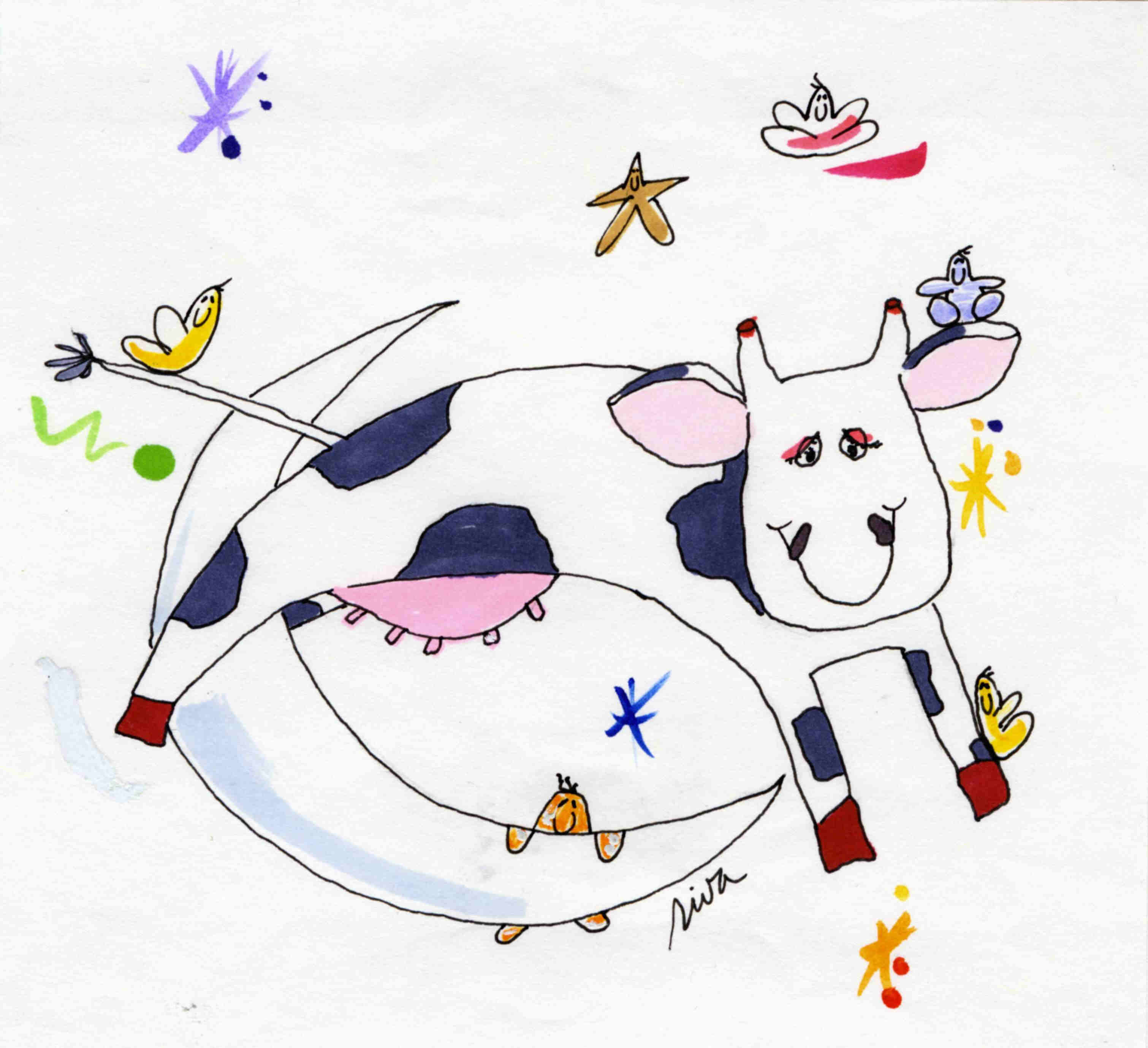
Cow jumped over the moon

I recently read this quote and put it where I see it often:

“Everyone stands alone on the heart of the earth transfixed by a sun ray and suddenly it is evening.”

In other words:

What are you doing with the substance of your life?

What will you want to have accomplished when it’s over?

What do you want to be remembered for?

What could you do today that would add something to your life or that of others?

What will you do today that matters; that honors that you’re here?

…for so suddenly it is evening.

I would gladly credit the author of this quote but do not know who it was.

You can be awakened from sleep with a kiss – or a trophy

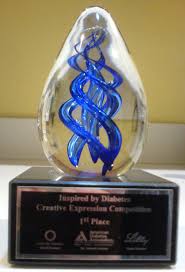
imagesMy ‘Inspired by Diabetes Competition’ wake-up trophy

I’ve been going along these last several months nose to the grindstone working on my book, when last week a package appeared for me from the arms of my FedEx guy. I couldn’t recall ordering anything and I didn’t recognize the shipper. The box was one of those delightful boxes, not colorful or funny-shaped in any way, actually quite the opposite — a perfectly medium sized, square, brown paper-wrapped box that could contain almost anything.

I opened the box and there my eyes fell on a letter telling me I was a first place winner in the Inspired by Diabetes Creative Expression Competition sponsored by Eli Lilly and the International Diabetes Federation (IDF). I had entered last year and had pretty much forgotten about it. My winning submission is a photographic treatmentand a narrative about how living proudly with diabetes helps my management and brings greater joy to my life. My executive husband said, “Where’s the judge’s report?” “Huh?” I said. “We want to know why they picked your submission.”  Seemed pretty clear to me, they liked it. However to satisfy his curiosity I called and asked if there was a judge’s report. “Huh?” the girl said who answered the phone at the Inspired by Diabetes office. After I explained she gave me the judging criteria: relevance to diabetes, creativity, narrative and emotionally impactful. Yup, just like I thought, they liked it but at least that satisfied the executive.

The competition received 800 entries from around the world capturing the challenges and triumphs of living with diabetes in either photographic form, essays, poetry, drawings, paintings or music. There are four Grand Prize winners and 1st, 2nd and 3rd place winners. As a first place winner a donation of $500 is being made in my name to provide scholarships for children from low-income families to attend diabetes camps and in IDF’s Life for a Child Program which provides life-saving supplies to more than 1,000 children with diabetes in 17 developing nations. Winners of the U.S. competition are now being entered in the global competition, winners of which will be announced in the fall. This is an annual competition so if you are just hearing about it and want to enter next year, check out the Inspired by Diabetes web site.

But back to the box. The box that my letter of congratulations came in contained a second box submerged under a hundred puffy pink Styrofoam chips. I didn’t open that box however for two days, not until my husband returned from business in Holland. I thought it nice we open it together so he could share the moment as he is my biggest fan and supporter. The evening he came home we opened the box and pulled out this trophy you see. We looked at the trophy and then looked at each other wondering what it was. I can’t remember what he guessed and I thought maybe it’s a double helix DNA pattern indicating stem cell research. But we really don’t know. All we know is we’re pleased as punch to be honored, contribute to such a worthy cause, and it woke me out of my deep and long slumber.

Sometimes it’s easy to forget when you work at home alone most of the time that what you do does have an impact on others. That is until a mysterious box arrives and a letter saying local media may knock on your door to hear more about your life with diabetes.

So, trust me, sometimes you can be awakened from a sleep by a kiss, as in fairy tales, and sometimes by a trophy. I’m just happy to be reminded now and then as I sit in my quiet living room typing away that I do make some kind of difference from time to time. Now you would really make a difference to me if you could tell me what this trophy represents, any guesses?