I could have put a picture up here of trigger finger but they’re gross, trust me, I looked. Instead, I chose this lovely self portrait where I’m just managing to hide the offending finger.
I have to be at the surgeon’s clinic at 7:30 am tomorrow for an 8:45 am procedure. While I’ve been told the cutting takes all of ten minutes I can’t imagine what’s with all the built in time. Nonetheless tomorrow it’s up at 6 and out the door by 6:30 am.
I’ve had this trigger thumb for about two years. Its had two cortisone shots that provided temporary relief, but when I was offered a third a month ago, I simply didn’t want to keep avoiding the inevitable, and, go through another three days of upended blood sugar.
This is my first finger issue, I’ve had two frozen shoulders, one was fixed through laparoscopy, the other was worked out by a chiropractor with treatment including massage after three months. Yes, these are all part of a suite (sweet?) of comorbidities associated with diabetes.
I keep wondering what will it be like not to do the million things I do now with my right hand: tie my hair back in this atrocious heat, prepare food, wash the dishes, type, pick up my phone, my iPad, everything else, and inject insulin???
That’s about all I know, except I’m joining a whole lot of other PWDs who have walked this path, so here goes…
I would say I’m late to the game but honestly I haven’t seen much discussion about Dexcom’s relatively new G7 CGM. I actually received my initial order back in mid-March, but waited til a week ago to try on my first, as I wanted to use up my G6 sensors and transmitter first.
Given the title here you know I’m not loving this new version, but before I get to my negatives, I’ll tell you what I do like based on just a week of wear.
What I like
Half hour or less to warm up. Yup, it’s fast and that feels terrific, no more endless two hour wait. The reason it’s typically less than even 30 minutes is by time you’ve gone through the few insertion steps, you’ve shaved a few minutes off.
Sensor and transmitter in one piece. Yes, I do like this. No more extra step to stick the transmitter into the sensor cradle or worry I’ll lose it somehow.
12 hour grace period. I haven’t used this feature but I know you get 10 days and 12 hours out of the G7. Presumably the extra 12 hours is to make it convenient for you whenever you change your sensor.
What I don’t like
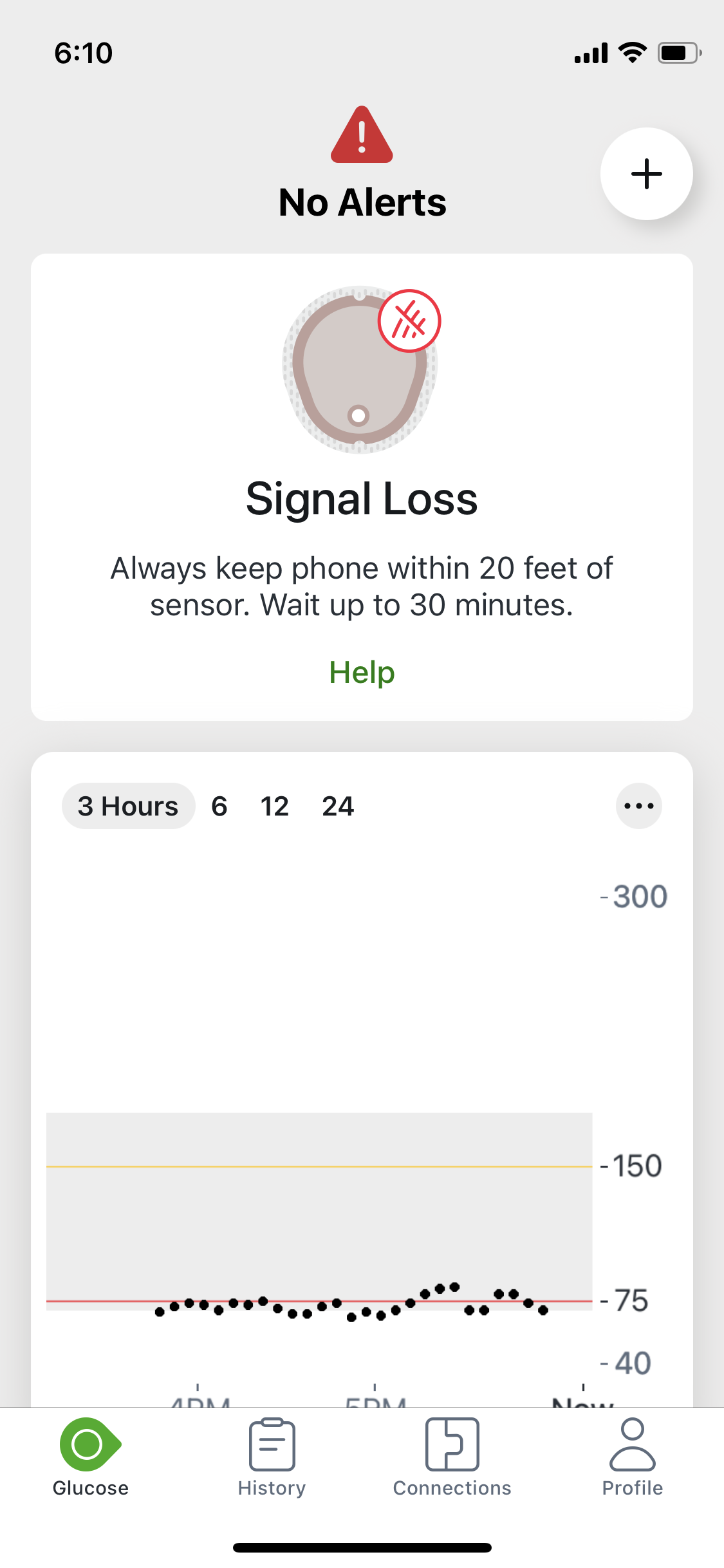
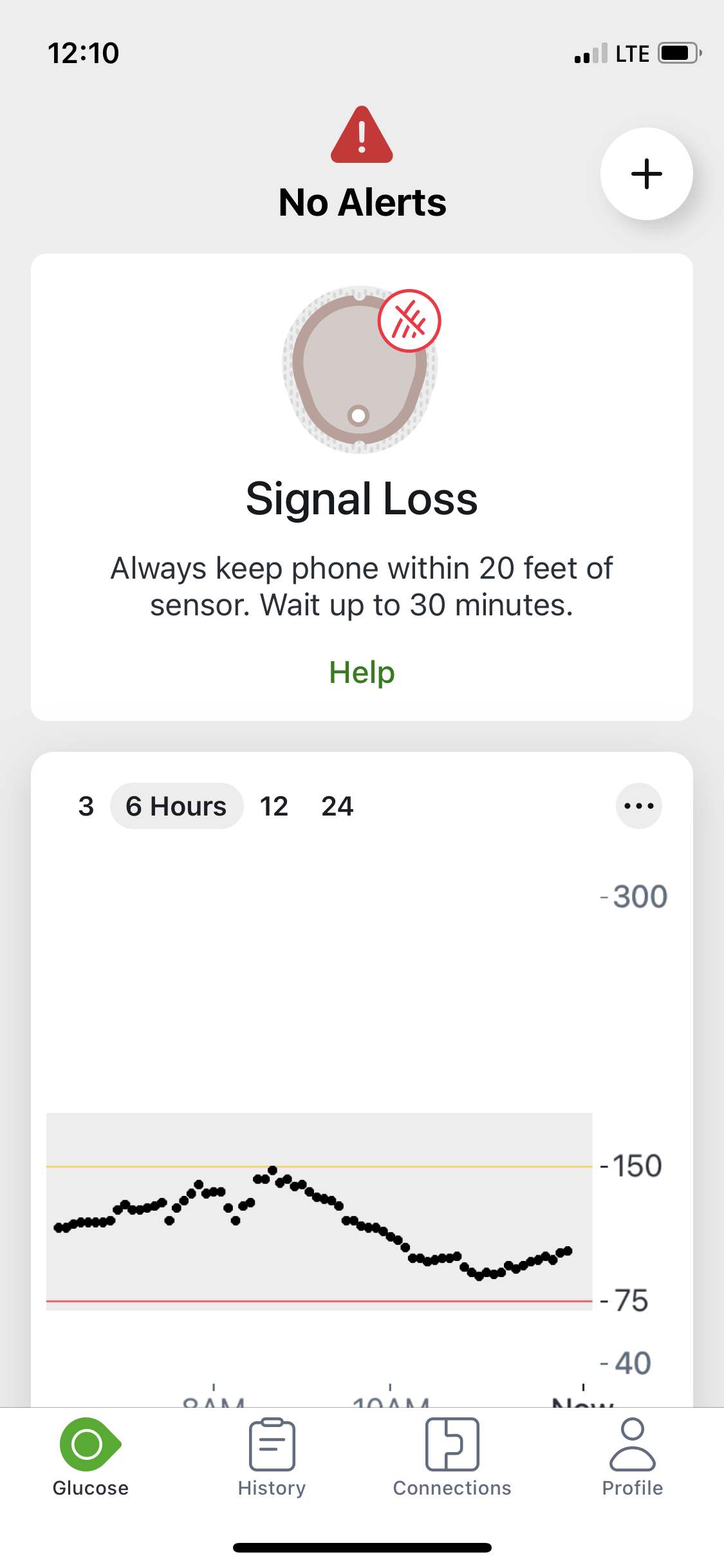
The signal gets dropped multiple times a day. The G7 has the same range as the G6, 20 feet. Yet half the time I look for my number (I use it on my iPhone, I didn’t get a receiver through Medicare, and wouldn’t use it anyway), there’s no signal and I have to wait a few minutes for it to show up. And I know I’m never out of range, I can’t be further away from my phone than 20 feet in my small apartment. This lost signal ‘feature’ is as annoying as the 30 minute warm up time is great.
No widget. With the G6 I never had to open my iPhone to see my numbers. No such luck with the G7, I have to go into my phone, what a pain, to pull it up.
First day numbers. Terrible, inaccurate. With the G6, half the time the sensor worked right out of the box, the other half my first 6-8 hours were spot on with the next 16 wonky. With the G7, the first 24 hours are wonky.
The interface. The G6 range graph was relatively attractive, as attractive as one of these can be. The zones were demarcated in pink, grey and yellow. This face is simply black, white and grey. Devoid of color I find it more clinical and less friendly.
The inserter. No I don’t like it any better than the G6 inserter. In fact, the very first sensor I inserted caused me to bleed and I wore it for two painful days and it never got accurate so, of course, I changed it out. While my second insertion went fine, I experience the insertion as a bullet’s impact (not that I’d know) but definitely too powerful.
The overpatch. Each sensor comes with its own overpatch. There’s so little adhesive around the sensor Dexcom gives you an overpatch, which they instruct you to put on immediately. For me, the smaller size of the sensor is all but ruined by this big piece of white tape running around it. I hate it. I ruined the second overpatch as it stuck to my fingers, so I hauled out the old sheer tape I used to tape the G5 down with, which made me wonder: why couldn’t they at least have made the overpatch clear?
The app. It’s spared down, nothing seems to be shelved where I’d expect to find it, and not user friendly.
In conclusion, the smaller size and rounder shape don’t mean enough to me to compensate for the things I don’t like. The MARD, which means how accurate it is, is slightly better than G6 but, for me, unnoticeable. There’s a feeling Dexcom rushed this one out of the gate and I wonder how many PWDs they consulted with. I can’t imagine a lot of these hiccups would exist if they’d listened to users.
Compared to the Freestyle Libre 3, I think Dexcom has reason to worry. When Libre finishes jumping through the FDA’s hoops, which will likely be this year, and is Medicare covered, I’d absolutely consider switching. Libre is still smaller and thinner than the G7, yes it has one hour warm up time but 14 day wear as compared to Dexcom’s 10, I find it a better inserter, I didn’t experience a dropped signal when I wore the Libre 3 as a courtesy for six weeks, and its accuracy is just about the same.
If you’ve tried the G7, I’d be curious what you think. If you want to see the G7 in action, have a look.
Danielle Ofri is one of my favorite author/doctors. She has written numerous books and is the Editor-in-Chief of the Bellevue literary review, the first literary journal from a medical establishment. Yes, she is really an internist at Bellevue, New York City’s public health hospital, where she’s been practicing for decades.
I had the distinct pleasure of interviewing her at her apartment in Manhattan when I was writing on the HuffPost.
She doesn’t write sweeping novels like Abraham Vergese or critical thinking pieces like Atul Gawande, but examines the doctor/patient relationship, the humanity and how it is trained out of medical students, and lovely stories of her patients and what they teach her.
I was particularly struck by the tone of this most recent essay where she shares the story of an elderly Chinese gentleman and what was so important to him during his treatment that would be all but hidden to most physicians, and less honored. I think you’ll enjoy it, “The Little Things.”


 Diabetes Stories